Hibapress
The Olympic flame was extinguished on Sunday evening in Paris, ahead of a moving closing ceremony combining grand spectacle and solemn moments until the official handover to Los Angeles, the host city of the next Summer Games in 2028.
More traditional than the opening ceremony which amazed the world with its remarkable night-time river parade on the Seine, in pouring rain, the closing evening, taking advantage of mild weather in the context of the heat wave affecting France, began with a parade of athletes at the legendary Stade de France, in an atmosphere of joy shared with the 70,000 spectators who came to celebrate sport and Olympic values.
Proud of their participation in this global event, the members of the various sports delegations, including that of Morocco, responded to the cheers and encouragement of this beautiful audience, among which one could distinguish the many members of the Moroccan community who waved the national flag.
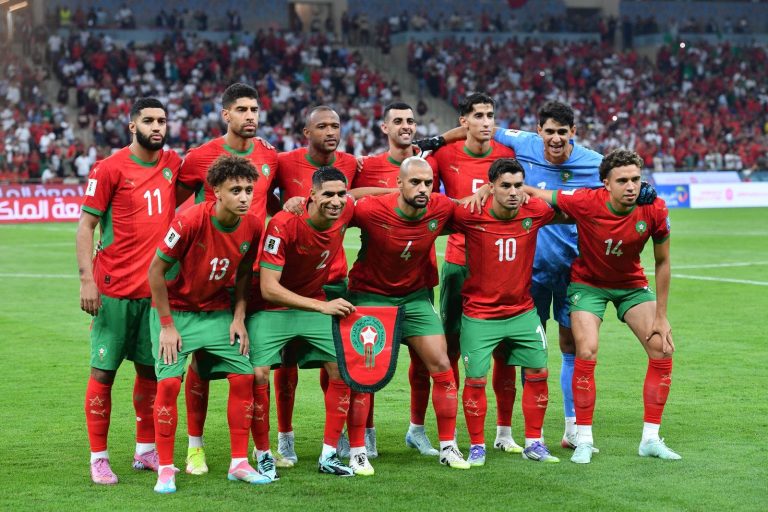
Morocco, it should be remembered, had a good participation in these Olympic Games with two medals: gold won by the double Olympic and world champion in the 3,000 m steeplechase, Soufiane El Bakkali, and the bronze medal in the men’s football tournament.
As promised, the show was there alongside the essential protocol moments ranging from the parade of athletes whose entry into the stadium, to the festive rhythms of music, was preceded by that of their flag bearers to the presentation of medals (marathon) and the thanks to the volunteers.
The great artistic show, concocted by the director Thomas Jolly and his team, already in charge of the opening ceremony, reflects the desire of the French creator to “celebrate this shared humanity that vibrates every day” since the beginning of the Games on July 26, by bringing together at the end a hundred acrobats, performers, dancers and circus performers in an opera piece called Records (archives in English).
This dreamlike and fantastic fresco, signed Damien Gabriac, is presented as an immersive journey through time, “from the origins of the Games to a dystopian world that needs to be reinvented”.
“We wanted to take it up a notch, to space, and our story is the story of an interstellar traveler who arrives at the stadium and discovers the remains of the Olympic Games. He will revive them, like Pierre de Coubertin who, at the end of the 19th century, wanted to revive the ancient Olympic Games,” explained the French screenwriter.
This idea is embodied by his character of “Golden Voyageur”, dressed all in gold and light, played by the French breakdancer Arthur Cadre whose performance added to the many surprises of the evening, also punctuated by musical performances by cult French groups such as Phoenix or Air, the DJ Kavinsky and the Belgian singer Angèle.
Speaking after the ceremony, which took place in the presence of French President Emmanuel Macron, the President of the International Olympic Committee (IOC), Thomas Bach, welcomed the success of the Paris 2024 Olympic Games, thanking France for making them the games of a “new era” by making them “wide open”.
A highlight of the ceremony, the very formal handover of the Olympic flag between Anne Hidalgo and Karen Bass, the respective mayors of Paris and Los Angeles, which will host the next Olympic and Paralympic Games, scheduled for July 14 to 30, 2028, culminated in the spectacular appearance of the famous American actor Tom Cruise, keen on stunts in the streets of Paris, to symbolize this transmission.
After London (1908, 1948, 2012) and Paris (1900, 1924, 2024), Los Angeles will become the third city to host the Summer Olympic Games for the third time after 1932 and 1984.
As is tradition, Los Angeles offered a first glimpse of its Games with a 15-minute show, in the style of “Mission Impossible”, under the leadership of Hollywood star Tom Cruise.
It is in the wake of the handover to the City of Angels that the extinction of the Olympic cauldron, emblematic of the Paris 2024 Olympic Games, takes place. At the end of the Olympic fortnight, it will enter a period of “sleep” from August 12 to 27, during which it will neither be lit nor accessible to the public.
Majestic in the heart of Paris, the cauldron that has flown every evening since the opening of the Summer Olympic Games to illuminate the sky of the French capital, will remain in place in the famous Tuileries Gardens, before being relighted with the launch of the Paralympic Games on August 28.
The unusual giant flame ring topped with a monumental balloon was so fascinating that city officials and the French government are considering the possibility of preserving this unique cauldron to make it one of the symbols of the capital.
The day after the opening ceremony, which saw the Olympic Flame take flight for the first time in the history of the Games to shine without fuel in the Parisian sky, the Tuileries Garden was stormed by tens of thousands of visitors from all walks of life who came to admire this magnificent work, installed near the great river Seine, in line with the Louvre Museum and its Pyramid, the Concorde obelisk and the Champs-Elysées dominated by the Arc de Triomphe.