Heba Press
The second meeting of Arab ministers concerned with disaster risk reduction was launched today, Wednesday, at the headquarters of the General Secretariat of the League of Arab States in Cairo, with the participation of Morocco.
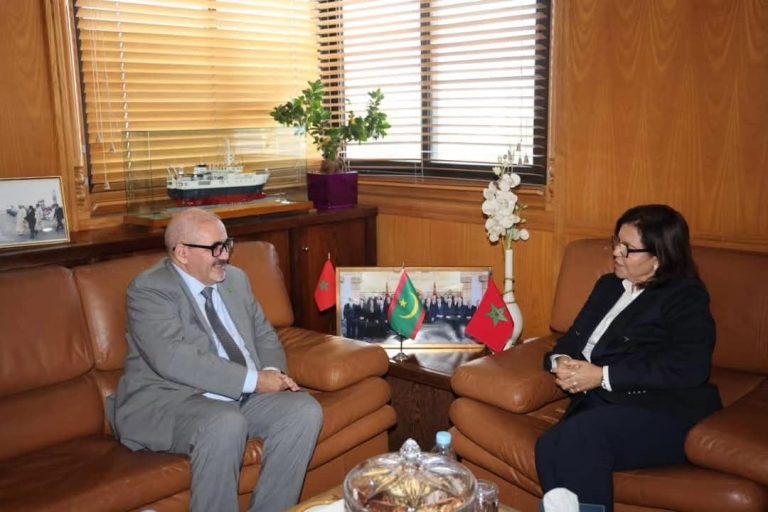
Morocco is represented at this meeting by a delegation led by Mohamed Jarifa of the Directorate of Natural Risk Management of the Ministry of the Interior and also includes representatives of the General Directorate of Civil Protection, the Ministry of Health and Social Protection and the Ministry of National Protection. Territorial preparation, construction, housing and urban policy.
The meeting aims to follow up on developments since the first ministerial meeting held in 2022 and to follow up on the mid-term review of the Sendai Framework for Disaster Risk Reduction held in New York on 18-19 May 2023, as well as to present Arab contributions to the Sixth Arab Forum for Disaster Risk Reduction, which will be held in Kuwait from 27 to 31 October, and the Eighth Global Forum for Disaster Risk Reduction, which will be held in Switzerland in 2025, in addition to presenting the latest developments related to disaster risk reduction in the Arab region.
The meeting will discuss the adoption of the projects of the sixth meeting of the Arab Coordination Mechanism for Disaster Risk Reduction, which was held at the headquarters of the General Secretariat of the Arab League from 18 to 20 August, and the adoption of the slogan of the Arab Day for Disaster Risk Reduction for the year 2025, which was approved by the sixth meeting of the Arab Coordination Mechanism under the title “A resilient and disaster-resistant Arab infrastructure.”
The meeting will also discuss the outcomes of the fifth meeting of the Arab Coordination Mechanism for Disaster Risk Reduction, which was held in Rabat in June 2022.
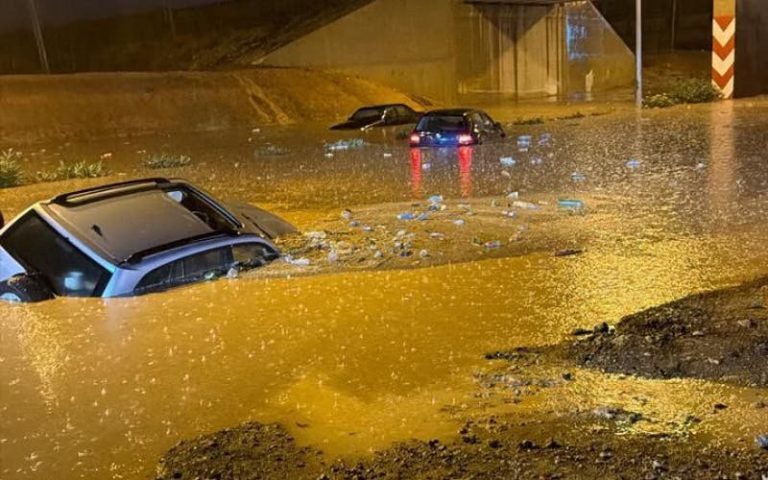
The Deputy Secretary-General of the League of Arab States, Ali bin Ibrahim Al-Maliki, said in a speech delivered at the opening session that the holding of the second meeting of Arab ministers concerned with disaster risk reduction comes in light of the great repercussions observed by the Arab region in recent decades, as Arab countries are exposed to many… natural hazards such as drought, desertification, dust and sand storms, torrents, floods, extreme weather events, forest fires and hurricanes, as well as geological hazards such as earthquakes, landslides and climate change.
He stressed the importance of making disaster risk reduction one of the most important priorities in the Arab region, by strengthening cooperation and coordination among Arab countries in order to reduce economic and human losses.
He added that there is an Arab political commitment to disaster risk reduction that needs to be further strengthened through means of implementation, especially after the Arab region has achieved a number of achievements, considering it necessary for international and regional cooperation to be an essential part of strategies to address natural disasters in Arab countries, through collaboration and knowledge exchange, and enabling Arab countries to strengthen their capacity to effectively address these challenges and preserve the security of societies and the environment.
He stressed that the issue of disaster risk reduction has been given great attention by the League of Arab States since the establishment of the coordination mechanism between Arab bodies concerned with natural disasters and emergencies at the summit level in Algeria in 2005 until the adoption of the Arab Strategy for Disaster Risk Reduction 2030, which was approved by Arab leaders at the Arab Summit held in Dhahran in 2018.
In this context, the Assistant Secretary-General noted that the Arab League, through the Technical Secretariat of the Arab Coordination Mechanism for Disaster Risk Reduction, has worked in recent years to build distinguished Arab regional and international partnerships that have greatly contributed to strengthening joint Arab cooperation in the fields of disaster risk reduction, as these partnerships have contributed to strengthening the position of the Arab region in the world by presenting important initiatives and projects in the Arab action system to reduce disaster risks, and include in particular the draft Arab road map for cooperation, preparedness and response to nuclear and radiological emergencies, as well as the Arab project to reduce marine disasters.