This article was automatically translated from HIBAPRESS, the Arabic version:
HIBAPRESS-RABAT
This is so true that barely a year later, another event of major political significance occurred to reinforce their conviction that these were not “simple troublemakers” as a certain Al Moqri, chamberlain of his state, not of a small group of lost people, but indeed of a core of political activists.
A group of young nationalists, including Allal El Fassi, Mohamed Hassan Ouazzani, Mekki Naciri, Omar Ben Abdel Jalil among others, wrote a protest text in December 1934, entitled the “reform plan” which they submitted simultaneously to the King, to the leader of the French government and its representative in Rabat, the Resident General.
The signatories take care to deliver a moderate pamphlet, nuanced enough so that it only reveals a way of restoring abandoned Muslim religious values, and a real opening of public freedoms.
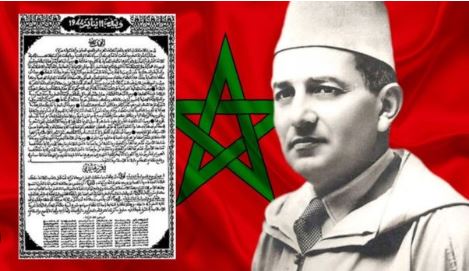
No one is mistaken, as the text implicitly exudes political will. They are also the same ones, joined by a few others who, ten years later, made public on January 11, 1944, what is called “the Independence Manifesto”, a veritable road map thrown in the face of the ‘colonial administration and which, this time, openly demands liberation. The “reform plan” hardly attracts the attention of the French government, even though it presents a series of proposals intended to calm the agitation and promote a climate of dialogue.
Mohammed V is bitter about this… As for the young nationalists, they are taking their fight to another front that has become crucial in these troubled times: the fierce fight against the “Islamist brotherhoods”, who are waging a campaign to divide the country.
Preaching the need for a return to medieval archaisms and feudalism, these movements fell prey to the manipulations of agents of the Protectorate, landowning settlers, French lobbies, local tribal chiefs, in short an armed arm of reaction … Here again, the objective conjunction between the nationalist movement and the Sovereign seems to take the colonial authorities by surprise.