This article was automatically translated from HIBAPRESS, the Arabic version:
7 / 100 Powered by Rank Math SEO .rank-math-seo-score{font-family:sans-serif;position:relative;display:inline-block;height:96px;width:96px;margin:20px 20px 30px;text-align:center;color:#fff;border:none;border-radius:50%;background:#eee;-webkit-box-shadow:1px 1px 1px #bbb;box-shadow:1px 1px 1px # bbb}.rank-math-seo-score.before-content{margin:0 0 30px 20px;float:right}.rank-math-seo-score.after-content{margin:20px 0 30px 20px}.rank-math-seo-score.as-shortcode{display:inline-block}.rank-math- seo-score .label{font-size:12px;position:absolute;top:100px;left:0;display:block;width:100%;color:#979ea5}.rank-math-seo-score .score{font-size: 42px;font-weight:bold;line-height:42px;display:block}.rank-math-seo-score .outof{font-size:12px;font-weight:normal;line-height:12px;display:block;color:rgba(255,255,255,0.7)}.rank-math-seo-score .backlink{font-size:12px;position:absolute;top:-94px;left:-12px;display:block;visibility:hidden;width:120px;padding:8px 10px;-webkit-transition:.25s all ease; transition:.25s all ease;-webkit-transition-delay:.25s;transition-delay:.25s;opacity:0;color:#a8a8a8;border:none;border-radius:8px;background:#fff;-webkit-box-shadow: 0 4px 14px rgba(60,60,90,0.2);box-shadow:0 4px 12px rgba(60,60,90,0.15)}.rank-math-seo-score .backlink:after{position:absolute;bottom:-8px;left:calc(50% – 7px);width:0;height:0 ;content:”;border-width:8px 7.5px 0 7.5px;border-style:solid;border-color:#fff transparent transparent transparent}.rank-math-seo-score:hover .backlink{top:-74px;visibility:visible;opacity:1}.rank-math- seo-score .poweredby{font-size:13px;color:#a8a8a8}.rank-math-seo-score .poweredby a{display:block;font-weight:normal;text-decoration:none;color:#6372b6;border:none}.rank-math-seo-score.unknown-seo{background:#eee;background:linear-gradient (135deg, #b9b9b9 0%, #989898 100%);-webkit-box-shadow:1px 1px 1px #bbb;box-shadow:1px 1px 1px #bbb}.rank-math-seo-score.bad-seo{background:#f8b0a2;background:linear-gradient(135deg, #f8b0a2 0%, #f1938c 100%) ;-webkit-box-shadow:1px 1px 1px #e48982;box-shadow:1px 1px 1px #e48982;filter:progid:DXImageTransform.Microsoft.gradient( startColorstr=”#f8b0a2″, endColorstr=”#f1938c”,GradientType=1 )}.rank-math-seo-score.good-seo{background:#fdd07a;background:linear-gradient(135deg, #fdd07a 0%, #fcbe6c 100%);-webkit-box-shadow:1px 1px 1px # efb463;box-shadow:1px 1px 1px #efb463;filter:progid:DXImageTransform.Microsoft.gradient( startColorstr=”#fdd07a”, endColorstr=”#fcbe6c”,GradientType=1 )}.rank-math-seo-score.great-seo{background:#99d484; background:linear-gradient(135deg, #99d484 0%, #83c97f 100%);-webkit-box-shadow:1px 1px 1px #5ba857;box-shadow:1px 1px 1px #5ba857;filter:progid:DXImageTransform.Microsoft.gradient( startColorstr=”#99d484″, endColorstr=”#83c97f” ,GradientType=1 )}.rank-math-seo-score.template-circle .score{margin-top:22px !important}.rank-math-seo-score.template-square{height:80px;width:110px;border-radius: 12px}.rank-math-seo-score.template-square .score{margin:10px 12px;text-align:left}.rank-math-seo-score.template-square .outof{display:inline-block;margin-left:-8px}.rank-math-seo-score.template-square .label{font-size:13px;top:52px;left:14px;text-align:left;color:rgba(255,255,255,0.8)}.rank-math-seo-score.template-square .backlink{left:-5px}.rank-math-seo-score.template-square.before-content{margin-bottom:20px}.rank-math-seo-score.template-square.after-content{margin- bottom:0}.theme-twentytwenty .rank-math-seo-score{width:96px !important}.theme-twentytwenty .rank-math-seo-score.template-square{width:110px !important}.theme-twentytwenty .rank-math-seo-score.before-content{margin:0 auto 30px auto;display:inherit;float:none }.theme-twentytwenty .rank-math-seo-score.template-circle .score,.theme-twentytwenty .rank-math-seo-score.template-square .score{transform:translateY(22px)}
Hibapress
The joint candidacy of Morocco, Spain and Portugal for the organization of the 2030 World Cup, the only file in the running, is characterized by “its overall quality” and exceeds “the minimum organizational requirements” required in the technical evaluation, indicates the International Football Federation (FIFA) in its evaluation report of the applications.
Beyond the symbols, the joint bid to host the 2030 FIFA World Cup is characterized above all by its overall quality, the report states, affirming that the FIFA administration has determined that this bid joint could be submitted for consideration to the FIFA Council and the FIFA Congress.
This solidity is found in the technical evaluation, which concerns both the infrastructures (sporting and others) and the commercial potential, it is explained.
The application offers a wide choice of high-quality sites spread across 17 host cities with varied profiles. It combines existing, emblematic and recognized facilities which regularly host the biggest clubs in the world as well as modernization projects (constructions and renovations). The different proposals all present serious arguments in terms of inheritance.
The joint candidacy of Morocco, Spain and Portugal “aims to bring together, thanks to the passion that the inhabitants of these three countries have for football, but also to bring together and transcend borders by strengthening the links that unite two continents neighbors and the world in general,” the document continues.
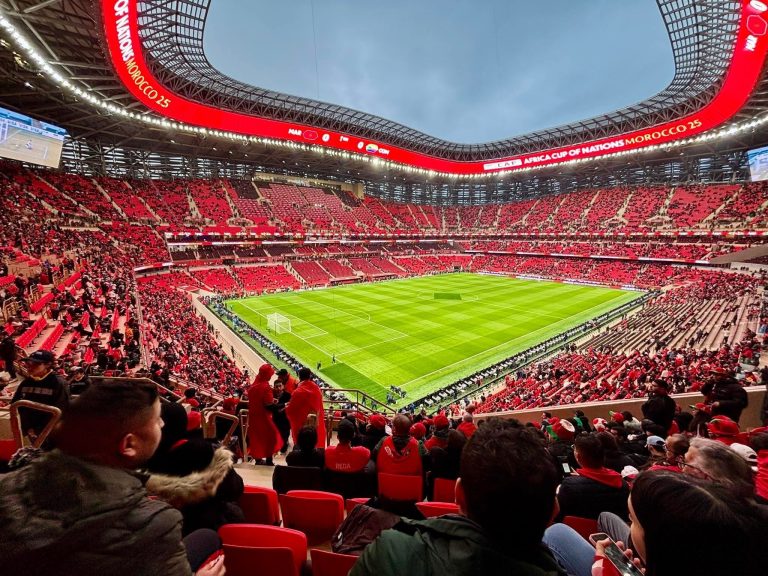
It emerges from the report that while the scale of construction projects within a six-year period requires rigorous monitoring, and even, where appropriate, support measures, it is worth emphasizing the existence of mitigating factors, such as the fact that several projects have already been launched (notably in Morocco, where several stadiums must be delivered for the 2025 CAF African Cup of Nations), the quality and completeness of the proposed plans and the commitment around these projects, which testifies to a high degree of confidence.
According to the results of its technical evaluation, the Morocco/Spain/Portugal 2030 candidacy obtains an average score of 4.2/5. Regarding the centenary celebration, according to the results of its technical evaluation, the Argentina/Paraguay/Uruguay candidacy obtains an average score of 3.6/5.
The Morocco-Spain-Portugal 2030 candidacy offers varied and interesting options for its stadiums, which number 20: six in Morocco, three in Portugal and 11 in Spain. This exceeds the minimum requirements (14 stadiums) set for the 2030 World Cup, providing enough flexibility to choose diverse and iconic venues across the three countries, the report highlights.
Among these 20 stadiums, one will be newly built and several will undergo major renovation work, indicates the document, adding that whatever their status, all have specific assets and are perfectly capable of hosting the World Cup.
Five of the six stadiums proposed by Morocco will also host CAN-2025 matches. All six must be built or renovated, but “appear to meet most or all of the requirements”, highlights the report, noting that Morocco presents in particular the Grand Stade Hassan II in Casablanca, which is expected to become the most largest football stadium in the world and work on which is already underway.
The report also notes that the stadiums of Santiago Bernabéu, in Madrid, Camp Nou, in Barcelona and the Grand Stade Hassan II in Casablanca have been proposed for the opening match and the final.
The period for organizing the centenary celebration by the Argentina/Paraguay/Uruguay trio was proposed for June 8 and 9, 2030. As for those proposed for the final phase, it should be held from June 13 to July 21, 2030, indicates the same source.
The evaluation reports concerning the organization of the 2030 and 2034 FIFA World Cups will be submitted for consultation to the Extraordinary FIFA Congress, which will be held on December 11 by videoconference, so that it can designate the host countries of the said competitions.