This article was automatically translated from HIBAPRESS, the Arabic version:
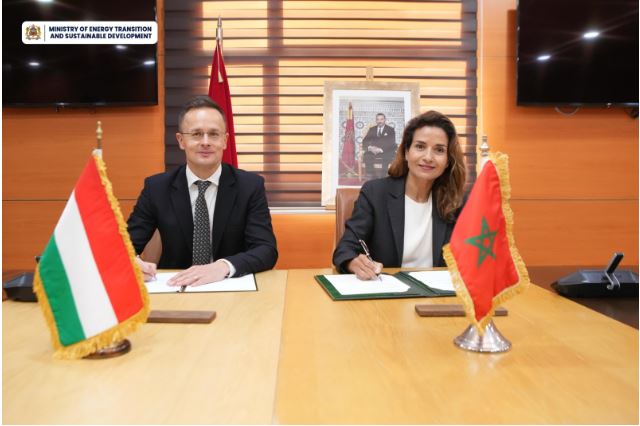
4 / 100 Powered by Rank Math SEO .rank-math-seo-score{font-family:sans-serif;position:relative;display:inline-block;height:96px;width:96px;margin:20px 20px 30px;text-align:center;color:#fff;border:none;border-radius:50%;background:#eee;-webkit-box-shadow:1px 1px 1px #bbb;box-shadow:1px 1px 1px # bbb}.rank-math-seo-score.before-content{margin:0 0 30px 20px;float:right}.rank-math-seo-score.after-content{margin:20px 0 30px 20px}.rank-math-seo-score.as-shortcode{display:inline-block}.rank-math- seo-score .label{font-size:12px;position:absolute;top:100px;left:0;display:block;width:100%;color:#979ea5}.rank-math-seo-score .score{font-size: 42px;font-weight:bold;line-height:42px;display:block}.rank-math-seo-score .outof{font-size:12px;font-weight:normal;line-height:12px;display:block;color:rgba(255,255,255,0.7)}.rank-math-seo-score .backlink{font-size:12px;position:absolute;top:-94px;left:-12px;display:block;visibility:hidden;width:120px;padding:8px 10px;-webkit-transition:.25s all ease; transition:.25s all ease;-webkit-transition-delay:.25s;transition-delay:.25s;opacity:0;color:#a8a8a8;border:none;border-radius:8px;background:#fff;-webkit-box-shadow: 0 4px 14px rgba(60,60,90,0.2);box-shadow:0 4px 12px rgba(60,60,90,0.15)}.rank-math-seo-score .backlink:after{position:absolute;bottom:-8px;left:calc(50% – 7px);width:0;height:0 ;content:”;border-width:8px 7.5px 0 7.5px;border-style:solid;border-color:#fff transparent transparent transparent}.rank-math-seo-score:hover .backlink{top:-74px;visibility:visible;opacity:1}.rank-math- seo-score .poweredby{font-size:13px;color:#a8a8a8}.rank-math-seo-score .poweredby a{display:block;font-weight:normal;text-decoration:none;color:#6372b6;border:none}.rank-math-seo-score.unknown-seo{background:#eee;background:linear-gradient (135deg, #b9b9b9 0%, #989898 100%);-webkit-box-shadow:1px 1px 1px #bbb;box-shadow:1px 1px 1px #bbb}.rank-math-seo-score.bad-seo{background:#f8b0a2;background:linear-gradient(135deg, #f8b0a2 0%, #f1938c 100%) ;-webkit-box-shadow:1px 1px 1px #e48982;box-shadow:1px 1px 1px #e48982;filter:progid:DXImageTransform.Microsoft.gradient( startColorstr=”#f8b0a2″, endColorstr=”#f1938c”,GradientType=1 )}.rank-math-seo-score.good-seo{background:#fdd07a;background:linear-gradient(135deg, #fdd07a 0%, #fcbe6c 100%);-webkit-box-shadow:1px 1px 1px # efb463;box-shadow:1px 1px 1px #efb463;filter:progid:DXImageTransform.Microsoft.gradient( startColorstr=”#fdd07a”, endColorstr=”#fcbe6c”,GradientType=1 )}.rank-math-seo-score.great-seo{background:#99d484; background:linear-gradient(135deg, #99d484 0%, #83c97f 100%);-webkit-box-shadow:1px 1px 1px #5ba857;box-shadow:1px 1px 1px #5ba857;filter:progid:DXImageTransform.Microsoft.gradient( startColorstr=”#99d484″, endColorstr=”#83c97f” ,GradientType=1 )}.rank-math-seo-score.template-circle .score{margin-top:22px !important}.rank-math-seo-score.template-square{height:80px;width:110px;border-radius: 12px}.rank-math-seo-score.template-square .score{margin:10px 12px;text-align:left}.rank-math-seo-score.template-square .outof{display:inline-block;margin-left:-8px}.rank-math-seo-score.template-square .label{font-size:13px;top:52px;left:14px;text-align:left;color:rgba(255,255,255,0.8)}.rank-math-seo-score.template-square .backlink{left:-5px}.rank-math-seo-score.template-square.before-content{margin-bottom:20px}.rank-math-seo-score.template-square.after-content{margin- bottom:0}.theme-twentytwenty .rank-math-seo-score{width:96px !important}.theme-twentytwenty .rank-math-seo-score.template-square{width:110px !important}.theme-twentytwenty .rank-math-seo-score.before-content{margin:0 auto 30px auto;display:inherit;float:none }.theme-twentytwenty .rank-math-seo-score.template-circle .score,.theme-twentytwenty .rank-math-seo-score.template-square .score{transform:translateY(22px)} HIBAPRESS-RABAT-MTEDD Madame Leila Benali, Minister of Energy Transition and Sustainable Development, received His Excellency Mr. Peter Szijjarto, Hungarian Minister of Foreign Affairs and Trade, as part of a working visit official. This visit is part of a dynamic of ongoing consultation and coordination between the Kingdom of Morocco and the Republic of Hungary, aimed at strengthening bilateral relations in various strategic areas. It also reflects the historical and dynamic ties uniting the two countries, based on common values of cooperation and a shared commitment to global environmental issues. On this occasion, the two parties explored new opportunities for cooperation, while reaffirming their commitment to encouraging mutual investments in areas related to the energy transition and sustainable development. In this context, the two ministers signed a Memorandum of Understanding (MoU) in the areas of the environment and sustainable development.
This agreement marks a new stage in the strengthening of the partnership between the Kingdom of Morocco and Hungary. It constitutes an opportunity for the two countries to share expertise, launch joint projects and promote an ecological and inclusive transition. And this, by establishing an ambitious framework for strengthened collaboration which aims to respond effectively to environmental challenges through several priority areas: the fight against climate change, the governance of sustainable development, sustainable waste management, the circular economy, the conservation of biodiversity, the energy transition and the development of natural resources.
In addition, the MoU provides for the development of collaborative projects in training and capacity building, the exchange of expertise in the areas of biodiversity conservation and energy transition, as well as the implementation of strategies innovative solutions for environmental governance and the circular economy.
It should be noted that this initiative is part of the continuity of exemplary cooperation between Morocco and Hungary. These relations, consolidated over the years, were particularly illustrated through the Joint Economic Commission, the last session of which was held in Rabat in October 2024. On the commercial level, Morocco is Hungary’s third economic partner in Africa, with trade reflecting a constantly growing dynamic. This partnership also extends to strategic areas such as education, scientific research, renewable energies and the atomic industry.