This article was automatically translated from HIBAPRESS, the Arabic version:
This article was automatically translated from HIBAPRESS, the Arabic version:
Heba Press – Abdel Latif Baraka
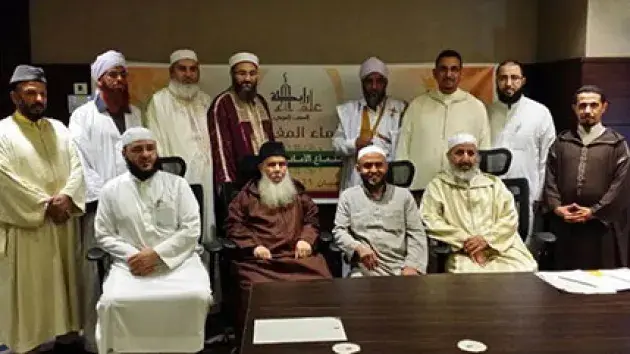
The Arab Maghreb Scholars Association issued a statement against proposed amendments to the Moroccan Family Code, saying the amendments contradicted Islamic law. In his statement, he warned against any legal action against these laws if they were implemented, which would require the Moroccan people to reject their implementation.
The “Arab Maghreb Researchers Association” was founded in Türkiye and includes personalities from Algeria, Morocco, Tunisia, Libya and Mauritania. But this association, accused of extremism, is not established in its countries of origin, which raises questions about the motivations for its establishment in Türkiye. It should be noted that most of the association’s members are known for their affiliation with the Salafist movement known as Sururism, which seeks to seize power, and that some of them have been linked in the past to links to extremist groups such as ISIS and Al-Qaeda. .
The Association strives to disseminate its ideas, and is seen by other scholars as seeking to sow discord and challenge traditional religious institutions. Many believe that this Association does not seek to serve Islam and Muslims, but rather is used as a tool to achieve extremist political goals. .
1. Religious extremism and avoidance of flexibility in jurisprudence
The Arab Maghreb Scholars League or “League of New Kharijites” sometimes seeks to adopt extremist religious positions that go beyond the social and cultural context of each country in the North African region. This rigor can lead researchers to move away from flexible jurisprudence adapted to lived reality, and to confront them with reformist trends calling for the renewal of religious thought. In a changing context like that of the Maghreb, where societies are experiencing rapid change, it becomes necessary for fatwas and religious jurisprudence to be flexible and innovative. Unfortunately, some positions of the Association show a rejection of any attempt to modernize jurisprudence in accordance with modern transformations, which leads to unjustified extremism and creates an environment of anxiety and tension.
2. Conflicts between the peoples of the region
The League of Arab Maghreb Scholars is not far from fueling conflicts between the peoples of the region, especially at a time when the Islamic world is suffering from external and internal threats. Some League positions could exaggerate doctrinal and sectarian differences among Muslims, further shattering Islamic unity in the region. Instead of working to promote unity and spread tolerance, the League could contribute to fanning the flames of differences, whether between Sunnis and Shiites or between different Islamic tendencies, which would make it part of the problem instead of be part of the solution.
3. Attitudes towards modern social issues
The League’s positions on modern social issues, such as women’s rights, civil marriage, and changing personal status laws, can appear rigid and pro-traditional. In Morocco, for example, the Moroccan Family Code is the subject of criticism from certain religious circles who see it as a concession to the West and a compromise on Islamic values. These positions, which reject legal reforms aimed at promoting women’s rights and achieving social justice, could spark controversy and conflict within Muslim communities, while these laws could represent a step towards social progress and justice. .
4. Neglecting the secular reality of certain countries
It is clear that some countries in the region or on the European continent, such as Tunisia and Turkey, where the association’s headquarters are located, have adopted secular policies or at least widely practiced the separation of religion and religion. ‘State. Despite this, some members of the League seem to ignore this reality and support certain secular regimes, which raises doubts about the sources of supply. In this context, support for civil marriage in Türkiye and the rejection of amendments to the Moroccan Family Code could lead, according to the statements. taken by the members of the League and the intransigent positions, to the tensions between the different political and religious movements, which accentuate the division between Islamist movements on the one hand, and secular or modernist movements on the other hand.
5. Negative impact on religious reforms
In light of the political and social challenges facing the Maghreb countries, there is an urgent need to carry out real religious reforms in order to renew religious discourse in a way adapted to the needs of the times. But the extremist positions of the League of Arab Maghreb Scholars could hinder this renewal, which would have a negative impact on the development of religious thought in the region. These positions, which are based on traditional understandings of religion, can limit the ability of scholars and thinkers to offer practical solutions to contemporary problems facing the Muslim community.
6. Influence the role of religious institutions
The Association of Scholars of the Arab Maghreb, to the extent that it represents an influential religious body in certain circles, can contribute to marginalizing the role of independent local religious institutions. Instead of supporting the role of local religious scholars in adopting moderate religious discourses oriented toward public interests, the Association imposes uniform views that may not reflect the reality of different societies. This singularity of opinion can damage the credibility of national religious institutions and reduce their ability to deal with local problems in a flexible and realistic manner.
7. Cause political and ideological divisions
Through its positions and declarations, the League can contribute to fueling political and ideological divisions between the different parties and movements in the Maghreb countries. This could have a negative impact on the political and social stability of the region, increasing tensions and making it difficult to find national consensus on vital issues such as democracy and human rights.
The Arab Maghreb Scholars Association, although a religious institution that aims to promote cooperation among scholars in the region, can sometimes become a source of extremism and sow discord between peoples. This association must seek to adopt more flexible positions that support Islamic unity instead of creating divisions, and strive to interact with social and political changes in a positive and constructive manner.