This article was automatically translated from HIBAPRESS, the Arabic version:
This article was automatically translated from Hibapress, the Arabic version:
Heba Press -Ahmed Al -Masader
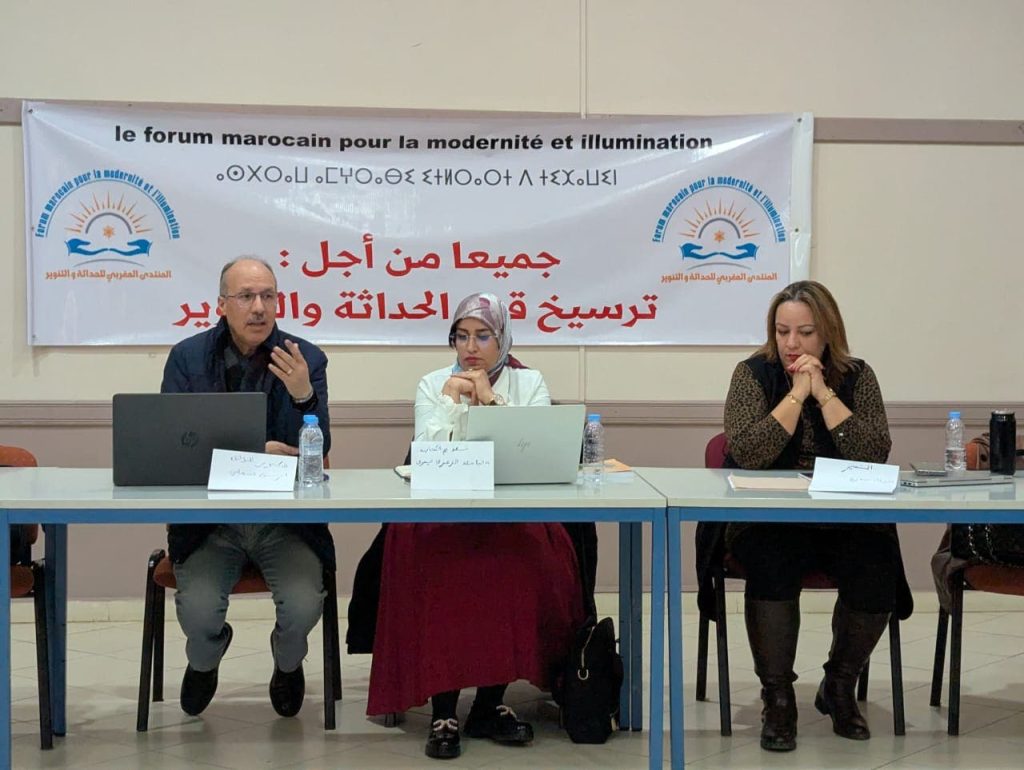
The Moroccan forum for modernity and illumination organized an intellectual meeting yesterday, Saturday February 22, in the space of the collective fabric in Oujda, during which the book “Religion in Moroccan Society, a sociological reading of the city of ‘Oujd the millennium as a thousand model on the ground to study the manifestations of religiosity, not as a doctrine, but as practices and rituals governed by the collective spirit of the inhabitants residents.
After a presentation and presentation of the contents of the book, conductive by the forum member of the researcher yousry al -zaari, and giving the word after that to the expectations, which contributed to the interventions and the analyzes and interpretations it presented it presented and The subject’s link and its interference in various social, anthropological cultural aspects and politicians.
The word was treated with the author of the book, Dr Idris Al -Senhaji, to interact with the aforementioned interventions, where he explained that the book contains a set of conclusions and conclusions, on religiosity as a practice in the community inevitable which was developed after the completion of a study in the field of a spatial and temporal space in Oujda during the period 2010 and 2015 with the update of certain data in 2019, where he indicated that the transformations that the city knew in its economic, demographic and spatial structures, it did not play a big role in the creation of a concrete change in the perceptions and religious practices of the population, revealing The deep gap between religious actors in public space and control it, in particular in terms of values and representations in the anti -field represented by supporters of modernity, progress and rationality.
To conclude Dr. Al -Sunhaji, this religion occupies a central position for the majority of residents of Oujda and the Moroccan society in general, as a powerful advertising and packaging tool.