This article was automatically translated from HIBAPRESS, the Arabic version:
This article was automatically translated from Hibapress, the Arabic version:
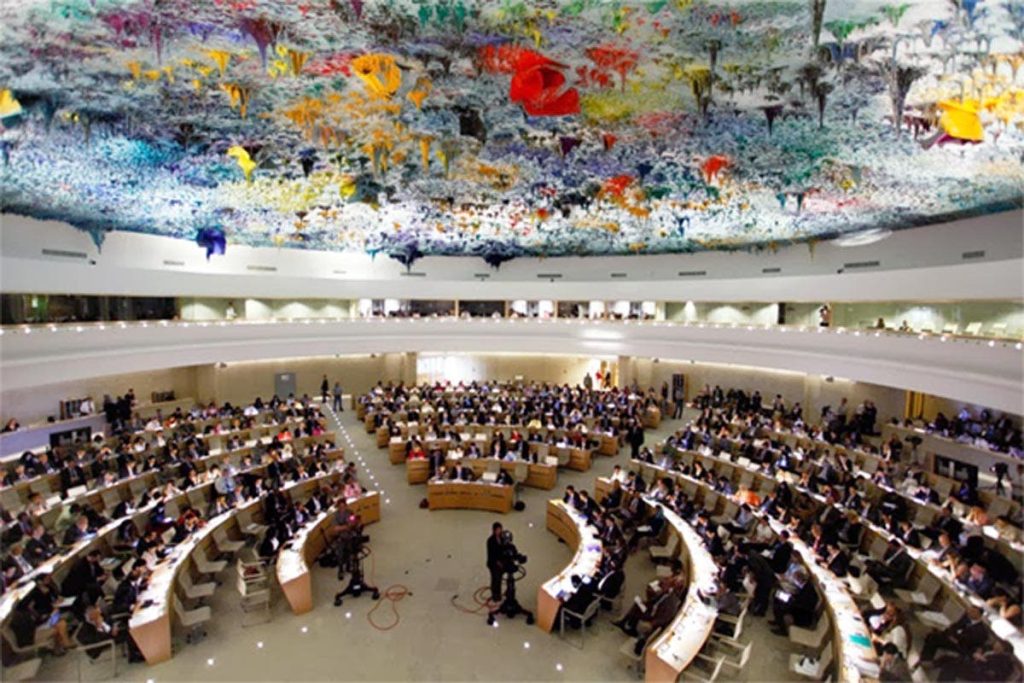
The ambassador, the permanent representative of Morocco in Geneva, Omar Zeniber, today, Thursday at the United Nations Human Rights Council, made an unprecedented decision on the role of women in diplomacy and their participation in the defense and the advancement of human rights.
This new step has been approved and adopted in favor of more complete diplomacy, in accordance with the United Nations Human Rights Council.
The Decision Submitted Within The Framework of the 58th Session of the Human Rights Council, With the Support of A Regional Group Led by Morocco, The Owner of the Initiative, Includes The Chilean, Spain, Maldives, Morrichus, Mexico and Slovenia, A Firm Priority for the Kingdom’s Foreign Policy Represh in the Advancement of Gender Equality at the Diplomatic Level, as well as in multilateral forums, by Ensring that Women are equal to the decision -Concles manufacturing.
The decision, which has broad support, is also devoted to the recognition of the basic role played by diplomatic women in the construction of a fairer, balanced and sustainable international system; It is a vision adopted by Morocco with a solid conviction for years in all the bodies in which it occupies a seat.
This initiative is a harmonious dynamic framework in accordance with the strategic directions of the kingdom, whether at international or national level.
Morocco has doubled its concrete initiatives to improve the position of women in public life, through voluntary policies and fundamental reforms, as evidenced by the continuous reform of the family code. This program aims to ensure equal opportunities between women and men in economic, social and institutional fields.
Internationally, Morocco today establishes its position as a firm and credible actor to support pluralism. By establishing gender equality at the center of the diplomatic debate, the Kingdom stresses that women’s rights are not only a sectoral question, but rather the cornerstone of equitable societies capable of consistency.
In his capacity as president of the Human Rights Council of 2024, Mr. Zeniber launched a consultant council concerned by gender equality with the Council in order to advance the representation of women and their leadership at the Human Rights Council, which represented an important advance for the United Nations Bureau in Geneva.
The adoption of this decision comes at a time when the need for a collective commitment to pluralism and representative diplomacy has become more urgent than ever. By raising the voice of institutional women in the field of diplomacy, Morocco seeks to devote a strong ambition in the context of its work within the Human Rights Council.
The decision “L.15” linked to “women, diplomacy and human rights”, which Morocco presented and adopted unanimously, aims today, Thursday, during the 58th session of the Human Rights Council in Geneva, to put systematic deficiency in the representation of women in the diplomatic field and multilateral forums at the heart of the agenda of the Human Rights, the necessities of participation in women.
The decision submitted by a group of Morocco led by the Via-Régional, which includes the Chilean, the Maldives, Mauritius, Mexico, Slovenia and Spain, highlights the lack of representation of women in diplomacy and multilateral forums, despite international obligations in this section.
The text is based on figures showing that women only occupy 20.7% of ambassadors around the world, and less than 10% of negotiators in peace operations, while the percentage of women of elected leaders in multilateral organizations has not exceeded 13% and no woman has occupied the position of United Nations Secretary-General.
The decision aims to put this systematic deficiency in the representation of women at the heart of the agenda of the Human Rights Council, as well as the need for complete, equal, concrete and safe participation for women, in addition to the need for structural transformation to achieve equality and equality in international decision -making circles.
This decision represents a historical step, because it highlights the importance of giving institutional nature to the International Day of Women in Diplomatic Work, which was celebrated for the first time on June 24, 2024 in Geneva, coinciding with the presidency of Morocco to the Council of Human Rights.
Conferences will also be included in the elimination of discrimination and structure obstacles that prevent women from participating and representing them in decision -making circles during a discussion day of women’s rights in the 59th, 62nd and 65th sessions of the Human Rights Council.
(With)
.Hibawts {display: inine-flex; Align-Eeetems: Center; Justification-contained: Center; Background color: # 25D366; padding: .5rem 1.25rem; Police size: 1st; Link-Height: 1.5rem; Police-point: 500; -Tw-tox-opacity: 1; Transition time:. 7s; Transition timing funiating: Cubic-Bezier (. 4.0, 2.1); Width: 49%; } .HIBAWTS SPAN {Color: #FFFFFS; } Padding: 10px; Border-Radius: 10px; Color: #FFF; Police: Bold; Display: inheritance; Marge pot: 5px; } Padding: 10px; Border-Radius: 10px; Color: #FFF; Police: Bold; Display: inheritance; Marge pot: 5px; } Padding: 10px; Border-Radius: 10px; Color: #FFF; Police: Bold; Display: inheritance; } Width: 3rd; Height: 2m; ADIGNE VERTICAL: Middle; Display: online block; Marge: Var (-google -News-icon-Margin); } Url (“https://ar.hibapress.com/wp-constrent background-size: auto; background-size: 2m 2em;} url (” https://ar.hibapress.com/wp-content/themes/hibapress/hiba.svg?6.52#sshare- Telegramgramgramgramgramgramgramgramgramgramgrantargramess-size: Auto; last news from Heba Bress on x