This article was automatically translated from HIBAPRESS, the Arabic version:
Hibapress
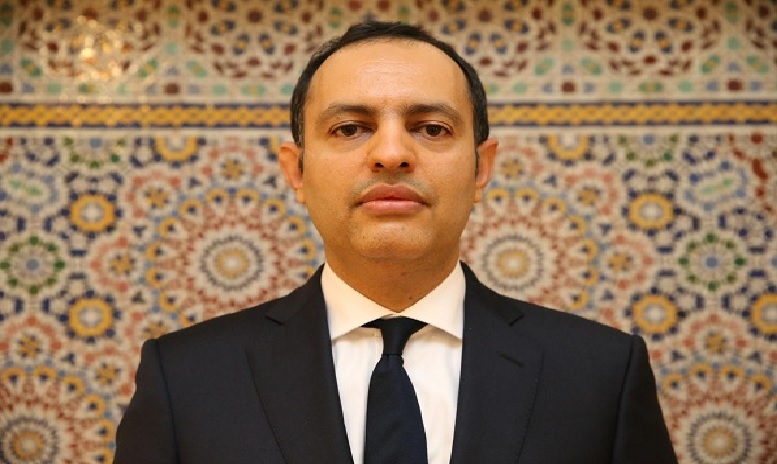
Fully invested in the fight against child labor, thanks to the positive results obtained at the national level, Morocco pleads for solutions which can be transposable on a global scale, said, on Wednesday in Geneva, the Minister of Economic Inclusion, the Small Enterprise, Employment and Skills, Younes Sekkouri.
“Morocco has done a lot and continues to make efforts to eliminate child labor. By welcoming the 6th international conference on the issue, in February 2026, he hoped to have a much more important impact on a global scale, “said Sekkouri at a high -level event marking the celebration of World Day against Children’s Labor of 2025 (June 12).
According to him, the efforts made by the kingdom have reduced child labor by 55 % since 2017.
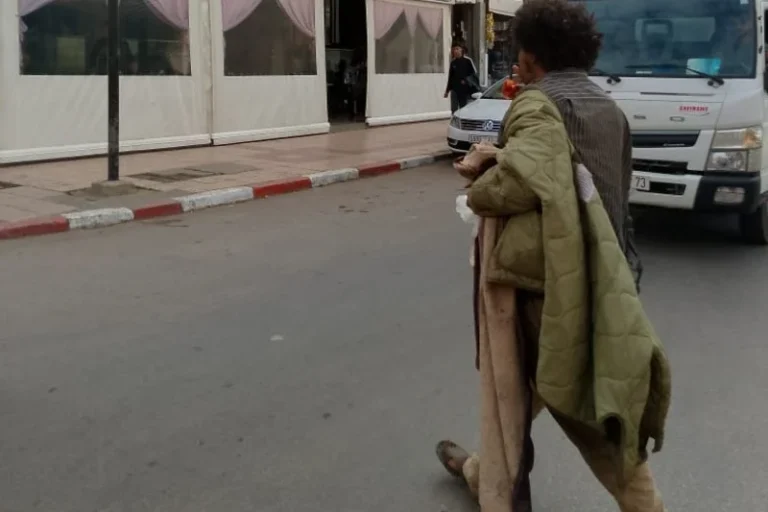
Indeed, among the 7,775,000 children aged 7 to 17, some 110,000 were engaged in an economic activity in 2023, which represents 1.4 % of this age group.
Among these 1.4 % of working children, 60 % were engaged with their families in activities, particularly in rural areas, he noted, specifying that although they are not under child labor, in the traditional sense of the term, these cases “should no longer exist”.
Mr. Sekkouri then reviewed the various levers which allowed Morocco to face the challenge of child labor, notably evoking “prevention”, through the generalization of social protection. This major and unprecedented project, launched by His Majesty King Mohammed VI, benefits 7 million children today, he said.
He also reported the government’s generalization of preschool education to all children aged four or over, a project carried out in collaboration with NGOs and designed according to a business model adapted to local realities.
The minister then dwell on the aspect of “governance”, which is “at the heart of the process if we want to achieve very positive results”. In this regard, he cited specific control and inspection programs, developed with the judicial system, as well as work on the regulatory and legal framework through the ratification of international conventions and protocols.
In addition, Mr. Sekkouri reported the difficulty of transposing the many local experiences at an international level. “This is a point on which we must focus on an international scale and determine the conditions allowing local experiences to gain momentum and cover the problem in a global way,” he continued.
In this regard, he highlighted the importance of multilateral partnerships which “must be encouraged in order to provide innovative solutions”.
Organized on the sidelines of the 113rd session of the International Labor Conference (June 2-13) by the Permanent Mission of Morocco and the International Labor Organization (ILO), this event knew the launch of the joint OIT-UNICEF report on the latest global child labor estimates.
The event, which has experienced the participation of several ministers in Latin America and Asia and senior European officials, brought together the constituents and the ILO partners to discuss the implications of the new estimates and worldwoman for child labor, and the measures necessary to accelerate progress.
It was an opportunity to reflect on the progress made and the urgent need of a stronger action to achieve global goals. On this occasion, the ILO called to the full ratification of its Convention No. 138 on the minimum age and to the implementation of its Convention No. 182 on the worst forms of children’s work.