This article was automatically translated from HIBAPRESS, the Arabic version:
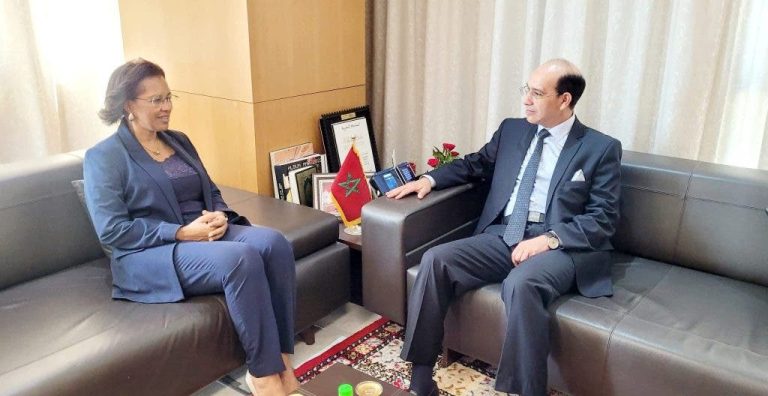
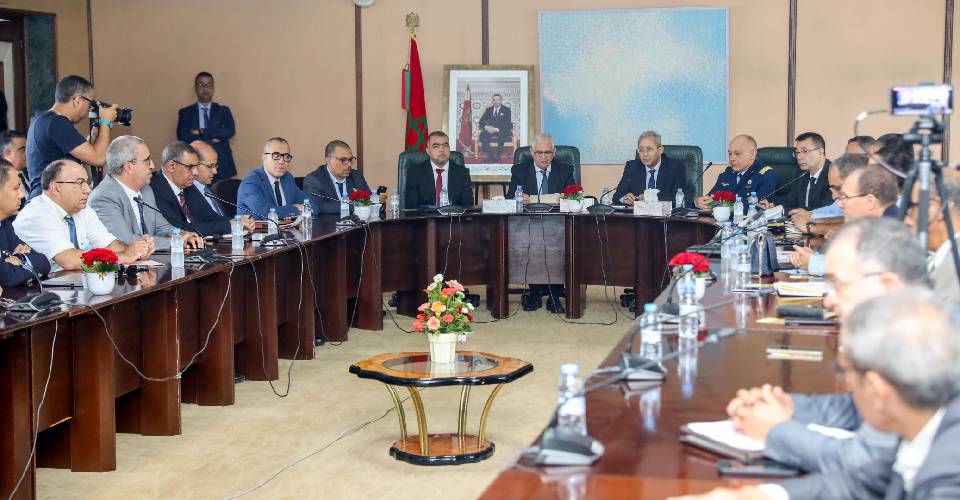
HIBAPRESS-RABAT-MEE The Directorate General of Meteorology (DGM) presented, Friday in Rabat, its annual report on the state of the climate in Morocco in 2024, during a meeting held in the presence of the Minister of Equipment and Water, Nizar Baraka.
Published by the DGM for the fifth consecutive year, this annual report provides an in-depth analysis of the evolution of the main climate indicators and highlights the extreme weather phenomena having had significant socio-economic repercussions during the year 2024.
Speaking on this occasion, Mr. Baraka said that this climate report has become, over the years, a scientific and strategic reference for many national and international entities, given its importance in the proactive identification of risks such as floods and drought and decision -making in public policies and government strategies. “The annual climate state report in Morocco is not only a government document, but rather a strategic mechanism that guides economic and social policies and supports sustainable territorial planning through in particular the orientation of private investments towards sustainable productive sectors,” he said. He added that environmental information has become an essential lever for planning and adaptation, hence the need to make it one of the decision -making tools. “This report is intended to be a call to action. He commits us all, public institutions, private sector, academics and civil society, to integrate climate information in our policies, our investments and our future choices, “he said. Furthermore, Mr. Baraka deemed it necessary to take advantage of the development of science in this area, citing in particular the strengthening of terrestrial and marine climate surveillance, the development of satellite surveillance systems and the growing AI use for the processing of climate data and the improvement of predictive models. Presenting a presentation on the results of the said report, the director general of meteorology, Mohamed Dkhissi, indicated that the analysis carried out in this context pointed out that 2024 was the hottest year ever recorded in Morocco, with an anomaly of national average temperature of +1.49 ° C compared to the normal climatological 1991-2020. This historic record, he added, is part of the trend of global warming, a trend marked by an increase in the world average temperature which exceeded, for the first time, the symbolic threshold of +1.5 ° C compared to the pre-industrial era, noting that the analysis of temperatures shows an increase in thermal anomalies, especially during the fall and winter seasons. “The months of January and November 2024 recorded the highest average temperatures ever observed for these periods,” he noted, noting that although summer was generally less hot than in 2023, several intense heat waves were found, with maximum daily temperature records beaten in several cities, including 47.7 ° C to Béni Mellal and 47.6 ° C in Marrakech. In terms of rainfall, the manager noted that the year 2024 experienced an average national deficit of -24.8 %, confirming the persistence of drought for the sixth consecutive year. Intense precipitation has however been observed locally, at the Atlas, Southeast, Oriental and Tata region, especially in September, but without inversion of the global trend, he continued, noting that these extreme episodes caused major floods and the reappearance of Lake Iriqui after half a century of drought. To this end, he noted that the agricultural hydrological year 2023-2024 has proven to be the darkest registered since the 1960s, with a 46.64%precipitation deficit, indicating that the lack of snow, high temperatures and rarity of rains have aggravated hydrological drought.
Through the development of this report, the DGM reaffirms its commitment to providing reliable climatic services, to support vulnerable sectors and to contribute to proactive national planning in the face of future climatic vagaries.