HIBAPRESS – Abdellatif Baraka
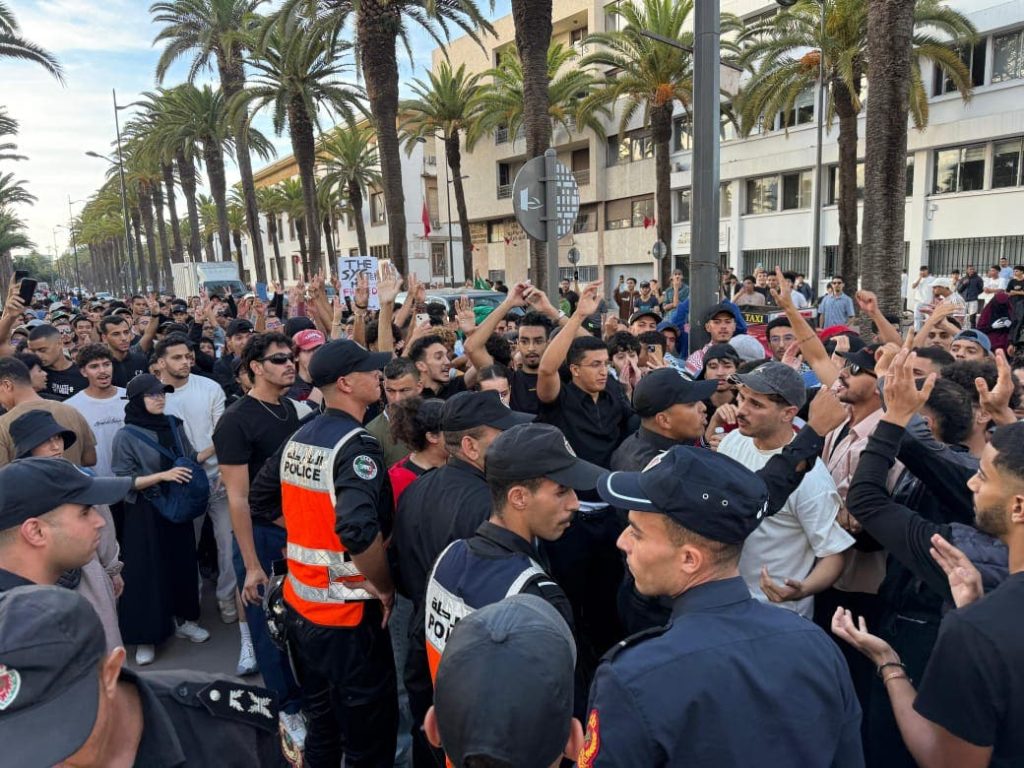
In a country historically known for its political and social stability, scenes of protests have recently returned to the forefront of events, after their spark ignited from in front of the walls of Hassan II Hospital in Agadir, which has become a symbol of what the protesters describe as the "deep imbalances" that the health system is experiencing.
Despite the intervention of local authorities by isolating some administrative officials and replacing them with others, the pace of protests has not calmed down, but rather witnessed extensions in other areas, fueled by intertwined factors that go beyond the health sector, to touch the depth of the deteriorating social and economic situation. – Health as a mirror of the crisis What started as protests against the conditions of hospitalization and administrative management quickly turned into a wide protest cry against the high cost of living and the deterioration of public services. The hospital was only the "fuse," but the real "gunpowder" was the chronic accumulation of social demands, from employment to housing, passing through health and education. Although the authorities showed a relatively quick response to the protesters' demands, what became clear was that the crisis is deeper than just a change in positions of responsibility, as the shaky trust between the street and the institutions needs more than patchwork decisions. – Parties in the crosshairs of criticism The level of tension also increased what is known as "political vacuum," where the leaders of the parties were busy with internal conflicts and media squabbles that do not reflect the size of the responsibility that these representative institutions are supposed to assume in guiding citizens and providing concrete solutions. In fact, some ill-considered media outings by political leaders contributed to deepening the feeling of resentment and loss of confidence. The protests, which were limited yesterday to specific demands, today carry silent political messages in their folds, revealing the depth of the gap between the political actor and its popular base, at a time when the country needs more cohesion and stability. – The Interior… a permanent presence to contain the crisis Amidst this scene, the role of the Ministry of Interior emerged as a pivotal actor in containing the waves of anger, through opening channels of dialogue, sending central committees to investigate the facts, and making instant decisions that reflect a will for reform. However, all these movements, despite their importance, cannot replace the need to make comprehensive and sustainable reforms that affect vital sectors, respond to the aspirations of young people, and restore the status of serious political action. – Stability is not bought with painkillers The level of awareness shown by citizens, despite their protests, is proof of their adherence to security and stability. But this stability, which is one of the most important gains of the country, cannot be guaranteed unless it is accompanied by social justice, real development, and a fair distribution of wealth, and before that, a responsible political discourse that restores trust to its place. The protesters' repetition of slogans in their demonstrations "Down with corruption" with the repetition of the national anthem shows concretely the cohesion between the people and the king in order to move forward with the reforms that King Mohammed VI initiated since he assumed the throne of his ancestors, and everyone agrees completely that the time of deep reforms from combating corruption through accountability is the only way forward towards building a strong Moroccan with its righteous men and women.