HIBAPRESS – Abdelatif Baraka
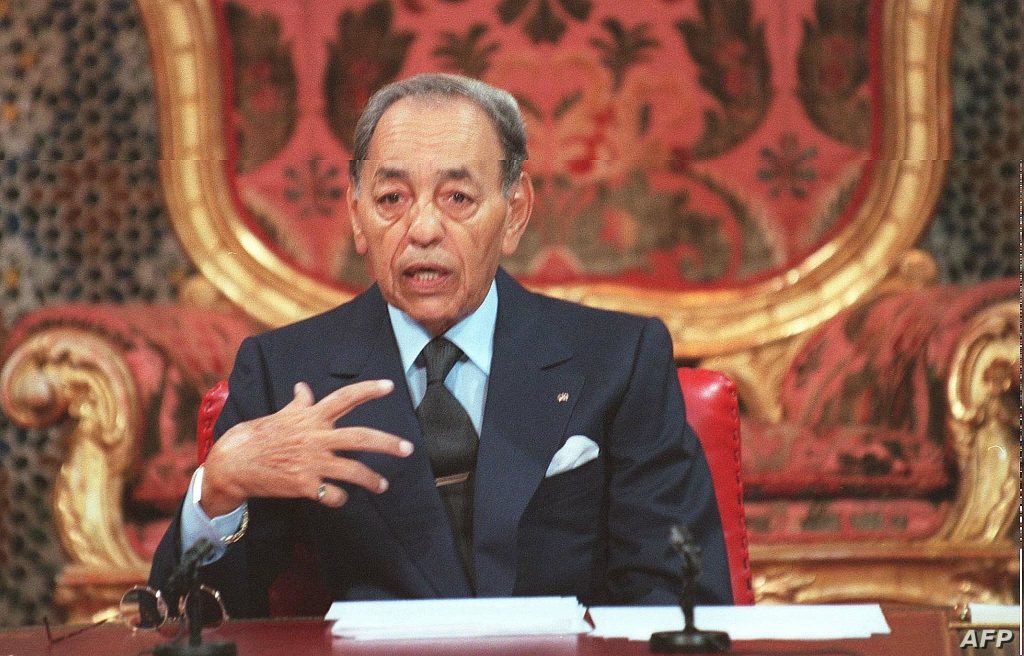
In one of the press interviews that was immortalized in the memory of Moroccans, a journalist asked the late King Hassan II a question, speaking about an official television channel of a country that described Moroccans as "fools". The King's response came, as usual, with the eloquence of the knowledgeable and the wisdom of the leader, saying in the meaning of his answer: "If madness is that a defenseless people liberate their homeland without weapons or money, and walk in its desert with the Quran in one hand and the national flag in the other, without a drop of blood being shed… then welcome to this folly, because it is positive folly."
Those words were not just a diplomatic response or a passing justification, but rather lessons in patriotism, politics, and dignity. Hassan II summarized in one sentence the spirit of a nation and the genius of a people who were able to prove to the world that sincere will is stronger than all armies and weapons. The Green March, to which the King called in 1975, embodied the peak of this "positive folly" that he spoke of. Hundreds of thousands of men and women answered the call of the homeland, carrying the book of God and the Moroccan flag, not the rifle or the cannon. A majestic scene drew a new image of the struggle, where the popular will turns into a weapon stronger than iron and fire. Between the wisdom of the ruler and the faith of the ruled, a Moroccan miracle emerged, taught in the books of history and politics. Hassan II only saw in "folly" a symbol of creative boldness, the one that pushes peoples to break the impossible, and turns the dream into reality. And the Moroccans, with their cohesion and unity, confirmed that loyalty to the homeland and the throne can rewrite geography without shedding a single drop of blood. Today, after decades of that bright moment, the echo of the King's words still resonates in the national memory. The "positive folly" that Hassan II spoke of is nothing more than deep faith in Morocco and its ability to rise no matter how the challenges intensify. And it is the same faith that his successor, King Mohammed VI, continued to build with a modern awareness and a developmental vision that extends from the depths of history to the horizons of the future. Thus, Morocco proves once again that when the wisdom of kings and the bravery of peoples meet, miracles are made and the features of a homeland are drawn, praised in forums, and used as an example in persistence and pride in identity.