HIBAPRESS
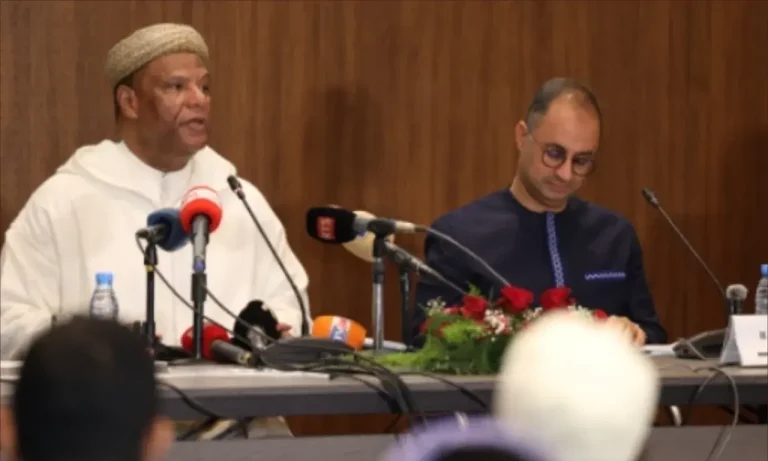
A consultative meeting was held today, Tuesday, at the headquarters of the Safi Prefecture, dedicated to exchanging views on preparing the new generation of integrated territorial development programs, with the aim of establishing a unified vision that meets the aspirations of the population in various social and economic fields.
This meeting, which was distinguished by the presence of the Governor of the Province, Mohamed Fata, the Secretary-General for Regional Affairs in the Wilaya of the Marrakech-Safi region, heads of external services, elected officials, authorities, and civil society figures, falls within the context of activating the high royal directives contained in the recent Throne Day speech, calling for the preparation of a new generation of integrated territorial development programs, taking into account local specificities and ensuring that citizens benefit fairly from the fruits of development. The meeting witnessed an extensive discussion that included interventions by representatives of the elected councils, external services, and civil society associations, who presented a number of proposals on developing the local development system, particularly in the areas of education, health, employment, roads, and water infrastructure, as well as encouraging initiatives aimed at benefiting young people and women in the rural world. In a speech on the occasion, the Governor of the Province affirmed that His Majesty King Mohammed VI continues to emphasize the need to move forward towards consolidating spatial justice and reducing disparities, especially in the rural world, highlighting that the aim of these royal directives is to enable all citizens to benefit from the fruits of development on an equal footing and in the various regions of the Kingdom. Fata pointed out that the implementation of these directives requires focusing on a set of priorities, including boosting employment, strengthening social services, and proactively managing water resources, in addition to carrying out territorial rehabilitation projects that take into account the specificities of each region and meet the aspirations of its residents. He concluded by saying that "achieving these goals requires will and comprehensive mobilization, and close coordination between the various stakeholders, according to a participatory approach that relies on the phased evaluation of the progress of projects, in order to ensure speed in implementation and effectiveness in execution, serving comprehensive and sustainable development in the Safi region." For his part, the representative of the Regional Investment Center in Marrakech-Safi (Safi Annex), Abdellah Jati, presented a detailed presentation addressing the most prominent development challenges facing the Safi region, in addition to reviewing the results of the projects carried out during the last 10 years (2015-2024), which constitute a base for starting to prepare the new generation of integrated territorial development programs. He pointed out that the region, despite its rich economic, natural, and human potential, faces challenges related mainly to connectivity and infrastructure, human resources, limited tourism offerings, promoting health services and the level of education, and the issue of water resources. Jati reviewed the results of the projects implemented in the province, which included, from 2015 to 2024, a total of 1281 projects with a total financial value of approximately 7260 million dirhams, covering the areas of equipment and infrastructure (74 percent), close social services (13 percent), and productive sectors (13 percent). This meeting concluded by emphasizing the need to continue this type of consultations at the level of the various territorial communities in the province, in order to ensure the involvement of all actors in formulating a joint development vision, and mobilizing the available potentials to serve comprehensive and sustainable development in Safi, in line with the high royal directives. For this purpose, it was agreed to establish reception cells in the various territorial communities in the province, to solicit development proposals and expectations from citizens, in addition to launching a digital platform for local and institutional actors, to enable them to express their opinions and suggestions, with the aim of formulating a collective and integrated vision for the new development program for the province.