HIBAPRESS – Abdellatif Baraka
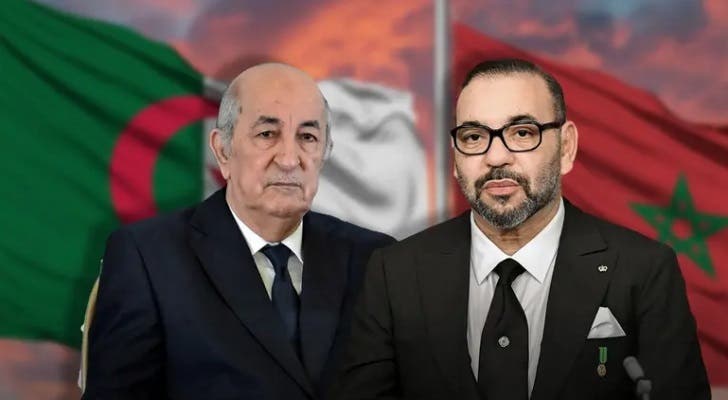
Despite their long-standing tensions, Moroccan-Algerian relations seem to be a mirror reflecting the contradictions of neighbors and a shared destiny more than conflict or separation. Between the past and the present, a thin thread of unfulfilled attempts to build trust connects the Agadir meeting in 1973 and the speech of King Mohammed VI on October 31, 2025, in which he called for opening a new page in relations between Rabat and Algiers, based on dialogue, trust, and good neighborliness.
From the past: The Agadir meeting and the beginning of estrangement
History recalls the Agadir meeting in 1973 as a milestone in the course of Moroccan-Algerian relations. At that time, the meeting brought together King Hassan II, Algerian President Houari Boumediene, and Mauritanian President Mokhtar Ould Daddah, in an attempt to restore warmth to relations that had begun to falter due to misunderstanding and lack of trust.
But the meeting, as recorded in Ould Daddah's memoirs, was cold and lackluster, and ended without achieving a real breakthrough. It seemed that estrangement began to penetrate between the two countries despite what united them in a unifying project to liberate the Sahara and build an integrated Maghreb space, similar to what the industrial "Ruhr" region was like between Germany and France after the Second World War.
That historical moment was a gateway to a period of coolness and apprehension, later crowned by an unannounced severance, then by repeated political and diplomatic clashes.
Chronology: From lost trust to postponed dialogue
Since the Ifrane Agreement in 1969, and then the border demarcation agreement in 1972, the late leaders Hassan II and Boumediene sought to overcome border and ideological differences. But political sensitivities and coup attempts soon thwarted those efforts, and the crisis of trust returned to the forefront of bilateral relations.
Mediation attempts were repeated: Mauritania, Saudi Arabia, Egypt… but the deep roots of the crisis were not in the Sahara issue, as is believed, but in the absence of trust and conflicting perceptions about regional leadership and the future of the Maghreb Union.
In contrast, popular awareness in the two countries remained attached to the bonds of brotherhood and common history. Many Moroccan and Algerian figures called for the need to overcome narrow political calculations in favor of a wider Maghreb project, stressing that any confrontation between the two countries is a "suicidal operation" in which there is no victor or vanquished.
The present: October 31st speech… towards a possible reconciliation
Half a century after the Agadir meeting, King Mohammed VI's speech on October 31, 2025, comes as a new call to revive trust and build a different future. The speech, in which the King addressed the Moroccan people, carried a direct message to Algeria: that dialogue is the only possible path, and that relations between the two countries do not need mediation, but rather a sincere will and belief in a common destiny.
The message was not only political but also symbolic; it brought back to the forefront the spirit of brotherhood that geography and borders tried to obliterate. The King, as his father did before, extended his hand again at a delicate regional moment characterized by security and economic fluctuations, which makes the Maghreb unity an inevitable strategic option.
From the Agadir speech to the speech of the future
The chronology extending from the Agadir meeting to the October 31st speech shows that political transformations are not measured by years, but by the boldness of initiatives. Today, the regional and global context has changed:
Africa is witnessing radical transformations in the balance of influence
The major powers, led by the United States, no longer view a Moroccan-Algerian rapprochement with suspicion, but rather see it as a cornerstone for the stability of North Africa.
The Maghreb peoples, exhausted by fragmentation, have become more aware that their future is dependent on integration and cooperation.
Towards a new horizon
The October 31st speech is not just a continuation of the policy of the outstretched hand, but a new launch for a possible relationship, built on the basis of mutual respect and common interests. History has taught us that crises are not resolved by severance, and that building trust is a long process, but it is possible if political will and historical courage are available.
Just as the Agadir meeting in the seventies of the last century was a first attempt to meet, the October 31st speech can be the beginning of a new path, moving the relationship from a stage of doubt to a stage of understanding, and from the burden of the past to the horizon of the future.