HIBAPRESS – Abdellatif Baraka
In a tragic global air show, the Dubai Airshow concluded on Friday, November 21, 2025, when an Indian fighter jet, the HAL Tejas, crashed during a maneuver in front of the audience, resulting in the death of the pilot and sparking an international debate about the safety of this model and the Indian strategy in the defense industry. The Indian authorities announced the opening of an official investigation committee to find out the circumstances of the accident.
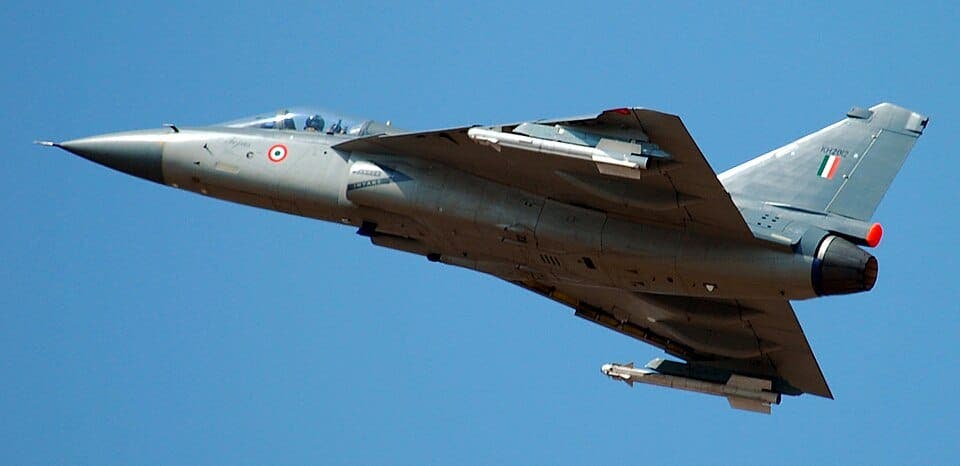
– First: A glimpse of "Tejas" "Tejas" is a light combat aircraft (LCA) developed by Hindustan Aeronautics Limited (HAL) with the aim of achieving defense independence and replacing old aircraft in the Indian Air Force. Its design features a delta wing and a single engine, which gives it a great deal of maneuverability. It has been equipped with elements that reduce its radar signature, in addition to seven loading points for carrying air-to-air missiles, air-to-ground missiles, anti-ship missiles, and laser-guided weapons. The pilot's seat is also equipped with a "Martin-Baker" ejection system, which allows for a safe exit even at low altitude and speed.
– Second: The production path and strategic importance The engineering of the "Tejas" project began decades ago, but its real end began with the allocation of huge funds by the Indian government to support local manufacturing. New Delhi sees this project as an essential element for building an advanced defense industry that relies on itself, instead of relying on foreign aircraft. "Tejas" plays an important role in modernizing the Indian Air Force, especially with the aim of replacing multiple old models and expanding with a balanced fleet of light and more advanced fighters. Its advantage lies in its relatively low cost compared to heavy fighters, as well as the ability to perform multiple tasks such as air combat, ground support, and even naval operations.
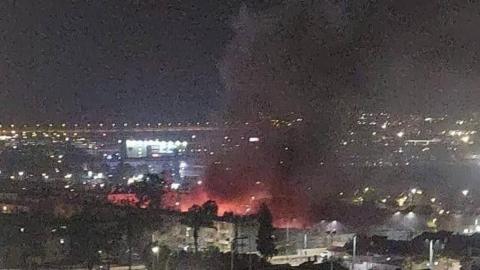
– Third: Details of the accident in Dubai and the ongoing investigation According to reports, the accident happened around 14:10 local time at Al Maktoum International Airport in Dubai, while the fighter was performing an air show in front of the audience. What eyewitnesses published and video footage shows the plane losing altitude rapidly, then descending sharply and crashing to the ground, producing a ball of fire and a high density of black smoke. The Indian Air Force (IAF) confirmed the accident and mentioned that the pilot suffered fatal injuries, and announced the formation of a Court of Inquiry to investigate the reasons that led to the crash. For its part, the UAE Ministry of Defense expressed its deep regret, and confirmed that the emergency and firefighting teams quickly attended the scene of the accident to extinguish the fire and secure the surroundings.
– Fourth: Beyond the accident.. Technical and strategic debate Before the accident, videos were circulated on social media indicating a leak of fluid from a Tejas aircraft during refueling or the show, and some sources referred to what they called "oil leakage." But the Indian Press Information Bureau (PIB) described this as false claims, and clarified that the fluid was actually condensation from the Environmental Control Systems (ECS) and the On-Board Oxygen Generation System (OBOGS) — which is a natural procedure when flying in a humid environment like Dubai. This debate highlights the tension between the Indian ambition to export this fighter internationally and the safety risks when presenting it in global shows in front of a huge audience. After this accident, the reputation of Tejas may suffer internationally, especially since the model aspires to be among the defense products that India sells to several countries.
– Fifth: Future repercussions From the Indian side: The investigation may make changes to the air performance protocols during shows or even in the design of the fighter if technical shortcomings are revealed. On the international level: The accident could affect export plans for Tejas, as interested countries may hesitate to order a plane whose reputation has been affected by a prominent accident in front of the audience. From a defense relations perspective: Cooperation between India and its partners in the defense market may witness additional pressures; And in return, pressure on HAL may increase to accelerate safety and delivery improvements. The crash of the "Tejas" fighter in Dubai constitutes a turning point in the career of this Indian national project. Despite the great ambition and technical achievements, reality reminds us that the aviation industry, especially the military, is not without risks. The ongoing investigation will be crucial to determine whether the accident was the result of human, technical, or environmental error, and it may also redraw the future of Tejas on the international scene.