HIBAPRESS – Omar Arrouzini (Barcelona Bureau)
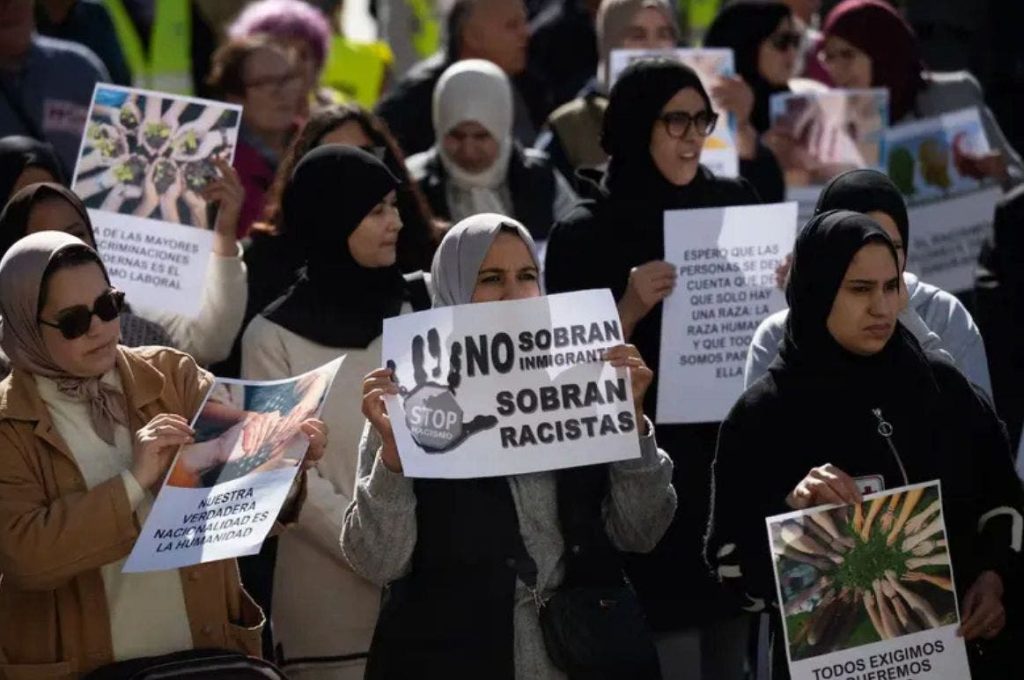
The Spanish arena has recently witnessed a worrying increase in discriminatory discourse directed against Muslim immigrants, amidst controversial political statements that place religious and cultural affiliation at the heart of the debate on citizenship and integration. This tense climate threatens the pillars of coexistence and the values of democracy upon which Spain has built its modern experience.
Former Prime Minister José María Aznar has sparked widespread criticism after statements in which he considered that immigration from Latin America "does not cause integration problems," in contrast to his description of Islamic immigration as a "real problem." This approach, based on religion and language, and not based on law or the concept of citizenship, is reminiscent of the discourse of the extreme right, and comes from a figure who has great political influence, which makes it more dangerous. When discrimination comes from high-ranking political figures, it gives a false legitimacy to the discourse of exclusion, and deepens the difficulties faced by Muslim communities in the paths of integration. It also paves the way for policies that may have an institutional discriminatory character against specific groups in society. In the same context, the Aliança Catalana party continues to strengthen its presence within the Catalan political scene, after moving from the margins of the arena to serious competition for major parties such as Junts per Catalunya. The party relies on its rise on attracting a part of the bases of Vox, Junts, and Partido Popular, through a discourse that rallies around the concept of "identity" and the rejection of immigration and the preservation of local culture. The growth of this hostile discourse is directly reflected on Muslim communities, especially those from the countries of the Maghreb. With each electoral round or inciting speech, immigrants find themselves required to prove their affiliation more than others, in light of a growing sense of social fragility. In the face of this dangerous trend, there seems to be an urgent need to promote a discourse that defends the values of equal citizenship, and rejects any classification based on race or religion. Initiatives that raise the voice of diversity must also be supported, and public speeches that encourage discrimination must be held accountable, in addition to empowering the participation of immigrants in public life without obstacles. The future of coexistence in Spain is dependent on its ability to confront the rising wave of hatred, and renew its commitment to the principles of equality and human dignity that form the basis of any strong democratic society.