HIBAPRESS
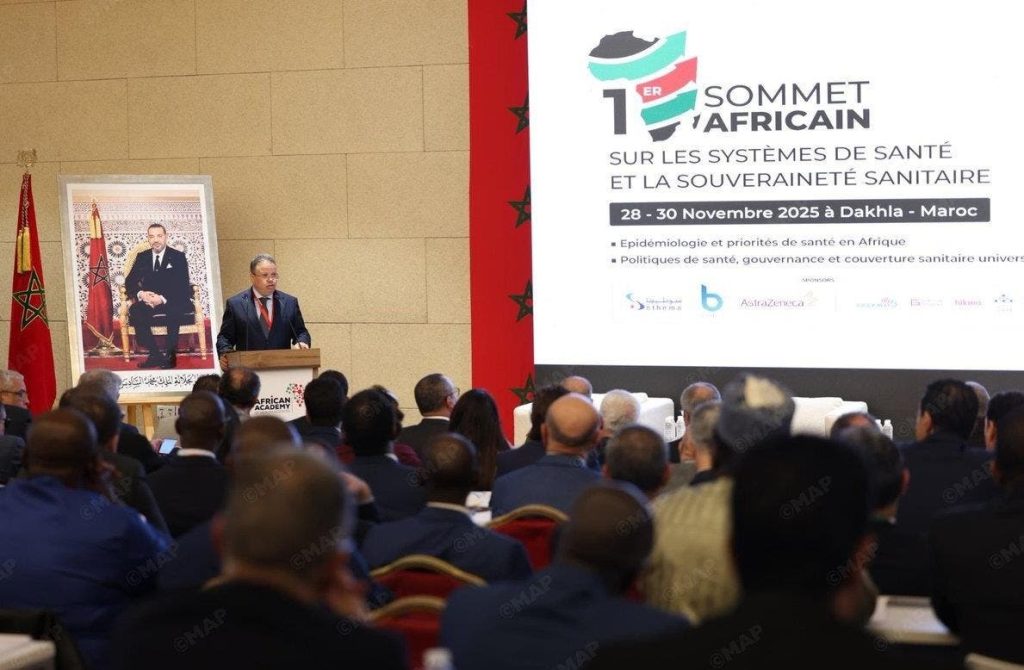
Participants in the first African summit on health systems and health sovereignty, held Saturday in Dakhla, called for strengthening primary health care and adopting a more structured governance for the health sector in Africa.
Experts and health professionals emphasized, during a panel discussion on organizational models and governance of health systems, that the reform of African health systems requires strengthening primary care, structured governance, sustainable skills, and adopting an approach based on equity.
In this context, Alex Riolexus Ariong, a professor specializing in epidemiology of infectious diseases in Uganda, highlighted that primary care and community health form the backbone of health systems in Africa, especially in rural areas.
He mentioned that countries that have invested in this vital field, such as Ethiopia, Uganda, and Morocco, have made significant progress in reducing maternal and child mortality, thanks to prevention, proximity, and early detection.
However, the speaker pointed out the persistence of major challenges such as weak funding, lack of human resources, and fragile infrastructure, calling on African decision-makers to have a firm political will to strengthen the first link of the health system.
For his part, the General Director of the Mohammed VI International University Hospital of Rabat, Ahmed Banana, reviewed the dynamic of transformation witnessed by the health system in Morocco, within the framework of Framework Law 22-06, which constitutes a break from circumstantial reforms in favor of a comprehensive reform based on territorial health clusters, expanding the health offer, and adopting a clear strategy for health sovereignty.
Banana stressed the Moroccan health system's ability to withstand, especially during crises such as the COVID-19 pandemic or the Al Haouz earthquake, highlighting its ability to absorb shocks, control interventions, and transform devices sustainably.
He also stressed the centrality of human capital, considering that training, retaining and motivating professionals is the basis of the transformation that has been embarked upon.
For her part, regarding the issue of cancer control, the Deputy Director General of the International Atomic Energy Agency and Head of the Department of Nuclear Sciences and Applications at the same agency, Najat Mokhtar, shed light on the role played by the agency in supporting African countries with limited resources, especially in the fields of imaging, radiation therapy and training.
She explained that the main barrier is not only the lack of equipment, but also the lack of qualified personnel to use and maintain this equipment, which leads to frequent breakdowns and delayed diagnoses.
As for Professor specializing in cancer surgery and breast diseases, Raja Aghzadi, she confirmed, regarding the issue of equity, that any reform in the field of health will not have an impact unless it is based on social justice, reminding that women remain the most affected by the limited access to health care in Africa, whether due to high maternal mortality, cultural obstacles, or a lack of diagnosis, especially with regard to female cancers.
It is worth mentioning that the first African summit on health systems and health sovereignty began on Friday in Dakhla, with the participation of about 200 African experts in person, in addition to a thousand participants remotely.
This summit, organized on the initiative of the Mohammed VI Foundation for Sciences and Health, falls within the framework of the dynamic led by His Majesty King Mohammed VI for African health sovereignty, based on innovation, cooperation, and capacity building.
(With MAP)