HIBAPRESS
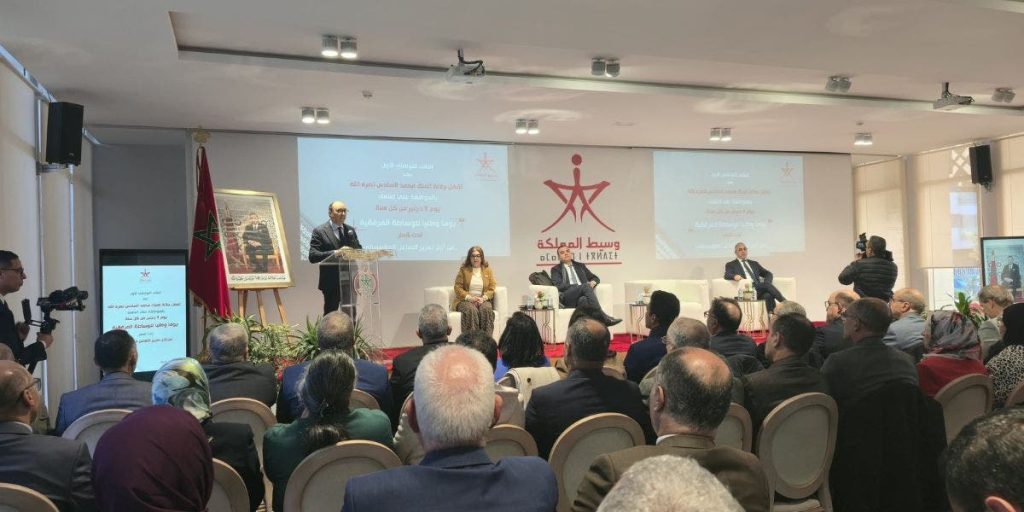
The Ombudsman of the Kingdom, Hassan Tarik, confirmed on Tuesday in Rabat that December 9th constitutes a symbolic founding moment in consolidating the idea of institutional mediation.
Tarik explained, during the opening of a communication meeting with the permanent interlocutors of the institution within the administration, that this date holds special significance as it is the first celebration of the National Day of Mediation, which was approved by King Mohammed VI, highlighting that its organization comes in the context of a royal confirmation of the need to strengthen communication between governance bodies and other institutions.
He added that the meeting, organized under the slogan "For Strengthening Institutional Interaction", constitutes a well-established tradition for activating consultation, strengthening coordination, developing communication channels, and ensuring the continuity of follow-up between the institution and its permanent interlocutors in the administrations.
He pointed out that this date falls within an institutional dynamic aimed at developing the roles of mediation, strengthening public dialogue mechanisms, and consolidating bridges of communication with users and various actors, noting that next year will be "the year of institutional mediation," by launching a series of programs and outreach, communication, and training activities.
In this context, the Ombudsman of the Kingdom highlighted the permanent interlocutor as a central link in the engineering of public service mediation and an essential partner within the good governance system, explaining that this category has strategic powers, including directing administrative interests to adhere to the spirit of responsibility, effectiveness, and transparency in their dealings with the institution, encouraging them to respect the rules of the rule of law, and the principles of justice and fairness, in addition to achieving equality and equal opportunities.
For his part, the Minister Delegate in charge of Relations with Parliament, the official spokesperson for the government, Mustapha Baitas, pointed out that this meeting is held in a context that recognizes a renewed institutional dynamic, based on the advancement of the performance of public utilities, strengthening bridges of trust between the administration and the user, as well as consolidating the state of law and institutions under the wise leadership of King Mohammed VI.
He added that the adoption of December 9th of each year as a national day for public service mediation, which is the date that coincides with the establishment of the institution of the Ombudsman in 2001, gives this date symbolic and legal connotations that deepen its presence in the institutional memory.
Baitas pointed out, in this context, to the issuance of the Prime Minister's circular regarding strengthening coordination and cooperation with the Ombudsman institution of the Kingdom, stressing that it is "an acknowledgment of the vital role that this independent national institution plays in consolidating administrative mediation and settling disputes amicably".
This meeting aimed to present the outputs of the 2024 annual report, which formed a qualitative evaluation opportunity, after completing the implementation of the institution's strategic plan (2019-2023), where it was issued in two books, the first of which deals with the reality of public service imbalances in light of the interaction of the Ombudsman institution and the response of the administrations, while the second provides a qualitative monitoring of the manifestations of these imbalances.
The communication meeting was also distinguished by the presentation of the "Mukhatib" digital platform, dedicated to exchanging correspondence between the Ombudsman institution of the Kingdom and the permanent interlocutors in the administration, in a move that aims to keep pace with the digital transformations that the Moroccan administration is witnessing.
This platform also allows the institution's employees in charge of handling grievances to record correspondence related to the exchanged files and ensure their direction to the relevant administrations, while enabling permanent interlocutors, or those representing them, to submit answers within reasonable deadlines.