HIBAPRESS – Tetouan
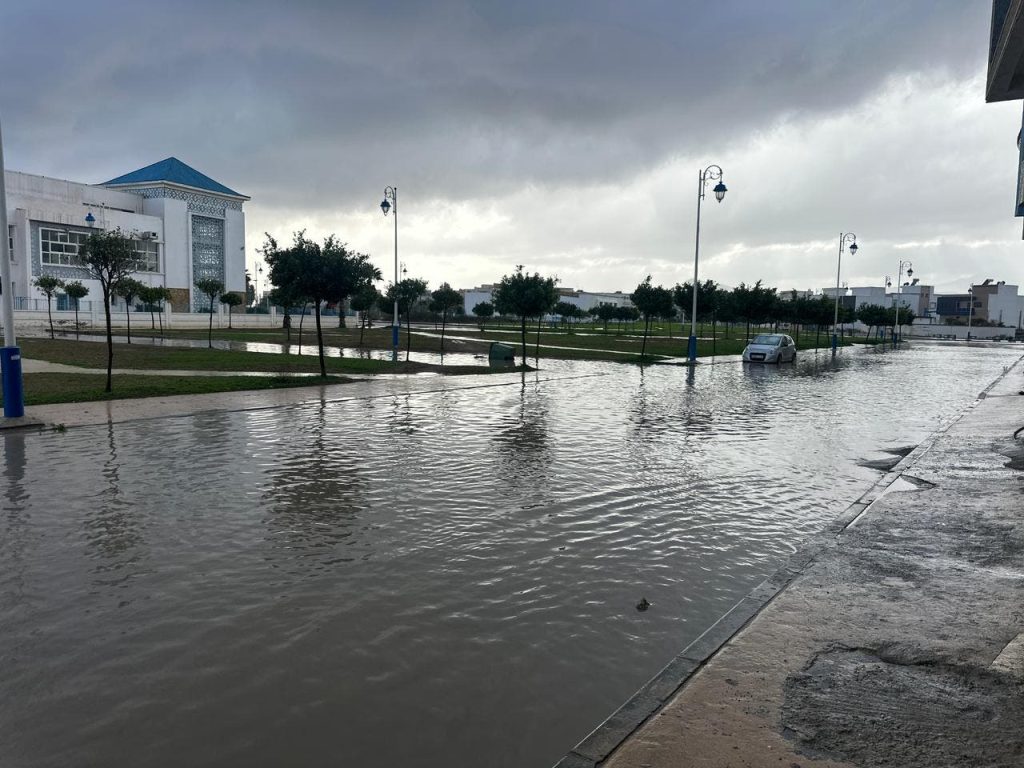
Mohamed Ashkor, the regional coordinator of the Youth of the Constitutional Union Party in the prefecture of M'diq-Fnideq, confirmed that the Am Kalthoum neighborhood in the city of Martil is experiencing a tragic situation resembling "Qandahar," despite the availability of three official agreements that were supposed to contribute to breaking its isolation and ending years of marginalization and exclusion.
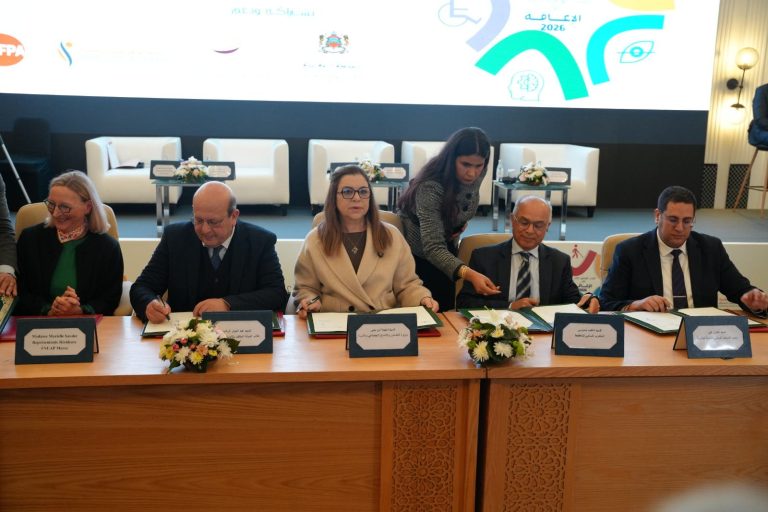
Professor Mohamed Ashkor says that the Martil community council approved a special agreement project to implement a complementary program to rehabilitate the city of Martil, within the framework of the framework agreement signed in 2009, clarifying that the Ministry of National Territorial Planning, Urban Planning, Housing and City Policy allocated a financial envelope of 22 million dirhams for this program for the benefit of five communities: Martil, M'diq, Fnideq, Al-Aleen, and Belyounech. Professor Mohamed Ashkor adds that this amount was decided to be distributed over four tranches extending between the years 2024 and 2027, at an average of 5.5 million dirhams per tranche, with a total amount of 11 million dirhams allocated for the years 2024 and 2025, and the agreement was approved during the February 2025 session. However, and until now, no actual action has been taken on the ground, except for taking celebratory photos with the Minister, without any tangible effect on the neighborhood or its residents. Professor Mohamed Ashkor points out that the president of the Martil Community Council, Mr. Mourad Amniwal, had previously confirmed his intention to give priority to the neighborhoods specified in the agreement, namely Al-Aghras, Ahriq Al-Wad, Al-Maleh, Al-Rmailat and Al-Sawani, with the need to open up to the rest of the under-equipped neighborhoods, and he confirms in this context that the Am Kalthoum neighborhood is one of these neighborhoods, despite the fact that it contributes significantly to the community's budget through construction permits and service fees. Professor Mohamed Ashkor highlights that the Tangier-Tetouan-Al Hoceima Regional Council allocated only 7 million dirhams to prepare the division of the Am Kalthoum neighborhood, as it is part of the city of Martil, considering that this amount is still insufficient given the size of the deficit and the deteriorating infrastructure that the neighborhood is experiencing. Professor Mohamed Ashkor adds that Article 9 of the agreement explicitly stipulates the possibility of expanding the complementary program, and it also allows the community to contribute by adding financial allocations to cover the repair and rehabilitation of neighborhoods not covered, but this provision, according to him, has not been activated to this day. Professor Mohamed Ashkor also confirms the existence of another agreement between the Martil community council and the M'diq-Fnideq prefecture council and the Tangier-Tetouan-Al Hoceima region, allocated to cities only, with a financial envelope of 20 million dirhams, which is equivalent to 660 million centimes for each community. Based on this, Professor Mohamed Ashkor emphasizes that the allocated appropriations actually include 11 million dirhams within the framework of the Ministry's agreement, and 660 million centimes within the cities agreement, in addition to 7 million dirhams allocated directly to the Am Kalthoum neighborhood by the region, and despite that, the speaker adds, the neighborhood has been living in catastrophic conditions since 2009, manifested in floods, destruction, the deterioration of infrastructure, the absence of basic equipment, and systematic marginalization. Professor Mohamed Ashkor, in a strong tone, questions the fate of these appropriations and their expenditure, demanding that the officials clarify the reasons for this exclusion, especially given that one party runs most of the communities in the M'diq-Fnideq prefecture, with the exception of the M'diq community, in addition to the presidency of the prefecture council by a parliamentarian belonging to the same party, which, according to his expression, was supposed to be a serious advocacy to break the isolation of the residents of the Am Kalthoum neighborhood. Professor Mohamed Ashkor concludes his position by confirming that the Ministry of National Territorial Planning also belongs to the same party, questioning the nature of the relationship between it and the residents of the Am Kalthoum neighborhood, expressing his rejection of any justifications for marginalization, and stressing that the advocacy will continue from various sites until the right to development and a decent life is achieved.