HIBAPRESS – Fez
Institutional and professional officials in the traditional crafts sector, along with academics and parliamentarians, confirmed that this sector is today at a crucial crossroads, in light of the profound transformations imposed by modern technology and market pressures, versus the urgent need to preserve the manual character and preserve the heritage identity of authentic crafts.
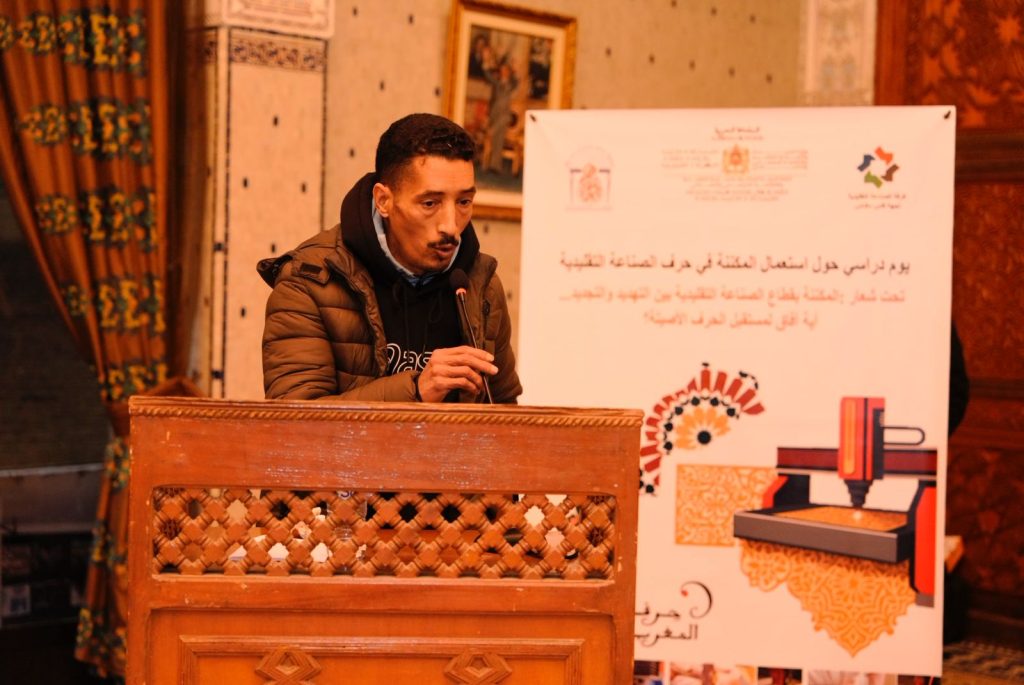
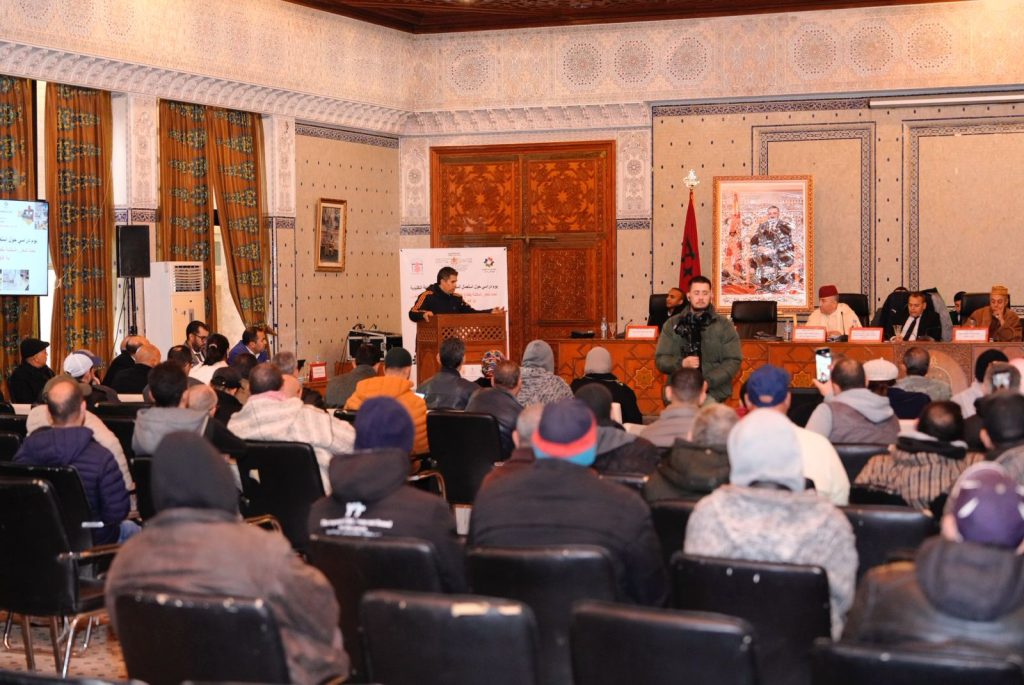
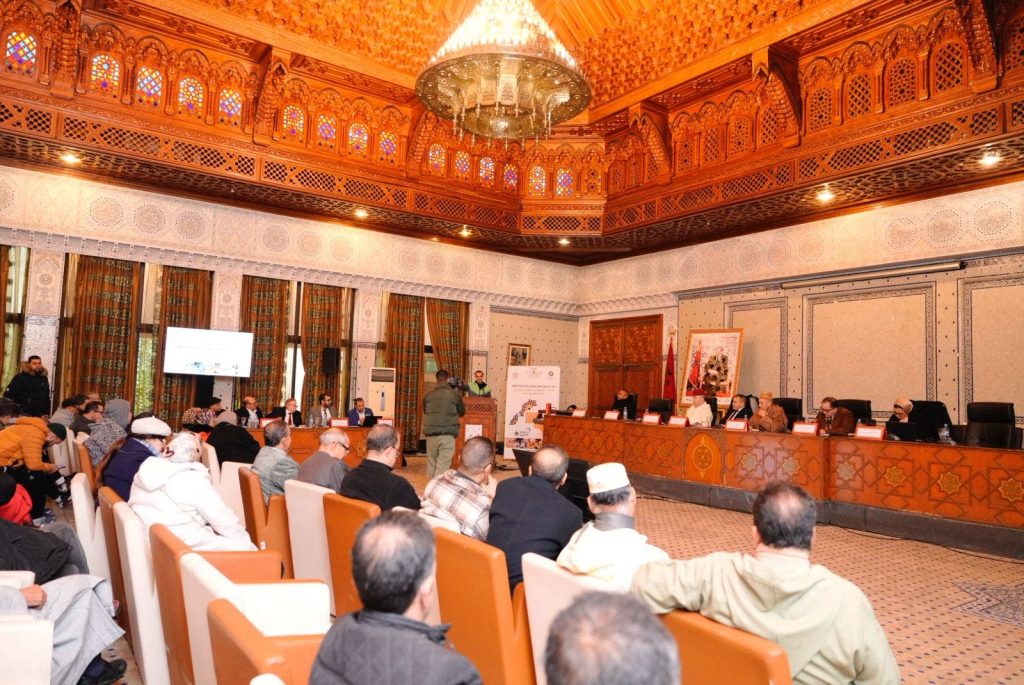
They confirmed that despite their recognition that mechanization has become a reality that cannot be ignored, they stressed the need to frame it with clear controls and standards. The speakers at the study day, which was hosted by the Fez City Hall last Friday, under the slogan: “Mechanization in the traditional crafts sector between threat and renewal… what prospects for the future of authentic crafts?”, and in the presence of regional officials and representatives of the administration, elected officials, universities, experts and traditional craftsmen, explained that the sector is going through a delicate and sensitive stage that requires a calm and responsible discussion about ways to reconcile the requirements of rapid technological development and the need to preserve the authentic manual character that forms the essence of the traditional industry and one of the pillars of national cultural identity.
In this context, Mouha Errach, Director of Heritage Preservation, Innovation and Promotion at the State Department in charge of Traditional Crafts and Social and Solidarity Economy, confirmed that the topic of mechanization falls within a general context in which the traditional crafts sector is witnessing profound transformations due to increasing demand, the development of consumer tastes, and increasing competition, which are factors that have prompted a number of actors to introduce machines and modern technologies in some stages of production, with the aim of increasing productivity and accelerating the pace of work.
However, this trend, adds Errach, despite the economic opportunities it carries, raises, in return, fundamental problems related to preserving the heritage identity of traditional crafts, especially with regard to preserving the manual skills inherited from generation to generation in various stages of production, as well as the legal and regulatory questions related to the limits of using mechanization, and the standards for distinguishing between the original traditional product and the industrial product.
Based on this awareness, the Director of Heritage Preservation, Innovation and Promotion stressed that the State Department has adopted a proactive approach based on a comprehensive and integrated vision based on valuing and preserving everything that is authentic manual through the adoption of the Moroccan specifications for traditional industry products, and the development of a quality mark system in its various components.
He also pointed to the establishment of a follow-up program to improve the quality of traditional products, which is based on the use of high-quality raw materials, and the integration of the design and innovation dimensions to keep pace with the tastes and requirements of the internal and external markets, in addition to adopting the standards related to maintaining the health and safety of the consumer and the manufacturer, and protecting the environment, in line with international trends in this field.
Errach considered that organizing this study day constitutes a space for responsible dialogue and scientific discussion between various stakeholders, from administration, elected officials, universities, experts and traditional craftsmen, with the aim of diagnosing the reality of mechanization in some crafts and recalling its heritage, economic and social effects and working to develop a joint vision that balances the requirements of technological development and the need to preserve the essence of the traditional industry as one of the basic components of national identity.
In conclusion of his intervention, he highlighted that the challenges posed today are mainly represented in ensuring the continuity of handicrafts that express heritage and identity, in parallel with the proper use and framing of mechanization, so that it turns into a positive element that serves the actors in the sector, preserves the artistic and symbolic value of the traditional product, and at the same time enhances its competitiveness and quality.
The same official expressed his hope that the work of this study day would be crowned with practical recommendations and realistic proposals, which would form a basic ground for building an integrated concept that frames the use of mechanization in the traditional crafts sector, in a way that ensures the protection of heritage, supports the traditional craftsman, and achieves sustainable development for this vital sector.
For his part, the Regional Director of Traditional Crafts and Social and Solidarity Economy, Mohamed Belkhayat, believes that the introduction of mechanization in a number of crafts in recent years, especially the use of laser machines in the traditional Zellige craft, copperware, carpentry, embroidery and others, was driven by multiple factors, including the rise in demand and the growth of competition, changing consumer tastes, in addition to the constraints related to cost and deadlines.
He explained that this path, despite the validity of some of its economic and commercial motives, produced worrying repercussions that touched the essence of the traditional craft and raised deep questions about authenticity, product quality, competitive fairness, and the continuity of inherited manual skills, which was translated into a public discussion and protest stands that expressed real fears within the circles of traditional craftsmen.
He stressed that the problem posed cannot be reduced to a binary position between acceptance or rejection, nor to a purely technical dimension, but rather it is a complex and multi-dimensional problem that affects the heritage, cultural, economic, social, socio-professional, legal and regulatory aspects, and requires a comprehensive and balanced approach.
In the same context, the head of the Chamber of Traditional Crafts, Naji Fakhari, explained that the phenomenon of using mechanization has become a competing and overwhelming alternative to a number of precise handicrafts, recalling the traditional Zellige craft, the Rasham, the Takhram, and the carving on wood and copper, which are authentic and ancient crafts that form part of the identity of the city of Fez, but are today threatened with extinction due to the encroachment of mechanization, which competes with them in the market and disturbs the craftsmen.
He affirmed that the Chamber of Traditional Crafts in Fez has taken the initiative, based on its institutional responsibility, to open channels of dialogue about this issue, not with the aim of rejecting mechanization absolutely, but rather to limit its unorganized encroachment, raise the problems associated with it, deepen research and discussion, open up to professionals and institutions, investigate the opinions of various stakeholders, and enlighten public opinion with the various manifestations of the topic and its repercussions on the cultural heritage.
He also stressed the need for the participation of young people, especially those who have dropped out of school, to enable them to learn these crafts and preserve the background and inheritance of professions and their craftsmanship for future generations, calling for the inclusion of national crafts in educational and training programs in national schools and institutes, and urging young people to engage in this process.
For her part, the Vice-President of the Fez-Meknes region confirmed that the transformations that the sector is witnessing are no longer limited to the means of production only, but have extended to include the behavior of customers who come to traditional products, in light of what she described as the development of "savage mechanization," which, according to her, requires "strengthening the defense of the traditional industry by employing all institutional relations and working to push the international system to make a clear distinction between what is the result of authentic handicrafts, and the products that have entered mechanization in one of their life stages."
She highlighted that the traditional industry relies in its essence on focus, craftsmanship and accuracy, unlike mechanization, which mainly relies on programming, considering that "the solution does not lie in generalizing mechanization, but rather in supporting the traditional craftsman, accompanying him, and providing the appropriate conditions that enable him to preserve this cultural heritage and pass it on to future generations."
In the academic dimension, the President of Sidi Mohamed Ben Abdellah University, Al-Mostafa Ajaali, confirmed that the university is present in this workshop in order to share experience, stressing that without the craftsmen, it would not have been possible to achieve any achievement in the field of scientific research on the cultural heritage that we are proud of, and the university president also considered in his intervention that the topic touches the essence of the transformations that the sector is witnessing and has clear social and economic dimensions.
Ajaali explained that mechanization has become an imposed reality due to technological development and the acceleration of transformations, but in return it poses a threat to the authentic character of the traditional industry, which requires the exchange of experiences with craftsmen, as they are the beating heart of the craft, in order to reconcile preserving identity and preserving heritage.
He affirmed that the university, which he heads, from its position as a key actor, puts at the disposal of this workshop what it has of educational offerings, human expertise and scientific research, to enable and strengthen the sector, stressing that the traditional industry is an ancient cultural heritage that reflects the authenticity of Moroccan society and its local specificity, and makes the city of Fez a true mirror of this cultural asset.
The speakers expressed their hope that the discussions would be crowned with practical recommendations and realistic proposals, which would form a ground for developing an integrated national vision that frames the use of mechanization in the traditional crafts sector, protects authentic crafts, supports the traditional craftsman, and ensures the sustainability of this vital sector in light of the rapid technological transformations.
This study day comes within the framework of a participatory approach that aims to establish a space for responsible dialogue that brings together state institutions, professionals in the traditional crafts sector, universities, experts, and parliamentarians, with the aim of building a joint and balanced vision that keeps pace with the transformations that the sector is witnessing, and reconciles the necessities of technological development and the requirements of protecting the national craft heritage and preserving the authentic manual character of traditional crafts.
The main goals of this study meeting are to diagnose the reality of using mechanization and modern machines in a number of traditional crafts, and to determine the scope of their spread and areas of use, in addition to opening an in-depth discussion about the problems that this transformation poses at the heritage, economic and professional levels, which allows anticipating the prospects for framing this path within a framework that preserves the balance between innovation and the preservation of the national cultural heritage.