HIBAPRESS – A. Mahyawi
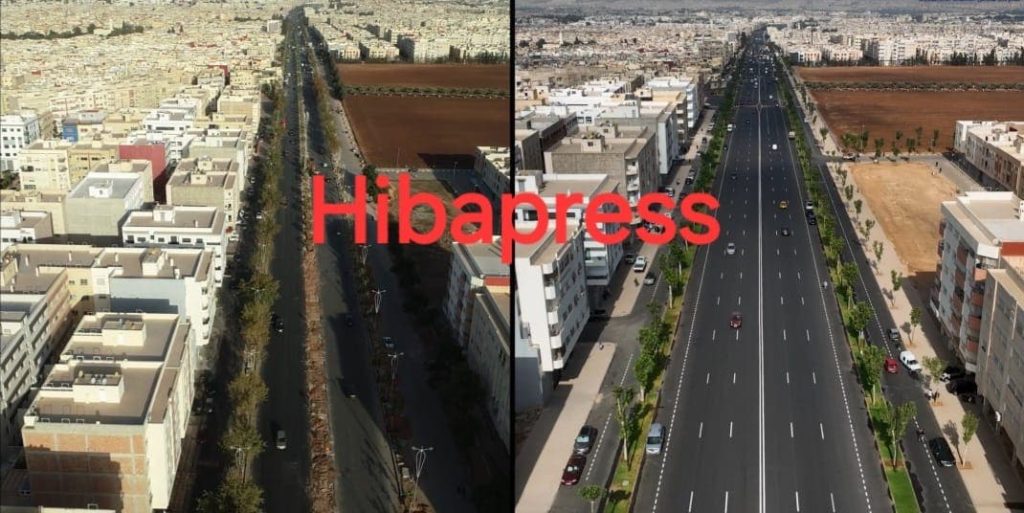
The Fez-Meknes region has witnessed, since the Fez Urban Development Company officially took over its tasks in the city of Fez and the region, a rapid dynamic in the field of urban rehabilitation and infrastructure development, as it has supervised the implementation of a number of major projects according to a precise technical approach, reflecting a high level of expertise and accuracy in managing structured projects.
The company's interventions have included the rehabilitation of the road network, the rehabilitation of urban spaces, the strengthening of basic infrastructure, in addition to projects with a strategic dimension, including the Grand Sports Complex in Fez, which is expected to constitute a qualitative lever to improve the quality of life and enhance the city's attractiveness, in harmony with the major national challenges, at the forefront of which are the preparations related to the 2030 World Cup.
Within the framework of expanding its field of intervention, the tasks of the Fez Urban Development Company are expected to include the city of Meknes, in order to complete a number of programmed projects, and ensure the continuity of structured projects. It is noted in this context that Meknes has witnessed, during recent years, a remarkable development dynamic, thanks to the field efforts led by the Governor of Meknes Prefecture, Mr. Abdelghani Essabar, through direct follow-up of projects, and strengthening coordination between various actors, which has positively reflected on the infrastructure and urban landscape of the city.
The interventions of Fez for development in Meknes come in the context of consolidating the gains and completing the development programs, through a technical and institutional approach that ensures quality and efficiency in implementation, and enshrines the logic of sustainability in urban rehabilitation.
However, this dynamic, however important, opens a legitimate debate about spatial justice within the Fez-Meknes region, as a number of cities and provinces of the region, such as the cities of Sefrou, Taounate, Taza, Ifrane, El Hajeb, Boulemane, Missour, and Moulay Yacoub, still suffer from a clear shortage in infrastructure, and a weakness in basic equipment, which deepens territorial disparities and limits opportunities for balanced development.
Local actors believe that the success of the intervention model in both Fez and Meknes should constitute a starting point for a comprehensive regional vision that takes into account the characteristics and needs of each province, and ensures a fair and equitable distribution of public investments, with the generalization of the technical expertise of the Fez Urban Development Company to the rest of the cities of the region, within the framework of a clear and integrated contract.
The main challenge today remains the transition from concentrating projects in the major urban poles to balanced regional development, which makes the Fez-Meknes region a space with integrated infrastructure, and capable of achieving the desired economic and social take-off.
In this context, the follower can only appreciate the work that the Fez Urban Development Company is doing, for its high professionalism, precise technical governance, and respect for deadlines and standards, making it a pivotal actor on which to build to expand the circle of urban rehabilitation and achieve territorial equity within the region.