HIBAPRESS – Rabat
The General Directorate of Meteorology has reacted to the report by the electronic newspaper "HIBAPRESS" regarding the confusion in the accuracy of weather alerts, in which it highlighted the delay and inaccuracy in the weather alerts, which resulted in broad precautionary decisions that included the suspension of studies and the suspension of economic activities in a number of regions.
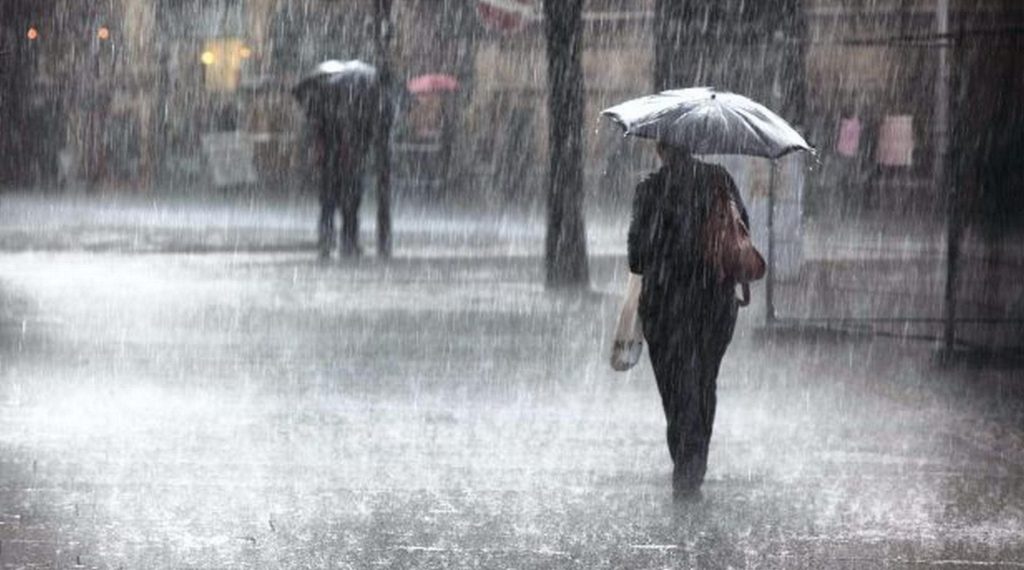
The Directorate said in its clarifications, which "HIBAPRESS" received, that the scientific data confirms that the weather alert, especially of the red level, "is based on a probabilistic assessment of the danger within a wide territorial area and within a specific time window, and not on the timing of the beginning of rain in a specific urban point." The Directorate added that "this approach is used internationally due to the irregular and local nature of Atlantic thunderstorms," noting that "the observational reality shows that the rainfall accumulations during only 12 hours (from Friday night to Saturday morning at 6:00) reached very important and exceptional levels in a number of areas classified within the red alert." Among these areas, according to the Directorate, "62 mm: Imouzzer (Agadir Ida Outanane), 59 mm: Taqi (Agadir Ida Outanane), 49 mm: Amskroud (Agadir Ida Outanane), 38.9 mm: Ikidi (Taroudant), 38 mm: Tidsi Nisendal, Tizmourt, Ouled Teima (Taroudant), 32 mm: Ait Baha (Chtouka Ait Baha), 31 mm: Imi Mgourn (Chtouka Ait Baha)". The Directorate considered in its clarifications that these figures are considered "high during a short period of time, and are scientifically sufficient to justify proactive preventive measures given the possibility of floods and the flow of valleys, especially in mountainous and semi-mountainous areas," stressing that "it is important to clarify that the red alert was not directed at the urban city of Agadir, but includes the region with its mountainous areas where the topographic characteristics lead to the amplification of rainfall compared to the coastal area." It pointed out that "this territorial distinction is essential to understand the differences recorded in the field between the city and the surrounding areas," continuing that the alert system relies on "the philosophy of prevention before the danger occurs, and not waiting until the worst scenario is realized," as it explained that "precautionary decisions are taken based on the increased probability of danger and its potential effects, which is the same approach adopted by global weather services." The General Directorate of Meteorology pointed out that the economic impact of these decisions may seem "heavy in some cases, but the priority of protecting lives remains the governing principle," reminding that it "adopts an internationally recognized early warning system and is considered a reference model on the African level, based on continuous monitoring 24/24, and is based on a national network of monitoring stations, radars, and satellite images, in addition to global and regional numerical models and expert human analysis. The Directorate issues weather alerts whenever necessary according to precise scientific standards." The Directorate affirmed at the end of its clarifications that it "works within the framework of regular institutional coordination with public authorities and various partners, in addition to international technical cooperation with the World Meteorological Organization and other bodies, in harmony with the approach of early warning based on risks and impacts," adding that this proactive approach is "an increasing necessity in light of the escalating intensity and frequency of extreme weather phenomena associated with climate changes, which makes early warning an essential tool to reduce human and material losses."