HIBAPRESS
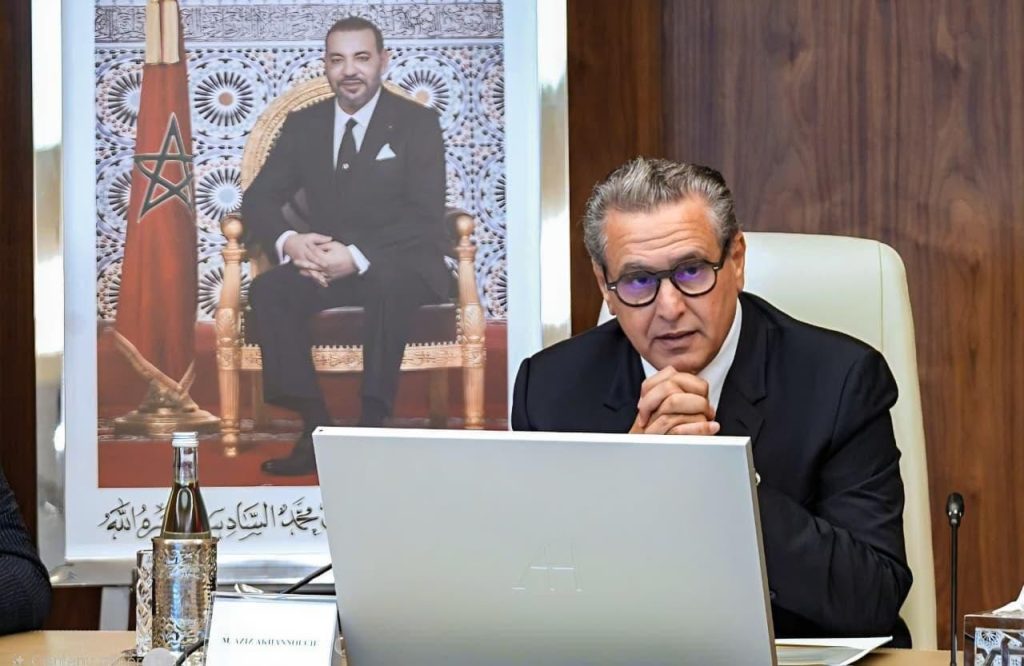
The Prime Minister, Aziz Akhannouch, chaired on Wednesday, January 7, 2026, in Rabat, a meeting of the steering committee for the reform of the national health system, dedicated to following up on the implementation of the various components of this strategic project, which enjoys high royal attention and constitutes one of the major pillars of the structural reforms taking place in the Kingdom.
The Prime Minister affirmed, at the beginning of the meeting, that the government continues, in full harmony with the high royal instructions, its comprehensive mobilization to establish the foundations of an integrated, just, and effective health system that puts the health of the citizen at the heart of its priorities and responds to the requirements and challenges of the stage.
The Prime Minister stressed the utmost importance of the involvement of all stakeholders, centrally and regionally, in successfully activating the territorial health groups, considering them a pivotal mechanism for advancing the national health system and providing practical and sustainable solutions to the structural constraints that the sector suffers from. In this context, he highlighted that the regional dimension constitutes a firm governmental conviction to strengthen the governance of the health sector and ensure functional integration and institutional harmony between the various hospital facilities within each region. The Prime Minister also called for accelerating the pace of implementing major health projects, foremost among which are the projects to build university hospitals.
During this meeting, the follow-up focused mainly on setting the necessary prior conditions for the implementation and activation of the eleven territorial health groups, whose decrees of actual commencement of their competencies were approved by the government council during December 2025.
Various organizational and institutional arrangements were reviewed to prepare for the start of the work of these groups, with the involvement of social partners, in order to prepare well for the holding of their administrative councils, heralding the actual and decisive entry into the implementation phase.
These territorial health groups will enable the preparation of integrated regional medical programs that respect territorial specificities, contribute to strengthening and diversifying the range of treatments, and improve the organization of health care pathways, which will be directly reflected in the quality of services provided to citizens.
The meeting also reviewed the progress of implementing the plan to unify the information system in the various health facilities across the regions of the Kingdom, in addition to following up on the progress of the emergency program to reform the health system, which is based on ten major projects that will improve the quality of health services in the near term and restore confidence in public health institutions.
The committee also reviewed the progress of the projects to rehabilitate health facilities, where it is expected that the two university hospital centers in both Laayoune and Rabat will be ready during the current year, while the work on ten other projects will be completed during February 2026, with an additional capacity of 1,430 beds, and the work on ten other additional projects will be completed by the end of 2026, with an additional absorption capacity estimated at 1,637 beds.
As for the rehabilitation of nearby health centers at the national level, the completion rate has reached 81 percent, after the rehabilitation of 1,130 health centers, with the aim of completing the work of 1,400 health centers by the end of this January. The second phase of this program will also be launched starting this year, which includes the rehabilitation of 1,600 nearby health centers, and 500 additional health centers will be rehabilitated during this year.
Present at this meeting were the ministers, Abdelouafi Laftit, Minister of Interior, and Amine Tahraoui, Minister of Health and Social Protection, and Azzdine El Mdaou, Minister of Higher Education, Scientific Research and Innovation, and Fouzi Lekjaa, the Minister Delegate to the Minister of Economy and Finance in charge of the Budget, and representatives of the General Secretariat of the Government, in addition to Lahcen Boubrik, the Director General of the National Social Security Fund.