HIBAPRESS – Barcelona: Omar Razzini
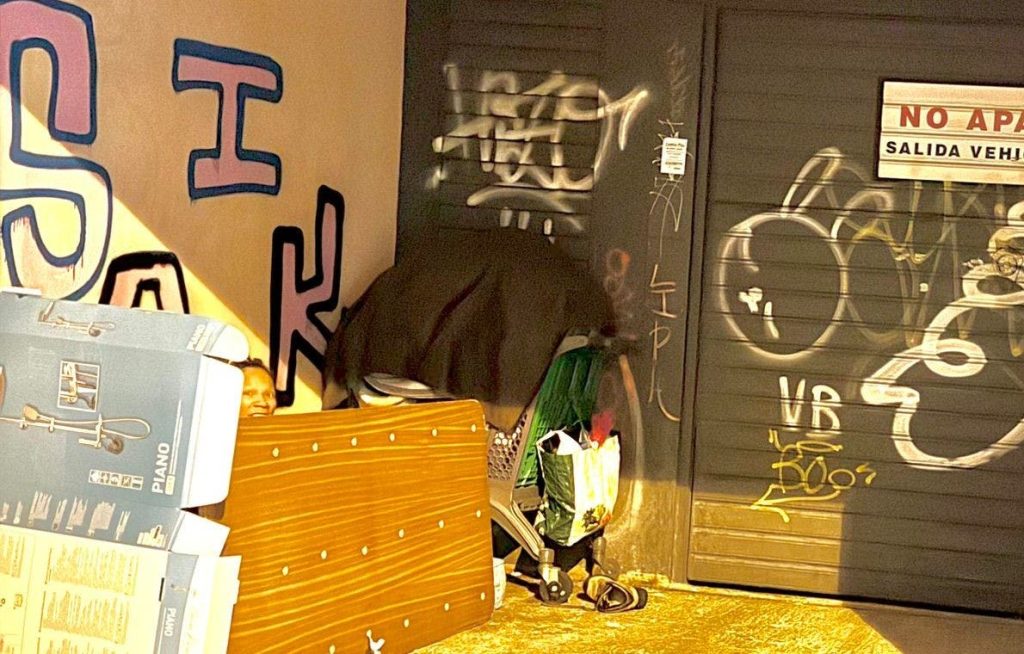
In an alley in the city of Barcelona, and under the shadows of walls covered with drawings and writings, a Spanish couple has been sleeping on the ground for more than two months, after they failed to find housing to shelter them. A shocking scene clearly reflects the depth of the housing crisis that is hitting the city, and turning the streets into a last resort for those whom the harsh rental market has rejected.
The couple, who live in this exposed place day and night, sleep on pieces of cardboard and dilapidated furniture, and surround themselves with what is available of simple luggage. Despite the harsh conditions, they try to maintain a minimum level of human dignity amid clear disregard from the concerned authorities.
Barcelona has also been suffering for years from a crazy increase in rental prices, driven by intensive tourism, the spread of tourist apartments, and a weak social housing supply. These factors have pushed thousands of families and individuals to the brink of homelessness, and the matter is no longer limited to immigrants or vulnerable groups only, but has affected Spanish citizens who work or were part of the natural fabric of society.
Social activists say that what this couple is experiencing is not an isolated case, but a stark example of a reality that is getting worse. Bureaucratic procedures, the long waiting lists for social housing, and the absence of urgent solutions make the street a forced option, not a choice.
This scene also raises urgent questions about the role of local and regional authorities in protecting the right to housing, which is one of the most basic human rights. Between political promises and long-term plans, the daily reality remains harsh for those who sleep in the open, in the heart of one of the richest and most famous cities in Europe.
The story of this couple is not just a passing news item, but a humanitarian cry that calls for urgent action. Barcelona, the city that attracts millions with its beauty and culture, hides in its corners the silent suffering of people who have lost their roof before they lose hope. The question remains open: How long will this silence last? And who is responsible for restoring dignity to those who have been deprived of their right to housing?