HIBAPRESS – Abdellatif Baraka
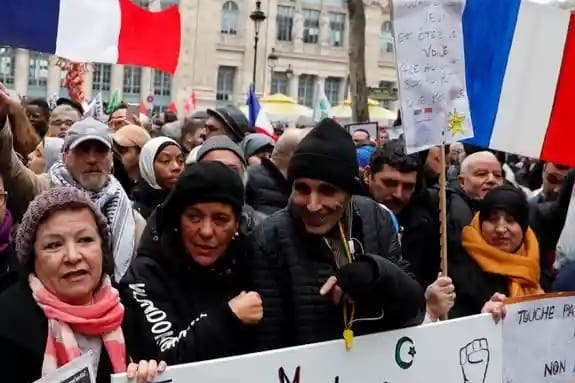
Dangerous data revealed by French MP Sabrina Sebaihi have brought the debate back to the heart of the political scene in France, after the existence of a website that monitors Muslims and identifies their places of residence and gatherings through interactive maps and classifications based on names and origins was revealed.
The issue is not just about a violation of privacy, but rather raises a direct political question: How is it permissible, in a state that raises the slogan of the republic and equality, to have digital platforms that practically put a category of citizens under surveillance? And, more seriously, why doesn't the level of official response move with the same speed and firmness that is used in other, less sensitive files? Sebaihi's warnings came in an already charged context, where the rise of the extreme right intersects with a gray official discourse about Islam and Muslims, making such sites a "digital arm" for normalizing collective stigmatization. When maps of neighborhoods are drawn according to names and presumed affiliations, the transition from monitoring to targeting becomes only a matter of time. Politically, this incident reveals a deep flaw in the state's approach to the issue of co-existence. Instead of protecting its citizens from the logic of sorting and discrimination, it finds itself obliged to justify silence or procrastination, at a time when attacks on mosques and veiled women are increasing, and a sense of fear is growing within a wide segment of society. The MP's move to write to the Minister of the Interior and demand that the file be referred to the judiciary reflects an understanding that the battle is no longer just legal, but political par excellence. It is a battle over who defines the identity of the "accepted citizen," and whether the republic will remain a unifying framework or will gradually slide towards the logic of permanent doubt in a part of its people. The joining of anti-racism organizations to the file, in turn, exposes the inability of traditional political balances to confront the escalating hate speech, and confirms that defending Muslims is no longer a sectarian issue, but a real test of the credibility of French democracy. In the end, the website does not seem to be just an isolated initiative, but rather a presentation of a deeper political disease: exploiting fear and identity in electoral calculations, and leaving Muslims in the position of "permanent suspect." The question that imposes itself today is not only who is behind these platforms, but who benefits politically from their continuation, and from the state's silence about them.