HIBAPRESS – Abdellatif Baraka
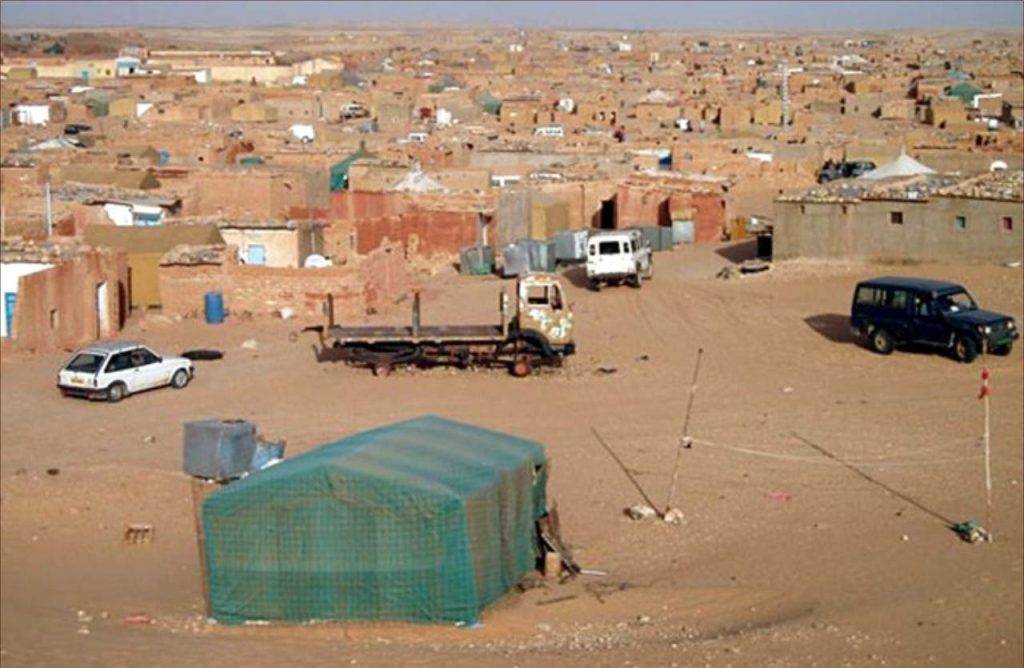
What is happening in the Tindouf camps is not a matter of "refugees" as is officially promoted, but rather a long-term collective detention, for which the Algerian state bears full political, legal, and moral responsibility.
Tens of thousands of civilians, including Moroccans forcibly detained, have been living for decades on Algerian soil without a clear legal status, without an official census, and without any basic guarantees of human rights.
– Detention without legal status
The Tindouf camps do not adhere to the logic of asylum as internationally recognized, as there are no nominal lists, no individual refugee cards, no freedom of choice, and no right to return or leave. This legal vacuum is not a coincidence, but a conscious political choice aimed at keeping the population in a vulnerable state, subject to employment, pressure, and bargaining.
The host state, represented by the Algerian military authority, has for years refused to allow a census of the camp population, in flagrant violation of international humanitarian law, and prevents any independent mechanism from monitoring the human rights situation within them, as if the camps were an area outside the world.
– The military above the law
The actual authority in Tindouf is neither civilian nor elected, but governed by a purely security logic, where people's lives are managed by top-down decisions, free expression is prohibited, and any attempt to refuse or demand rights is suppressed.
The testimonies of those fleeing the camps reveal a consistent pattern of restriction, punishment, control of humanitarian aid, and its use as a means of subjugation.
Here, a person is not viewed as a being with rights, but as a pawn within a geopolitical equation managed by the military from behind the scenes, far from any internal or external accountability.
– Moroccans forcibly detained
Within this reality, there are Moroccans detained in Tindouf for years, some of whom were born inside the camps without knowing their country, and some of whom were prevented from returning despite the presence of their families in Morocco. These are not refugees who chose to emigrate, but hostages of a harsh regional policy, deprived of their natural right to freedom, movement and reunification.
The continuation of this situation constitutes a serious violation of fundamental rights, and places Algeria in the position of direct responsibility for the detention of civilians on its soil, outside any recognized legal framework.
– Suspicious international silence
The most dangerous thing about the detention itself is the international silence surrounding it. Human rights slogans are raised everywhere, but when it comes to Tindouf, silence becomes the rule, and thousands of lives are left hostage to narrow political calculations, in flagrant disregard of human suffering that has lasted for decades.