HIBAPRESS – A. Mahyaoui
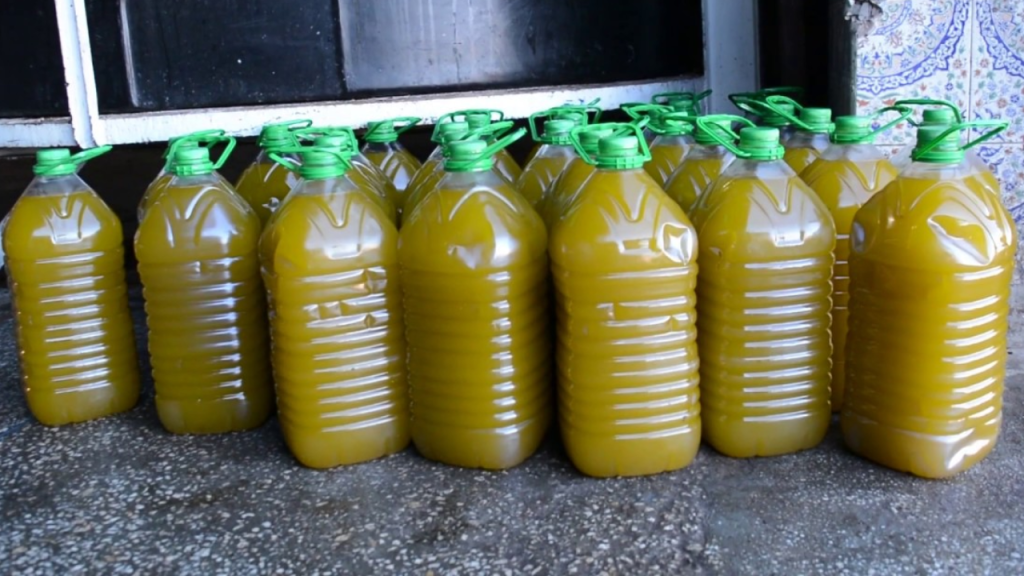
The olive oil markets in the Taza region, both at the pressing mills and commercial establishments, have witnessed a notable shift in the price curve during the current season, with a significant decrease recorded, reaching approximately 30 dirhams per liter in some mills, a decline described by professionals as unprecedented.
This decrease comes after a difficult period experienced by consumers during the past seasons, which were characterized by a sharp rise in prices, making olive oil out of reach for a number of families. This positive shift is attributed, according to sector professionals, to the abundance of production during the current season, especially in the Taza region, which is one of the most prominent olive-producing areas nationally. Interveners explained that the improved climatic conditions and the return of rainfall contributed directly to raising the yield and quality of the crop, which restored balance to the market and limited the speculation that characterized the past season, when the price per liter exceeded 100 dirhams due to drought and low production. Professionals added that this sharp decline exceeded all expectations, as initial estimates indicated a limited decrease, but the field data revealed an unprecedented abundance that overturned the equation, and imposed the logic of supply and demand away from the control of intermediaries and monopolies. While families have expressed their satisfaction with the return of "green gold" to their tables at reasonable prices, this situation raises questions about the sustainability of these prices, and their impact on the incomes of small farmers, especially in light of rising production costs, and the high cost of labor, whose wage reached about 200 dirhams per day, in addition to its scarcity during the harvest season. The future of olive oil prices remains dependent on national and international market developments, as well as the ability of various stakeholders to achieve a balance that guarantees the interest of the consumer without harming the income of producers, in an exceptional season that has restored the importance of olive oil as an essential product on the Moroccan table.