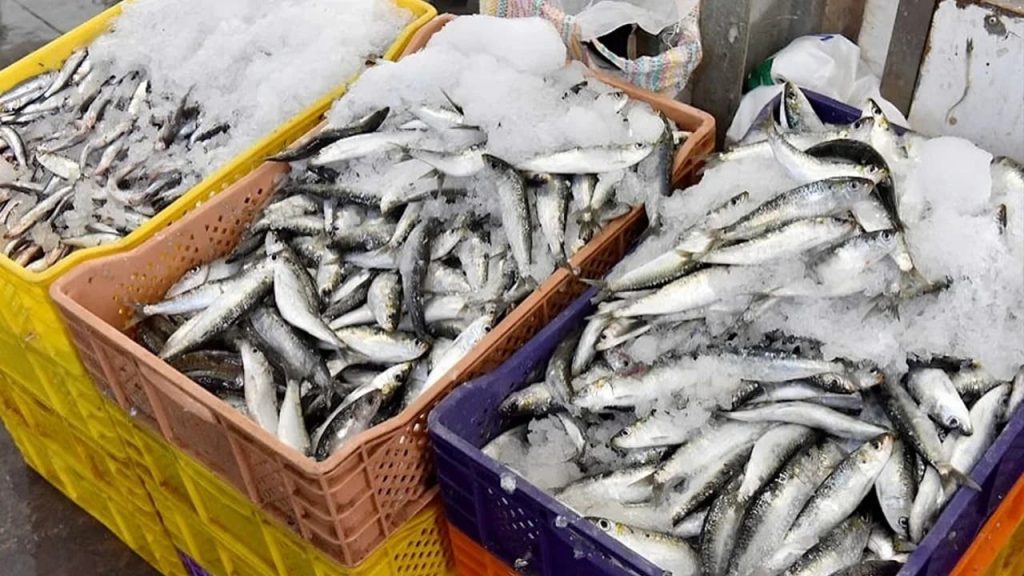
HIBAPRESS – Rabat. The State Secretariat for Maritime Fisheries revealed that the decision to restrict the export of sardines aims to give priority to the national market, in order to guarantee its supply with sufficient quantities, especially during the month of Ramadan, which witnesses a significant increase in consumption, stressing that this measure is temporary and limited, and does not affect the continuity of industrial activity or value chains.
The same sources explained that the decision came into effect as of the first of February of this year, to last for a year, and concerns frozen, fresh and chilled sardine products, with the aim of strengthening the supply of the domestic market. It added that this decision falls within the context of challenges related to the decline in the abundance of sardines, and the recorded decrease in surface fishing, as a result of climate change that has negatively affected the availability of this product, and caused the migration of a number of fish, pointing out that the measure does not include the rest of the other fish species. The same sources confirmed that the decision came after several meetings with professionals, contrary to what was promoted, especially after some media statements issued by the National Federation of Maritime Fishing Industries, highlighting that work was done to encourage the establishment of partnerships between freezing industries and canning industries, with the aim of ensuring the positive impact of the decision on the various value chains and industrial units. The sources stressed that this decision does not constitute a burden on the various components of the chain, whether suppliers, fishermen, intermediaries, or processing units, but will contribute to maintaining the dynamism of surface fishing. It also highlighted that the measure will contribute to ensuring the supply of the national market with sufficient quantities, especially during the month of Ramadan and peak periods, and supporting the canning industry, in addition to strengthening efforts to preserve fish wealth by achieving a balance between foreign and national markets. Regarding the concerns associated with creating a permanent imbalance within the value chain, the sources considered that they are not based on realistic data, expecting that this measure will have a positive impact on the production capacity of the sector, by improving product direction and ensuring the continuity of exporting the rest of the species. With regard to the supply of the national market, the sources confirmed that the ports of the south play a pivotal role, as supply through wholesale markets, especially between Agadir and Dakhla, represents more than 30% of the national supply, which makes it a main lever to strengthen supply and price stability. As for the economic and social data, the sources explained that some of the figures circulated require correction, pointing out that the number of small surface fish freezing units is about 100 units nationally, including 23 in the city of Laayoune, and the number of jobs is estimated at about 13,200 jobs, compared to inflated numbers that have been circulated. It added that exports of frozen small surface fish in 2025 amounted to about 3.12 billion dirhams, of which sardines represent only 23 percent, not 60 percent as promoted. The sources highlighted that industrial units continue to normally convert and export the rest of the species, headed by mackerel and horse mackerel, in addition to other types permitted by law. In the same context, it confirmed that this decision did not affect the continuity of industrial activity, especially in light of the development of the export structure, as the share of sardines decreased in favor of the rest of the species, whose share of the total turnover increased significantly. It also pointed out that the export structure during the year 2025 reflects a clear diversification in the export supply, and the sector's ability to adapt to climate and economic transformations. The sources, special to HIBAPRESS, concluded by stressing that this decision falls within a responsible and balanced approach, which aims to give priority to the national market, enhance food security, contribute to price stability, and maintain social peace, while continuing to pursue dialogue and consultation with professionals within the framework of joint responsibility.