By Mohamed Menflouti – HIBAPRESS
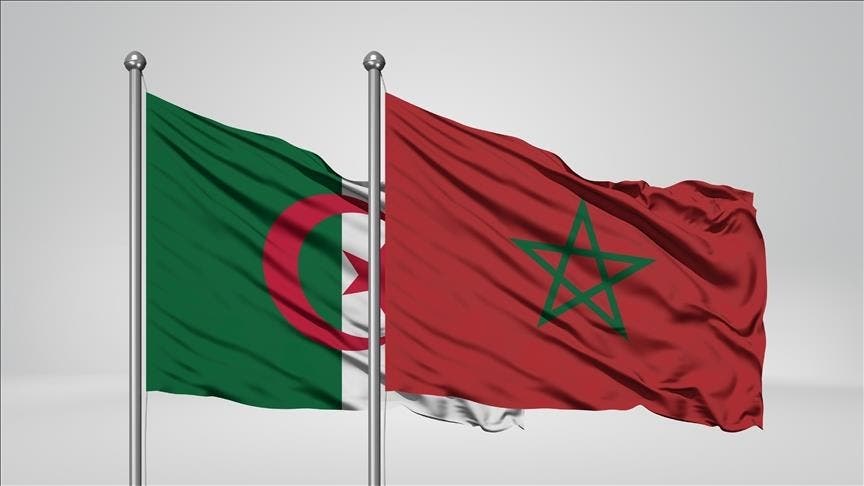
It is the principle of forfeiting economic, social, political opportunities, security coordination, and strategic cooperation, between two neighboring countries whose people are united by the bond of blood, Arabism, Islam, and even intermarriage…
What if Algeria believed, even for once, in the principles of good neighborliness and cooperation? Then "Greater Morocco" would be the fourth-largest economic power in the world today, thanks to the integration of Algerian gas with Moroccan phosphate and shared human intelligence. The Sahel and Sahara region would be an oasis of stability, and terrorist groups would not find a foothold in the presence of real intelligence and military cooperation between Rabat and Algeria. The money wasted on armaments, "buying recognitions" for the imaginary entity, and financing it would have been used to build the greatest universities and hospitals in Algeria. This is how the university professor and political analyst Omar Sharqawi deconstructed the equation of "If Algeria believed, even for once, in the principles of good neighborliness and cooperation." Sharqawi wrote: "There is no blame on what Morocco is doing in terms of alliances and strong partnerships, nor on its advanced military deals, nor on the diversification of its partners from Washington to Tel Aviv and from Paris to Madrid and China and Russia, these options are not a political luxury, but rather options for the Moroccan diplomatic doctrine, but they imply a logic of extreme necessity." Sharqawi continued, saying: "When you face a neighbor whose only concern is dividing your country into two states, and fragmenting a history that extends for 12 centuries, firmness becomes the only understandable language, Morocco does not adopt aggression, but it will not smile at a neighbor who wants to slaughter it." It is the curse of geography, but it does not mean at all that this fate should be an endless curse. In the Moroccan-Algerian case, (Sharqawi says), we are facing a historical and geographical exception that breaks all the logical rules of building neighborliness. While global blocs are moving towards integration to overcome energy and food crises, the eastern neighbor insists, for more than half a century, on draining the region's resources in a phantom battle that aims to tear apart the territorial unity of the Kingdom of Morocco. Sharqawi used examples of border conflicts to deconstruct this equation, highlighting that the difference lies in the rationality of the offending state and the victim's ability to be firm. • France and Germany: They fought fierce wars (World War I and II). But as soon as the Nazi "madness" ended, Germany realized that its survival lay in cooperation, not expansion. Today, they are the beating heart of Europe. • Brazil and Argentina: They were in bitter conflict over influence in Latin America and a nuclear arms race in the seventies. But they chose "Mercosur" and economic integration, and they became a respected regional power. • Canada and the United States: Despite the enormous disparity in power, and despite the "stupidity" of some American administrations that impose tariffs or border restrictions, the political doctrine between them prevents thinking about "dividing" the other or supporting separatist movements against it. Sharqawi continued by saying that all these models were a passing folly or were linked to dictatorial regimes that disappeared with the disappearance of their causes. As for Algeria, we are facing a hostile doctrine that transcends individuals and history, making the division of Morocco an existential goal of the regime, not just a diplomatic file. Sharqawi concluded his post by saying: "In this situation, it is impossible to equate between those who build and those who demolish a house of those who want to unite and another who is sick with division, the logic that Algeria deals with Morocco is very similar to the person who breaks into the borders of your private property, puts a fence in the middle of your garden, and then demands you to "restrain yourself" and not be upset, and even asks you to "smile" so that the chapters of "false brotherhood" are completed while the knife is embedded in the flank of national sovereignty. Morocco has endured what no other state in the modern era has endured. It has endured diplomatic exhaustion, military maneuvers, and the harboring of armed militias on the neighbor's land, and the spending of billions of dollars from the Algerian people's wealth to finance a "phantom state" project that does not exist except in the imagination of the generals of the Muradia Palace.