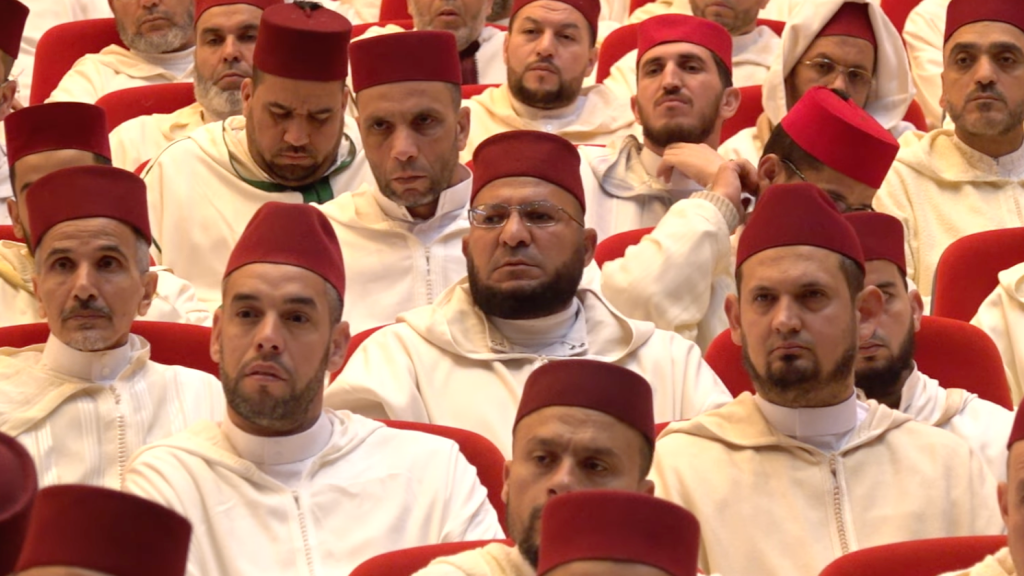
Today, Sunday, at the headquarters of the Mohammed VI Institute for the Training of Imams, Male and Female Guides in Rabat, a communication meeting was organized with members of the religious mission heading abroad during the blessed month of Ramadan. During the meeting, various religious support tasks were discussed, which they will undertake during this holy month for the benefit of the Moroccan community residing abroad.
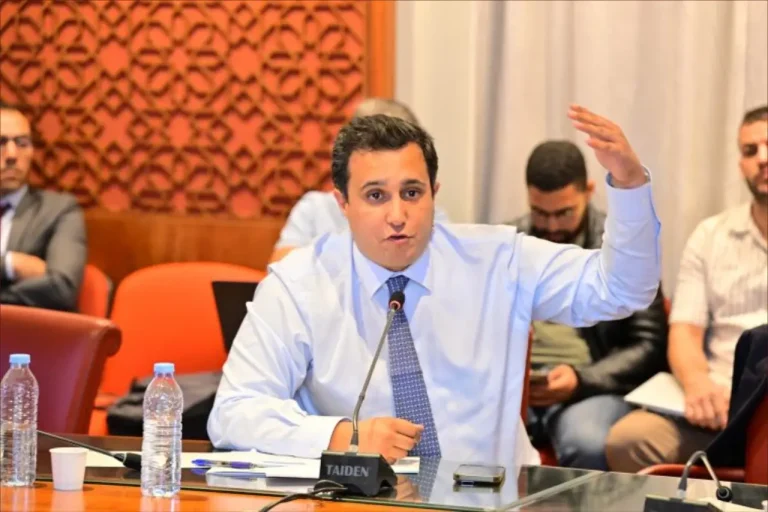
This meeting was an opportunity to provide the members of the mission, formed by the Ministry of Endowments and Islamic Affairs, with the guidance and instructions they must remember when carrying out their tasks of guiding the Moroccan community abroad during the month of Ramadan for the year 1447 AH – 2026 AD. This scientific mission consists of 22 male preachers, 19 female preachers, and 309 supervisors, who will travel to France, Belgium, Spain, the Netherlands, Germany, Canada, and Estonia to provide religious guidance to the Moroccan community residing in these countries, based on the approved national constants. This process also aims to unite the ranks of the Moroccan community and strengthen the bonds of relations between them, especially on the occasion of the blessed month of Ramadan, and to protect Moroccan mosques from all dangers, in addition to working in complete harmony with European laws and associations that frame the religious affairs of Moroccans in various European countries. On this occasion, Mr. Mohsen Koujim, Director of the Directorate for Monitoring the Activities of Scientific Councils at the Supreme Scientific Council, confirmed that this process has a deep significance, which is embodied in Morocco's expression of its civilizational presence through its manifestation of faith and educational behavior in European countries and in diaspora countries in general, in addition to building bridges of cooperation and communication between Moroccan civilization and other civilizations around the world. Mr. Koujim added, in a statement to the press, that one of the objectives of this religious mission is also to ensure the introduction of Islam and its characteristics of tolerance, coexistence, moderation, and good neighborliness, stressing that the month of Ramadan is "an opportunity to express our cultural identity to highlight the Moroccan specificity in religiosity through this mission, while enabling Moroccans around the world to live the atmosphere of Ramadan as if they were in Morocco." For her part, Nadia Al-Zahi, a preacher at the local scientific council of the city of Inezgane and a member of the mission, explained in a similar statement that building bridges of communication with Moroccans around the world and conveying the principles of religion within the framework of national constants are among the most prominent tasks assigned to the religious mission heading abroad, in accordance with the specificity of this holy month and its spiritual atmosphere. As for Rachid Hazimi, the imam and preacher of the Al-Rahman Mosque in the Sidi Ifni region and a member of the mission, he pointed out that sending a scientific mission to a number of foreign countries on the occasion of the month of Ramadan reflects the high royal care that His Majesty King Mohammed VI has always given to religious affairs, reminding that the first message entrusted to the members of this mission is to guide and direct Moroccans residing in those countries within the framework of the religious constants of the Kingdom, foremost of which is the imamate of the believers, as it is the guarantor of the religious reference for the Kingdom of Morocco, in addition to other constants, especially the Ash'ari creed and the Maliki school of thought. It is worth noting that the Ministry of Endowments and Islamic Affairs, within the framework of this process, distributed preachers, male and female, and supervisors based on the agreement reached with the embassies and consulates of the Kingdom abroad, as well as the bodies managing Moroccan mosques, which are considered the official addressees of the Ministry, with the numbers sent being determined based on the developments and concrete facts related to the situation of religious affairs and Moroccan mosques in each country.