HIBAPRESS – Abdellatif Baraka
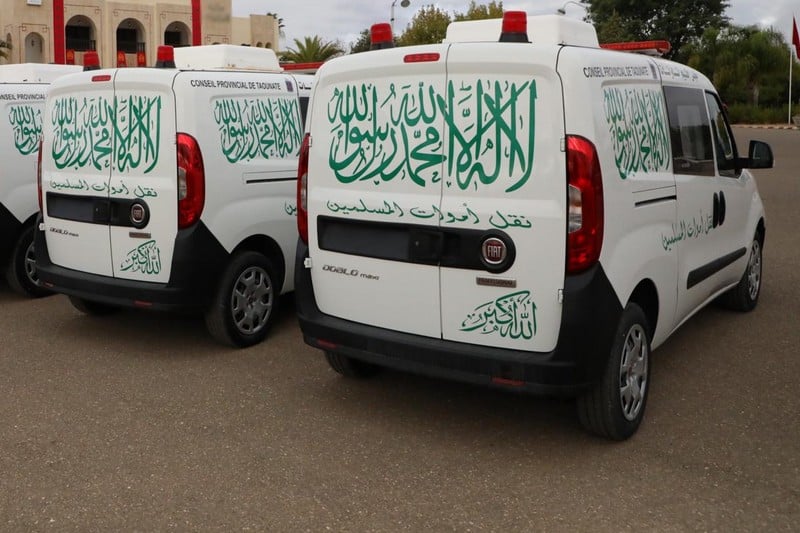
A recent administrative decision to unify the exterior appearance of funeral transport vehicles sparked a wave of widespread debate in Morocco, extending from the public sphere to social media platforms.
The joint decision between the Moroccan Ministry of Interior and the Ministry of Health and Social Protection stipulates the removal of religious phrases from vehicles and the adoption of unified visual signs and the writing of the phrase "Funeral Transport" along with the identification of the vehicle owner, as part of an effort to regulate the technical and visual specifications of this public service. Supporters of the decision believe that it puts an end to the disparity and randomness that characterized this sector, and enhances the principle of equality in providing the service to all citizens, while maintaining the safety of vehicles and their visual unity, in line with the modernization of services related to health and social protection. In contrast, critics consider that the move goes beyond the organizational aspect to touch on a deep-rooted cultural and social symbolism, pointing out that the exterior appearance of these cars carries emotional meanings for families during the farewell of their loved ones. The debate raises a broader question about the limits of "neutrality" in the public sphere, and how the administration can balance technical organization and respect for the sensitivity of society towards historically circulating symbols. Analysis reveals that the discussion about the decision reflects a need for better institutional communication, clarifying the practical goals of the decision and involving social and professional actors in determining the boundaries between administrative organization and respect for symbolic traditions. Joint regulation of public facilities can be achieved without prejudice to the cultural and social dimension, through a participatory approach that balances the modernization of services with the dignity of the deceased and the sensitivity of the family. In the end, the decision remains an indicator of the challenges of managing symbolic changes in the public space, a discussion that extends beyond the appearance of vehicles to how to reconcile administrative neutrality and respect for deep cultural representations in Moroccan society.