By Tariq Abla – Rotterdam
These are the breaths of the holy month of Ramadan, they are the values of our tolerant Islam in its coexistence, tolerance, and acquaintance with human beings with different origins, cultures, and identities. It is a rare human moment that brought together Moroccans and Dutch on the tables of the Most Merciful in this blessed month within an educational space, to draw a rare and exceptional different picture of the month of fasting in the diaspora.
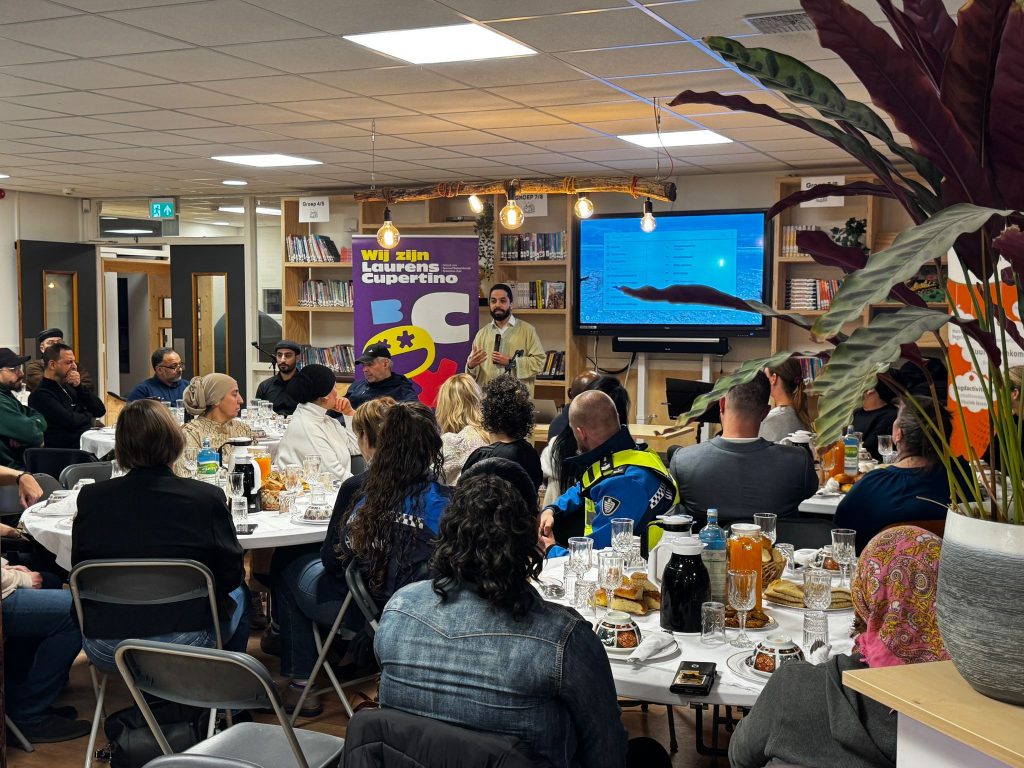
At the entrance to the primary school in the center of Rotterdam, the scene was different from every day. The doors of the educational institution did not receive the students in the morning, but were opened in the evening to receive dozens of fasting people, in a scene that turned the classroom into a space for meeting and brotherhood. Walls that witnessed mathematics and language lessons now embrace the iftar tables and are filled with the sounds of takbeer and welcome.
On this Ramadan evening, the Atlas Fine Noord Association organized a collective iftar party, in an annual tradition that never fails to keep its appointment, where every year, those in charge of it renewed the covenant with the holy month, to gather the scattered Moroccan community around one table, and open the door wide to Dutch neighbors to get closer to the rituals of Islam.
What distinguished this version of Iftar was the clear diversity in the features of the attendees. In addition to the Moroccans, who came in droves, the Dutch were present with their usual openness, and on tables that extended in the school hall, hands clasped before the dishes, and everyone exchanged conversations in one language, which is the language of humanity.
The Atlas Fine Noord Association, represented by both Ahmed Iken and Abdelkbir El Raoui, put the final touches on a meticulous organization that made the audience flow smoothly between the school spaces. It was not just a meal, but an integrated station for meeting and communication.
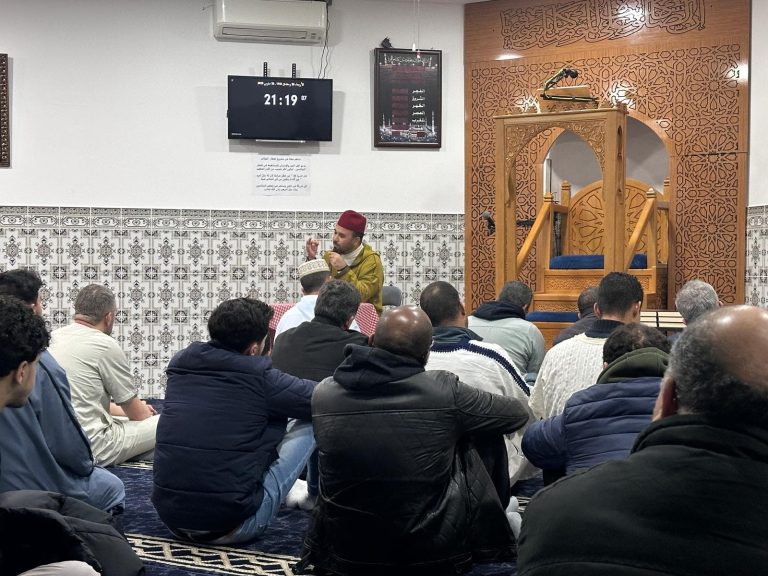
Before the Maghrib call to prayer, Imam Ezzeddine Marat took his place in a corner of the hall to give the Ramadan lesson. His words focused on the meanings of peace and tolerance in Islam, and how the month of fasting is a school of coexistence before it is a school of patience. The imam chose a simple language that is close to the hearts, addressing the Moroccans before the Dutch, to be a suitable entrance for non-Muslim guests to understand the essence of the message.
As for the course of the events of this meeting, it was organized and presented by Said Ouaaziz, who managed the dialogues harmoniously and presented the guests one after the other, facilitating the transition between the segments of the evening.
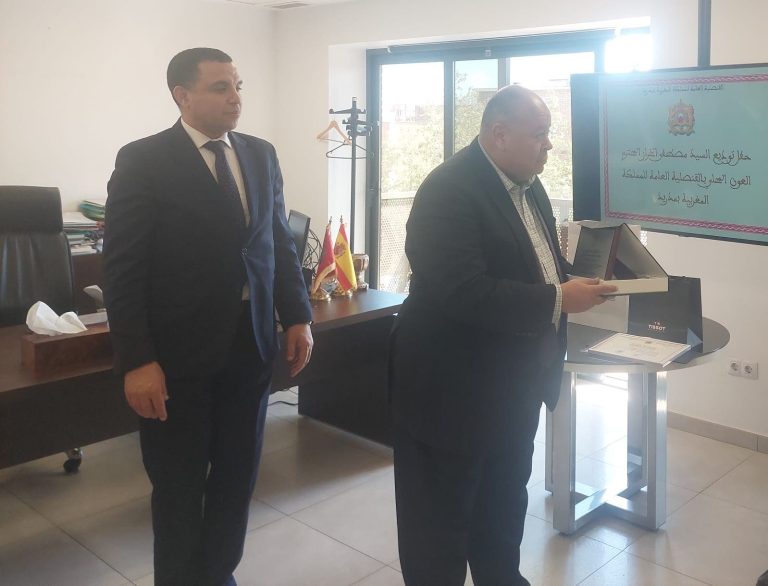
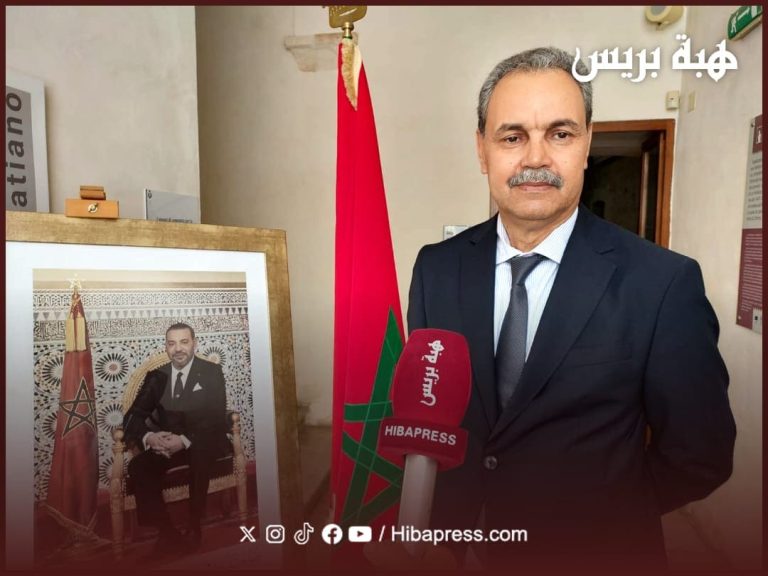
In a sophisticated diplomatic gesture, Abdelali El Kebiti El Idrissi, Consul of the Kingdom of Morocco in Rotterdam, was present to add value to the event. He did not settle for this, but chose to address the Dutch guests in the language of *Dhad* first, then moved to English to reach them directly. In his speech, he spoke about the spirit of Ramadan and the values of solidarity and giving that Muslims are distinguished by during this month, stressing that Islam is a religion of peace and coexistence, and that initiatives like this are the best way to build bridges of trust with the Dutch community.
Beside him, the Deputy Consul General of the Consulate General in Rotterdam was present, in addition to a number of prominent community activists, at the head of whom was the well-known activist Diba, who did not miss the opportunity to meet with members of the community and listen to their concerns in casual side conversations.
What was noticeable in this version of Iftar was the heavy presence of representatives of the Dutch police. Officers in official uniforms sat next to the Moroccans, ate traditional Moroccan food, and shared conversations with families, a presence that was not security-oriented, but rather a clear message on the nature of the new relationship that Dutch institutions seek to build with the Moroccan community, an image in this sense removes many concerns, and confirms that successful integration is based on mutual trust and respect.
With the arrival of the time for Iftar, everyone stopped talking, the call to prayer rose in the sides of the school, so everyone rushed to the dates and milk, then, in a moment of spiritual reverence, the Muslims present went to one of the halls designated for prayer, there they lined up behind their imam to perform the Maghrib prayer in congregation, reverence and reassurance in the hearts, in an educational space that was classrooms hours ago, a scene that carries a deep meaning about the ability of religion to transform any place into a space for spirituality whenever intentions meet.
As soon as the prayer ended, everyone returned to the main hall, where the tables were filled with authentic Moroccan dishes. It was not an ordinary iftar, but rather a journey deep into Moroccan cuisine. Couscous with seven vegetables, tajine of all kinds, crispy pastilla, and harira that cannot be missed in Ramadan nights. The smell of Moroccan spices wafted through the school, as if it were an open invitation to the Dutch to taste the flavor of originality.
Everyone sat at one table. Moroccans, along with the Dutch and guests of other nationalities, conversations revolved around the tables in a special family scene.
In a short speech during Iftar, the head of the primary school that hosted the Moroccan-Dutch gathering spoke, his words were shocking in their honesty and simplicity. He said with clear love: "We are happy to host this initiative because we want our students to learn and know the Islamic religion and Ramadan up close." An educational message par excellence, which confirms that knowledge is the real key to breaking stereotypes, and that the school is the best space to plant the values of coexistence from a young age.
What the Atlas Fine Noord Association, led by Ahmed Iken and Abdelkbir El Raoui, did was not just a regular iftar party, it was an annual meeting station, a bridge between cultures, and a bright image of Moroccans of the world, in a time when hate speech and fear of the other are escalating, initiatives like this appear to remind us that Ramadan, wherever it is, remains the month of mercy and affection, and that Moroccans, wherever they are, carry with them the warmth of their tables and the openness of their hearts.
"HIBAPRESS" followed a part of this Ramadan activity and prepared the following report:
https://www.youtube.com/watch?v=j6yKqkZQkis