HIBAPRESS – Abdellatif Baraka
Demographic data related to the results of the High Commission for Planning in the framework of the General Census of Population and Housing 2024 reveals a significant disparity in population density among the territorial municipalities in the Souss-Massa region. Inezgane tops the list of municipalities with the highest population density in the region, which is mainly due to the high number of its inhabitants compared to its limited geographical area, making it one of the most densely populated areas in southern Morocco.
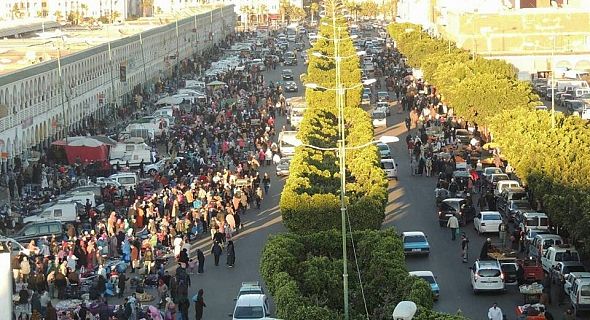
Inezgane has over 137,000 inhabitants according to the latest census results, while its area does not exceed about 14 square kilometers, which raises the density rate to high levels compared to the rest of the region's municipalities. Its strategic location in the center of the urban cluster known as "Greater Agadir," and its proximity to Agadir, Ait Melloul, and Dcheira El Jihadia, makes it an important point of attraction for population and trade, especially with its hosting of one of the largest commercial markets in the region. Following Inezgane in population density are several other urban municipalities within the Greater Agadir axis, including Dcheira El Jihadia, Ait Melloul, and Agadir, where these areas are also experiencing rapid urban and demographic growth in recent years. This expansion is linked to the concentration of economic and service activities in this urban belt, in addition to internal migration from the neighboring rural areas. These demographic indicators reflect the profound changes witnessed by the Souss-Massa region, where population growth is largely concentrated in the vicinity of Greater Agadir, compared to the slow growth in a number of remote rural municipalities. This population concentration poses real challenges at the level of urban planning and the provision of infrastructure and basic services, especially in the areas of transportation, housing, and public facilities. In contrast, observers believe that this reality necessitates accelerating urban planning projects and expanding the urban area towards neighboring municipalities, with the aim of achieving demographic and developmental balance within the region and reducing the increasing pressure on the most densely populated cities.