HIBAPRESS – Mohamed Zariouh
In a notable shift that transcends the logic of traditional commercial competition, a study issued by the University of Navarre revealed that Morocco is now employing its logistical and energy infrastructure within an integrated geopolitical vision, aiming to consolidate its presence in the Strait of Gibraltar, one of the most sensitive maritime passages globally. The study indicates that Rabat is no longer content with benefiting from its geographical location, but has begun to transform it into a lever of influential power in the equations of trade, energy, and maritime security in the region.
According to researcher Miguel Ayera, this approach is based on what he called the "Surrounding Strategy," through the development of two integrated maritime axes: Tangier Med port on the western front, and the Nador West Med project on the eastern side. This trend reflects a Moroccan endeavor to reshape regional balances, enhancing its economic position and limiting the margin of autonomous movement for the cities of Ceuta and Melilla in their immediate surroundings.
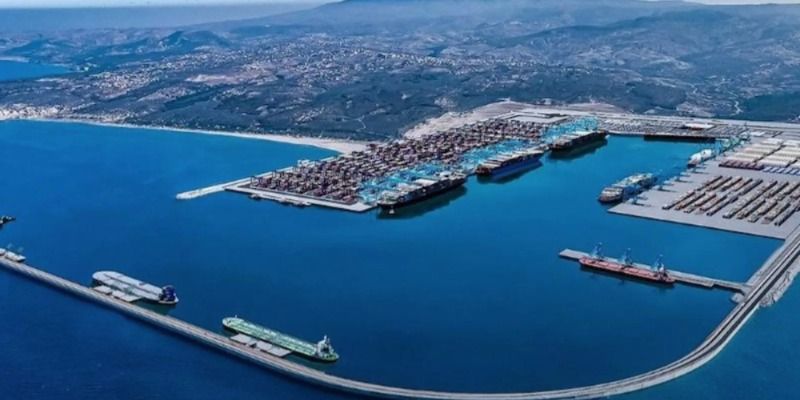
Tangier Med port stands out as one of the most important manifestations of this transformation, after it was able, since its launch in 2007, and its expansion in 2019, to establish its position as the largest port in Africa. Its ability to handle more than 10 million containers during 2024 contributed to consolidating its superiority over Algeciras port, which not only reflected on the movement of navigation and trade, but also redrew the map of maritime flows in the western Mediterranean according to new standards headed by speed, efficiency, and competitive cost.
The study finds that this Moroccan rise puts the occupied cities, led by Ceuta, in front of increasing challenges, given that competition is no longer purely economic, but has taken functional and strategic dimensions that may make these cities more connected to Moroccan services and infrastructure. This is becoming clearer with the introduction of new European regulatory factors, including the EU ETS system, which imposes additional burdens on ships docked in European ports, pushing a number of maritime actors to prefer Moroccan ports as being less costly and more attractive in terms of location and services.
On the eastern side, the Nador West Med project stands out as a natural extension of this strategic ambition, as it is expected to enter service between 2026 and 2027 with a capacity of 5.5 million containers, in addition to an industrial pole and an energy station that carries a clear ambition to transform the region into a regional center for natural gas. Thus, the study confirms that Morocco is consolidating its transition from a mere geographical transit point to a significant regional actor in global supply chains, in a scene that may reshape the balances of the western Mediterranean quietly, but with increasing depth and impact.