HIBAPRESS – Abdellatif Baraka
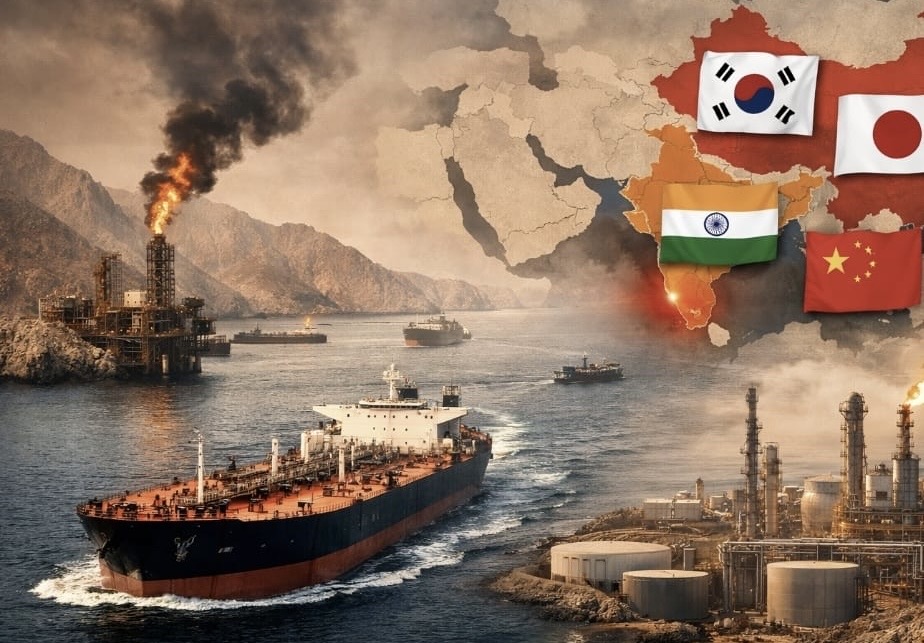
The Strait of Hormuz is a vital artery for global energy trade, with approximately 20% of the world's oil and liquefied natural gas passing through it. Any disruption to navigation in it poses a direct threat to major Asian economies, especially those that heavily rely on energy imports from the Middle East, such as Japan, South Korea, India, and China.
Japan is the most vulnerable, as its economy depends on imported oil by nearly 95%, most of which passes through the strait. Any closure leads to higher energy costs, pressure on manufacturing and export industries such as automobiles and electronics, and an increase in the import bill, with potential risks of declining growth and rising inflation. South Korea faces similar challenges, where its heavy and electronics industries rely on imported energy via the strait. Any disruption leads to an increase in production costs and puts pressure on export competitiveness, as well as increasing the burden on consumers and companies and putting strategic reserves under severe pressure if the crisis continues. India, in turn, is one of the fastest-growing economies in the world, importing more than 50-60% of its oil from the Middle East via Hormuz, making it vulnerable to rising fuel and gas prices, increased transportation and goods costs, and pressure on the trade balance, with direct repercussions on inflation and the standard of living. As for the People's Republic of China, it is the largest consumer of energy in Asia and imports huge quantities of oil and gas via the strait, but it has relatively higher flexibility thanks to strategic reserves and renewable energy. However, rising industrial production costs and pressure on exports may lead to increases in inflation and the costs of goods and services. In total, the closure of the Strait of Hormuz reflects a multi-dimensional crisis for Asian economies, including rising energy prices, pressure on manufacturing industries, inflation in costs, and a potential decline in growth. The current crisis also emphasizes the importance of diversifying energy sources and strengthening the economic and strategic resilience of each country to cope with global market fluctuations.