HIBAPRESS – Fikri Ouldali
A communication meeting was held in one of the classified hotels in Al Hoceima on Wednesday, March 25, organized by the Democratic Association of Moroccan Women in partnership with the Al Hoceima Regional Council and with the support of the Barcelona Regional Council, within the framework of celebrating International Women's Day, which constitutes an annual stop to renew the commitment to the values of equality and equal opportunities and to promote women's rights.
The meeting witnessed a significant presence of a number of officials, elected officials, and representatives of national and international bodies, including the Secretary-General of Al Hoceima Prefecture, the President of the Regional Council, Ismail Arrais, in addition to representatives of associations of heads of regions, prefectures and municipalities, and a representative of the United Nations Entity for Gender Equality and the Empowerment of Women in Morocco, and a representative of the Barcelona region, as well as activities from civil society, in a clear embodiment of the participatory and institutional character of this event.
In an opening speech, the President of the Al Hoceima Regional Council, Ismail Arrais, affirmed that the organization of this meeting falls within a national dynamic that aims to consolidate the principles of equality as a constitutional and strategic choice, highlighting the importance of the involvement of elected officials in translating these principles into practical practices on the ground.
The meeting also provided an opportunity to officially announce the establishment of the Regional Council for Equality in Al Hoceima, where its vision, goals, and preliminary action plan were presented, as a territorial consultative mechanism that seeks to integrate a gender approach in local public policies, and to enhance the participation of women in planning, development and decision-making processes.
Al-Rais explained that this initiative falls within a program that aims to support the political participation of women and promote a gender approach, in partnership with institutional and civil actors and with international support, considering the meeting a stop for exchanging experiences and dedicating a fair and sustainable development model.
He pointed out that this mechanism will start in the first phase at the level of 12 territorial communities, with the possibility of expanding it in the future to include the rest of the communities, calling for the continuation of joint efforts to consolidate the culture of equality and enhance the presence of women in public affairs management.
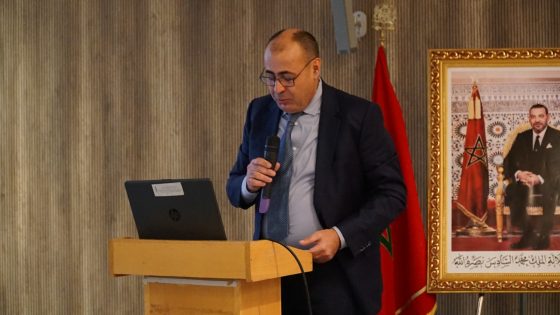
The meeting’s proceedings included thematic interventions that addressed equality issues from multiple angles, including a presentation on the “Safe Cities” program of the United Nations Entity for Gender Equality and the Empowerment of Women, presented by its representative in Morocco, Maryam Ouchen Noussairy, in addition to an intervention on open communities as an entry point to promote equality at the territorial level, presented by Fatiha Zinebi from the General Directorate of Territorial Communities.
Other interventions were also presented, including the role of equality in achieving integrated development by Nadia Koubay, in addition to a presentation on the roles of equality and equal opportunities bodies presented by Aisha Al-Haddad, and an intervention on the importance of programming and planning in integrating a gender approach presented by Khadija Arrabah, as well as a presentation of the preliminary results of the evaluation process of development programs from a gender equality perspective, presented by expert Abd al-Salam Al-Mukhtari.
The establishment of the Regional Council for Equality in Al Hoceima comes in a continuous national context to activate the constitutional provisions related to parity, and to strengthen the mechanisms of participatory democracy, by creating a space for consultation and coordination between various actors on issues of women's rights and inclusive development.
This council is expected to play pivotal roles, including monitoring and evaluating territorial policies from a gender equality perspective, contributing to the development of local public decisions, in addition to monitoring the situations of women and girls and enhancing their participation in public life, in coordination with various consultation bodies at the regional level.