HIBAPRESS – Economy
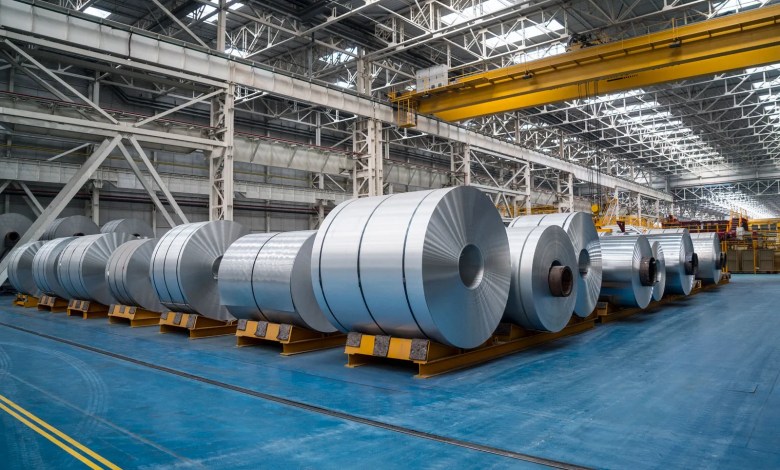
Global aluminum prices are heading towards a new wave of increases, driven by escalating tensions in the Gulf region and the disruption of navigation through the Strait of Hormuz, one of the most important vital passages for international trade.
These developments have brought the industrial metal back to the forefront of the markets, not only because of its strategic role, but also because of its volatile price path in recent years. In 2022, aluminum recorded historical record levels exceeding $4,100 per ton, before entering a stage of gradual decline during 2023 and 2024, where prices stabilized within a range of $2,100 to $2,500 per ton as a result of weak global demand and rising production costs, but this trend did not last long, as prices began to regain momentum since 2025, driven by the return of industrial demand and increasing restrictions on production. With the arrival of 2026, the market entered a new stage of increase, where the price of aluminum exceeded the barrier of $3,000 per ton, and even approached $3,400 in some recent transactions, which is its highest level in about four years, under the influence of concerns about supply shortages and disruption of global supply chains. This renewed increase is not only related to traditional economic factors, but is also fueled by geopolitical tensions, especially in the Gulf region, which is a major center for aluminum production globally. With the disruption of shipping through the Strait of Hormuz and the rise in maritime insurance costs, access to this material to international markets has become more complex and costly, which is directly reflected in prices. As for Morocco, which relies heavily on the import of aluminum and its derivatives, these developments pose increasing challenges to a number of vital sectors, foremost of which are construction and industry. Aluminum-related material prices have begun to rise gradually, which burdens contracting companies and affects project costs, at a time when citizens' purchasing power faces increasing pressures. The impact of the crisis is not limited to the price of the raw material only, but extends to the cost of international transport and supply chains, which makes the Moroccan market directly linked to any disruption in strategic sea lanes, even if imports do not come directly from the Gulf region. In light of the continued tensions, observers expect that aluminum prices will remain at high levels in the coming period, especially with the emergence of indicators of a structural deficit in global supply versus increasing demand from vital sectors such as construction, renewable energies and industry. Thus, the price path of aluminum between 2022 and 2026 reveals a deep transformation in this market, where it moved from a record peak to a correction phase, before returning strongly driven by geopolitical and structural factors, in a scene that reflects the fragility and interconnectedness of the global economy, and places countries like Morocco before the need to adapt to the fluctuations of a more complex international market.