HIBAPRESS – Mohammed Zeriyouh
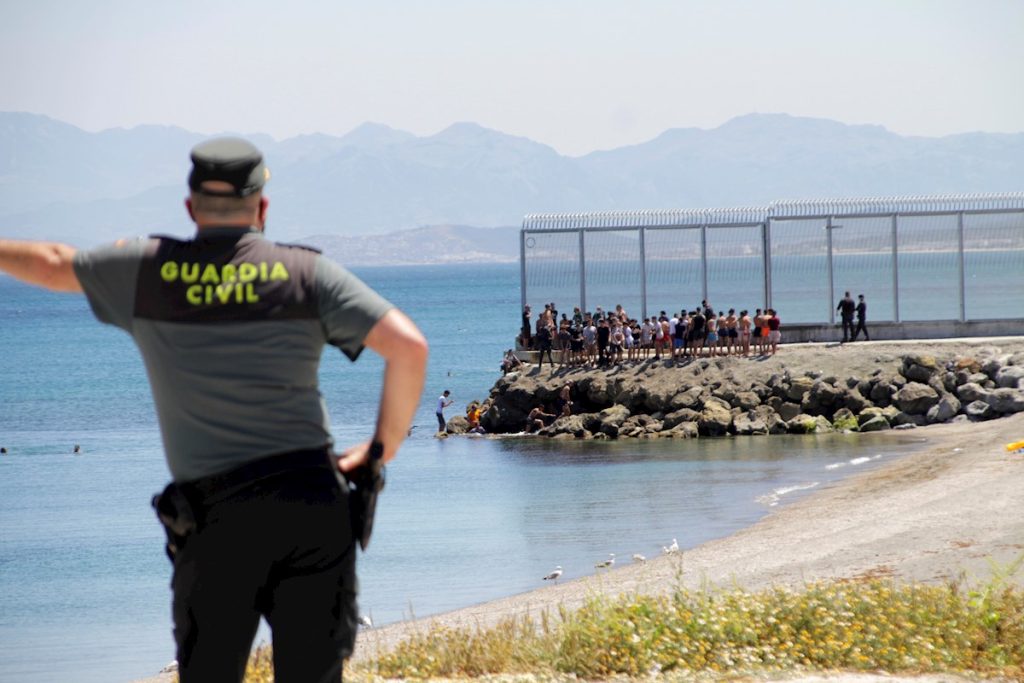
The issue of irregular migration has returned to the forefront of discussion in Spain, after recent data from the Spanish Ministry of the Interior revealed a significant increase in the number of arrivals to the occupied cities of Ceuta and Melilla during the first quarter of 2026.
According to the circulating figures, the increase reached 392 percent compared to the same period last year, a striking indicator of the return of pressure on these two border points. These data highlight a clear shift in migration routes towards the two enclaves, after a period in which it was believed that the southern borders of Spain were experiencing a degree of relative stability. However, the new figures showed that this calm was only temporary, with Ceuta and Melilla once again returning to the forefront as among the most sensitive points in the migration file towards Europe. According to Spanish media reports, this increase reflects a renewed pressure on the land crossings leading to the two cities, in a regional and international context characterized by constant changes in crossing maps. Migration routes are no longer fixed, but are directly affected by the political decisions and security measures adopted by European countries in confronting the phenomenon. In this context, convergent readings see that tightening control on some traditional routes, along with new European policies in managing borders, has contributed to redirecting a portion of the flow of migrants towards alternative outlets. It seems that Ceuta and Melilla have become among the most prominent of these points that have attracted crossing attempts during the first months of this year. This development raises major challenges for the Spanish authorities, both in terms of border management and in terms of reception capabilities and dealing with the increasing numbers of arrivals. It also confirms, at the same time, that the irregular migration file is still open to unexpected transformations, and that any talk of final stability remains dependent on rapidly changing field and political balances.