HIBAPRESS
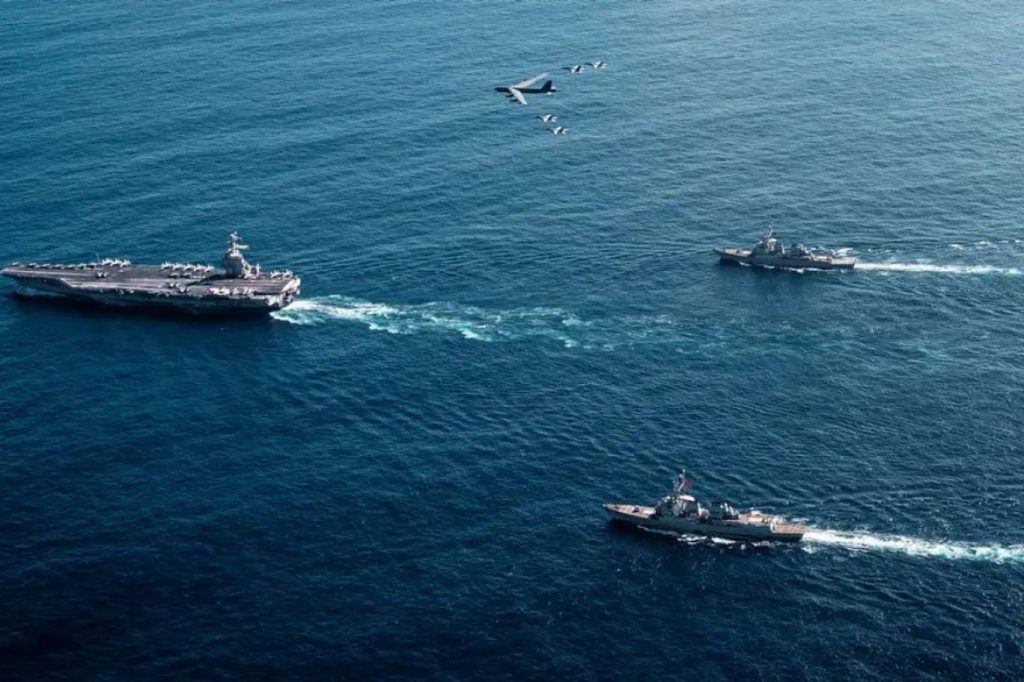
American President Donald Trump announced on Sunday that the U.S. Navy will begin imposing a naval blockade on the Strait of Hormuz "with immediate effect," by preventing all ships from entering or leaving it.
Trump clarified, in a post on the Truth Social platform, that the operation has actually begun, adding that the closure will be carried out gradually and with the participation of other countries. This development comes amid escalating tensions between the United States and Iran, following the stalled negotiations between the two sides regarding the Iranian nuclear program, despite international mediations that did not lead to an agreement. What is a naval blockade? In this context, Egyptian Navy Major General Reda Ismail explained that a naval blockade is a military measure aimed at preventing ships from entering or leaving the ports of a country, with the aim of cutting off military, food, and energy supplies, and thus pressuring it to change its positions. He pointed out that the American decision comes after the failure of diplomatic efforts and represents a new escalation in the confrontation, which may open the door to wider field developments. Potential economic repercussions On his part, Naval Captain Mohamed Naguib Felix warned that the blockade could lead to economic paralysis in Iran, by depriving it of exporting oil and importing essential goods, which will be reflected in the markets by rising prices and a shortage of vital materials. He added that the repercussions of the decision will not be limited to Iran only, but will extend to the global economy, especially since the Strait of Hormuz is one of the most important sea lanes for transporting oil, which may lead to disruptions in energy supplies and a sharp rise in prices globally. Political and military dimensions Experts believe that the naval blockade represents a political and military pressure tool at the same time, aimed at forcing Tehran to comply with American conditions, especially with regard to its nuclear program. In contrast, it is warned that any escalation in the Strait of Hormuz may push Iran to take counter-steps, including closing the strait, which may bring the region and the world into an unprecedented stage of tension.