HIBAPRESS
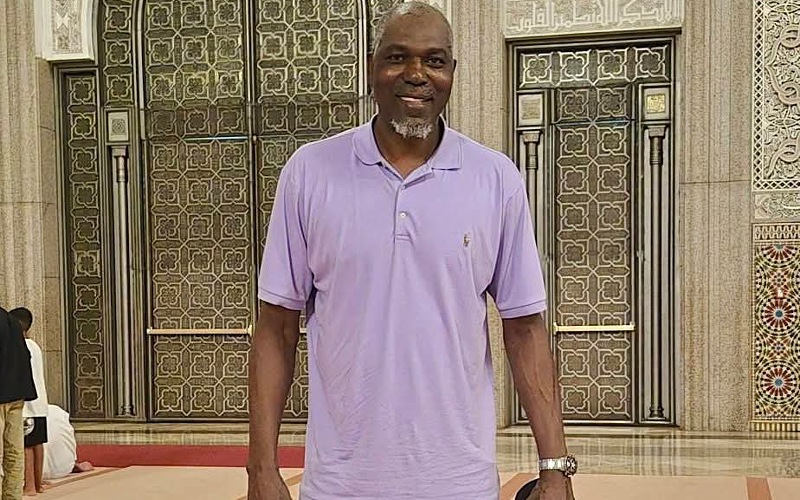
The visit of global basketball legend Hakeem Olajuwon to the Hassan II Mosque in Casablanca was not merely a fleeting stop. His tour inside the landmark transformed into an opportunity to discover a facet of Moroccan architectural heritage that deeply impressed him.
During the visit, accompanied by Moroccan journalist Mohamed Achari, the former NBA star paused to examine the mosque's details and artistic components, expressing his admiration for the grandeur of its construction, the precision of its decorations, and the high level of craftsmanship.
Before the arches, columns, Zellij tiles, and gypsum and wooden carvings, Olajuwon appeared interested in the details that give the space its distinctive character, particularly the geometric harmony and the precise repetition of decorative elements that create an integrated visual unity.
The various parts of the mosque reveal a strong presence of Moroccan traditional craftsmanship through Zellij tiles, carved wood, sculpted gypsum, and marble. These techniques reflect an extension of deeply rooted artisanal traditions in Moroccan culture.
For Olajuwon, what was also striking was the landmark's ability to combine its religious and aesthetic dimensions in a space overlooking the Atlantic Ocean, presenting a model of the interplay between architecture and traditional Moroccan arts.
Olajuwon described the Hassan II Mosque as an "architectural masterpiece," an expression that encapsulates his impression of a monument that derives its presence not only from its architectural grandeur but also from the intricate details that have shaped its visual identity.