HIBAPRESS
The departure of Aziz Akhannouch from the head of government, on Saturday, was not just the end of a five-year government mandate, but a milestone for evaluating a political experiment linked to the launch of broad social and economic reforms, during one of the most turbulent international periods, and the beginning of a new phase where the responsibility for continuing these projects passes to the Prime Minister, Fatima Ezzahra Al-Mansouri.
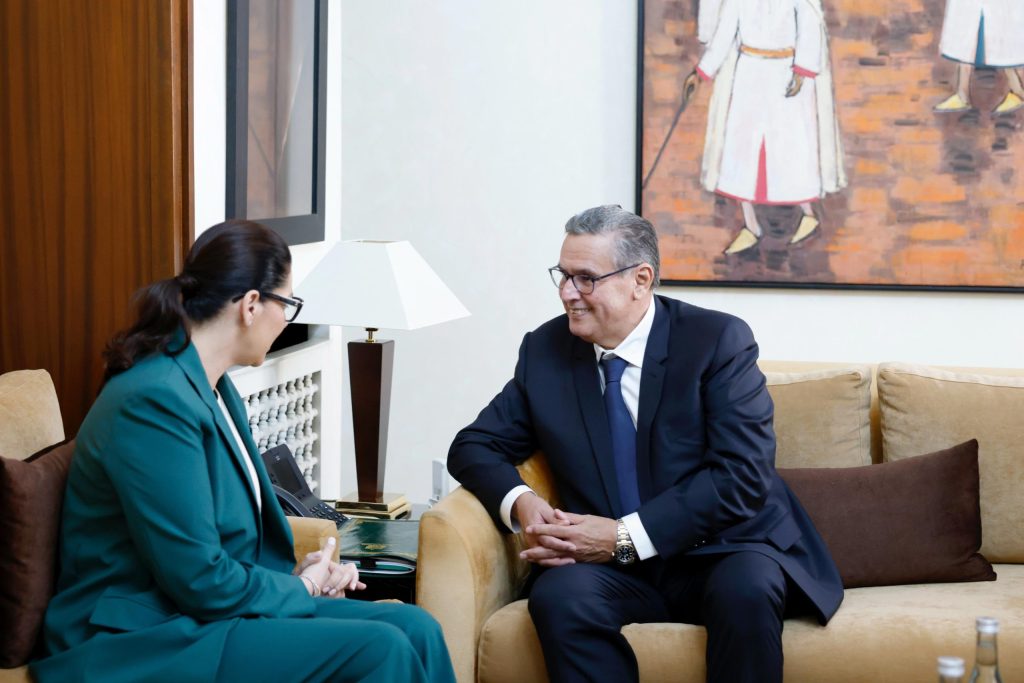
From the headquarters of the Presidency of the Government in Al-Mashour Al-Saeed in Rabat, the handover ceremony between Akhannouch and his successor, Fatima Ezzahra Al-Mansouri, marked an institutional moment that encapsulates the transfer of responsibility. However, it also raises a question larger than a mere change at the head of the executive branch: What will the new government build upon, and how will it deal with the outcomes of five years of programs and reforms?
Akhannouch's government began its term in an exceptional context, characterized by the repercussions of the Corona pandemic, rising prices in international markets, and the war in Ukraine, in addition to successive years of drought and the pressures it imposed on the national economy and household purchasing power. Nevertheless, the government chose to continue investing in social projects, rather than limiting itself to managing situational constraints.
The generalization of social protection was one of the most prominent features of this experience, through expanding health coverage, launching direct social assistance for about four million families, approving direct housing support, and expanding access to support programs for vulnerable groups. These measures reflected a trend towards strengthening the state's presence in protecting families and expanding the scope of its social intervention.
Concurrently, the government increased resources allocated to health and education, and launched programs to rehabilitate health institutions and improve the quality of education. Social dialogue served as an entry point for approving salary increases and improving a number of professional situations. These choices made the social dimension a central theme of the outgoing government's mandate.
Economically, the government bet on public and private investment, provided a new framework to stimulate investment, and worked to enhance Morocco's attractiveness to investors, in parallel with developing tourism, exports, and national industries. It also succeeded in strengthening state resources and improving its financial balances, thereby ensuring the availability of the necessary potential to finance public policies.
However, the government's legacy is not measured solely by the size of budgets or the number of programs launched, but also by its ability to endure and achieve tangible results. Employment, purchasing power, the quality of public services, and reducing spatial disparities remain ongoing challenges that require the next government to redouble its efforts and improve the efficiency of adopted policies.
From this perspective, Fatima Ezzahra Al-Mansouri assumes a heavy responsibility, not only because she is tasked with launching a new government program, but also because she is required to ensure the continuity of reforms that have become part of citizens' expectations, enhance their effectiveness, and address the imbalances that still limit their impact.
Especially since His Majesty the King, in his opening speech to Parliament, emphasized the necessity of continuing reforms and working to achieve development and respond to citizens' needs. This directive places continuity at the core of governmental responsibility, meaning preserving achievements, accelerating ongoing projects, and transforming economic potential into real opportunities for employment and dignified living.
Between the achievements of a departing government and the aspirations of a new one, the main challenge remains ensuring that the end of the government mandate does not become the end of the reform process. Will Al-Mansouri's government succeed in making what was achieved during Akhannouch's era a basis for a new launch, and add achievements to this legacy that meet the expectations of Moroccans, or will the test of continuity prove more difficult than the test of launching reforms?