HIBAPRESS – A. Mahyaoui
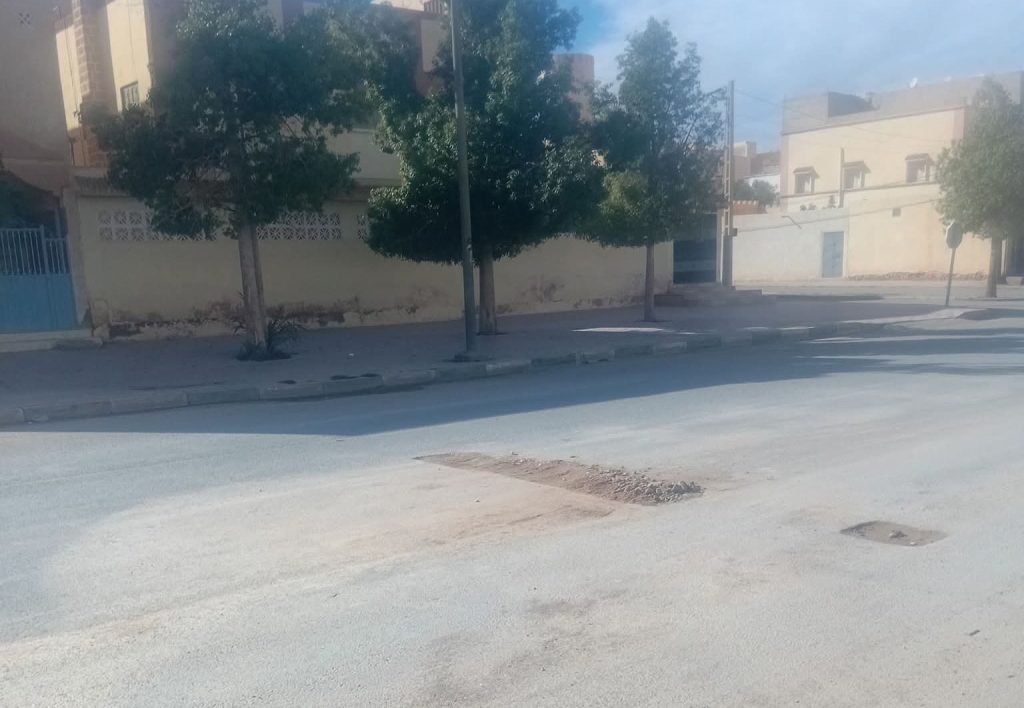
The recurring works on the main road adjacent to the 18 May school in the city of M'Seirra are raising a wave of questions about the management of infrastructure projects, amidst complaints of road sections being re-excavated shortly after their repair and asphalting. This raises doubts about the coordination between the involved authorities and the extent of supervision over the quality of work execution.
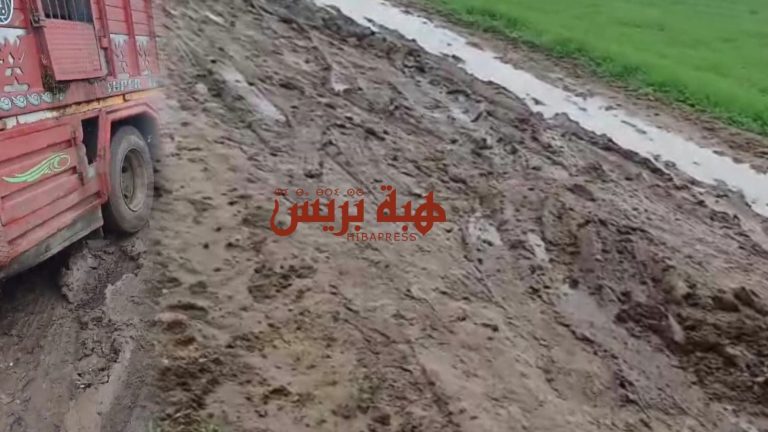
According to locally circulating information, the aforementioned road section has witnessed new excavations, coinciding with the breakage of a culvert, which has resulted in a deteriorated road condition and caused discontent due to the section being left in a state requiring treatment and rehabilitation. This is particularly concerning as it is a main road with daily traffic from citizens and road users, and it is located next to an educational institution.
This situation brings back to the forefront the issue of prior coordination between the entities responsible for road development and the departments that intervene to carry out works related to water, sanitation, and other basic utilities. Re-excavating a recently asphalted road raises legitimate questions about the extent to which different interventions are programmed according to a unified vision, to avoid repeating works and depleting financial resources.
Observers believe that the effective management of infrastructure projects requires the completion of necessary technical works, including culverts and underground networks, before proceeding with final asphalting, with the projects being subjected to monitoring and follow-up, and ensuring compliance with specifications and safety and quality standards.
Furthermore, leaving excavations without proper restoration within appropriate timelines can pose a source of nuisance and potential risks to traffic and pedestrians, especially in the vicinity of educational institutions. This necessitates taking the necessary measures to secure the affected section and restore the road to a suitable condition for use.
In light of this situation, demands are mounting for the intervention of the Governor of Boulemane Province, the Pasha of M'Seirra, and the President of the M'Seirra Municipality, each within their respective jurisdictions, to investigate the nature of the completed works, identify the party responsible for the excavation, verify compliance with technical and contractual obligations, and work towards repairing the affected section as soon as possible.
The demands also include enhancing coordination among all stakeholders before launching road development projects, activating monitoring and follow-up mechanisms, and taking appropriate action if any breach of obligations or negligence in restoring the situation is proven.
What is happening in front of the 18 May school goes beyond a mere pothole on the road, raising a fundamental question about the efficiency of public works management and the diligence in preserving public funds. The requirement is not only to repair the affected section but also to address the reasons that lead to repeated excavations after asphalting, ensuring the sustainability of projects and the quality of infrastructure.
The residents of M'Seirra await practical intervention to restore the importance of this road axis and put an end to uncoordinated works, with the aim of establishing responsible management of local projects, based on prior planning, transparency, monitoring, and respect for citizens' expectations.