HIBAPRESS – A. Mohyawi
The education and training system in the Meknes region is witnessing a rapid dynamic in expanding the school offer, within the framework of implementing the reforms led by the Ministry of National Education, Preschool and Sports, which aim to improve the quality of education and achieve equity and equal opportunities.
In this context, the Regional Directorate of Meknes, led by the Regional Director Mohamed Khalil, adopted a proactive approach to develop educational structures, based on the involvement of various stakeholders from local authorities, territorial groups, and civil society actors, in addition to economic and social partners, with a special focus on priority areas, and activating mechanisms for follow-up, evaluation, and mobilization of the necessary resources.
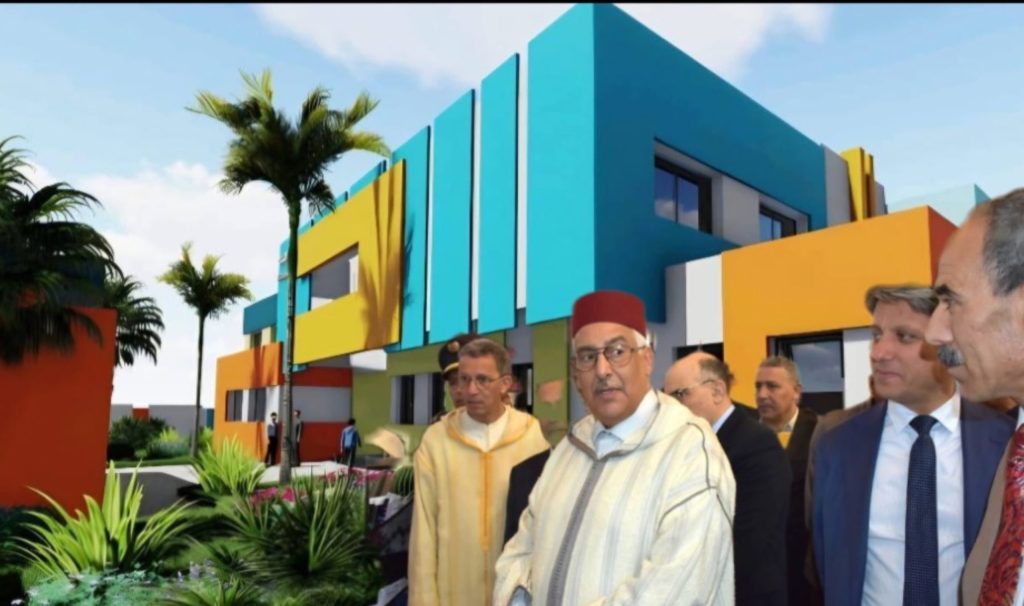
During the last two academic years, tangible progress was recorded in terms of infrastructure, as 38 new educational institutions were established with a financial envelope of approximately 355.8 million dirhams, in addition to expanding a number of institutions by adding 84 classrooms at a cost of approximately 23.2 million dirhams, as well as the rehabilitation of 344 educational institutions and school units with an investment of more than 111.6 million dirhams.
At the level of implementing the “Leading Institutions” model, the region witnessed a remarkable expansion, as the number of these institutions rose to 91 during the current academic year, compared to only five institutions during the 2023/2024 academic year. The preparatory schools for leadership also witnessed a remarkable development, as they moved from 5 preparatory schools to 18 preparatory schools, with a view to generalizing this model by the 2027/2028 academic year.
Regarding educational support, more than 43,000 primary school students benefited from the support program according to the TARL approach during its first phase, in addition to more than 31,000 beneficiaries of extended support, distributed over 91 institutions. As for the secondary school, the number of beneficiaries of the TARL phase reached about 14,000 students, in addition to more than 5,000 beneficiaries of extended support within 18 leading preparatory schools, with the effective contribution of a number of partners, including the National Initiative for Human Development, especially in the rural world.
These projects have been accompanied and supported by the Regional Academy for Education and Training of the Fez-Meknes region, in addition to the regional authorities, whether in terms of providing financial appropriations or simplifying administrative procedures and field follow-up.
These efforts resulted in positive indicators, the most prominent of which is the decline in the overcrowding rate from 6.98% during the 2024/2025 academic year to 4.85% currently, with an expectation of reaching 1.83% in the 2026/2027 horizon. The school dropout rate also decreased from 5.02% to 3.63%, with the goal of reaching 2.61% next academic year.
This dynamic is betting on improving the quality of basic learning and enhancing the cognitive and emotional competencies of students, which reflects positively on their academic results, in harmony with the contents of the 2022-2026 road map, which aims to build a public school of quality, fair and inclusive, capable of keeping pace with societal and developmental transformations.
These projects have received important institutional follow-up, as their implementation was accompanied by the support of the Meknes governor, by providing the objective and administrative conditions to accelerate the implementation of projects to expand the school offer, in addition to including the educational support component in educational institutions within the programs of the National Initiative for Human Development, which contributes to improving learning and enhancing opportunities for school success.
Continuous field support and follow-up was also recorded by the director of the Regional Academy for Education and Training of the Fez-Meknes region, through continuous training and follow-up of the various reform projects at the level of the Regional Directorate of Meknes, which ensures their implementation in the best conditions and the achievement of the objectives set.