HIBAPRESS
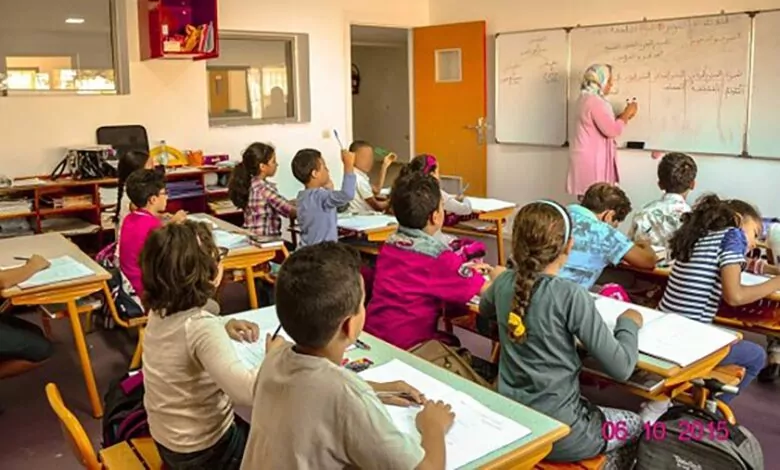
Leading schools form the main pillar in the roadmap for reforming the national education system (2022-2026), launched by the government of Aziz Akhannouch, with the aim of addressing academic setbacks from their roots and establishing a public school of quality.
In this context, the book "Five Years of Work in the Service of the Nation," recently issued by the government, provides precise details about this model and its field results, highlighting that the project relies on an innovative educational engineering that is based on four integrated axes: Teaching at the Right Level (TaRL), explicit teaching, the specialized teacher, in addition to an effective system of management and motivation. The book emphasizes that the project witnessed an accelerated pace of generalization; after an experimental phase during the (2023-2024) season, which included 626 primary schools and benefited about 322,000 students, the project moved to the expansion phase by adding 2,000 primary institutions annually. It is expected that the total number will reach 4,626 schools, including about two million students. The experience has also extended to include "Leading Preparatory Schools" in 232 institutions for the current school year, with a view to generalizing it to the preparatory cycle. The same source confirmed that independent assessment operations have proven the effectiveness of this model in raising the level of learning, as students in leading schools achieved progress in acquiring skills that exceeds by 1.6 times what their peers achieved in regular schools. This system has also contributed to activating the roles of the institution councils and involving parents' associations more effectively in managing educational affairs. This pedagogical transformation has been accompanied by a comprehensive material qualification of institutions, which included equipping classrooms with modern digital means to support explicit teaching, and providing a motivating work environment for administrative and educational frameworks to ensure the sustainability of reform and achieve its desired goals.