HIBAPRESS – Mohamed El-Harouali
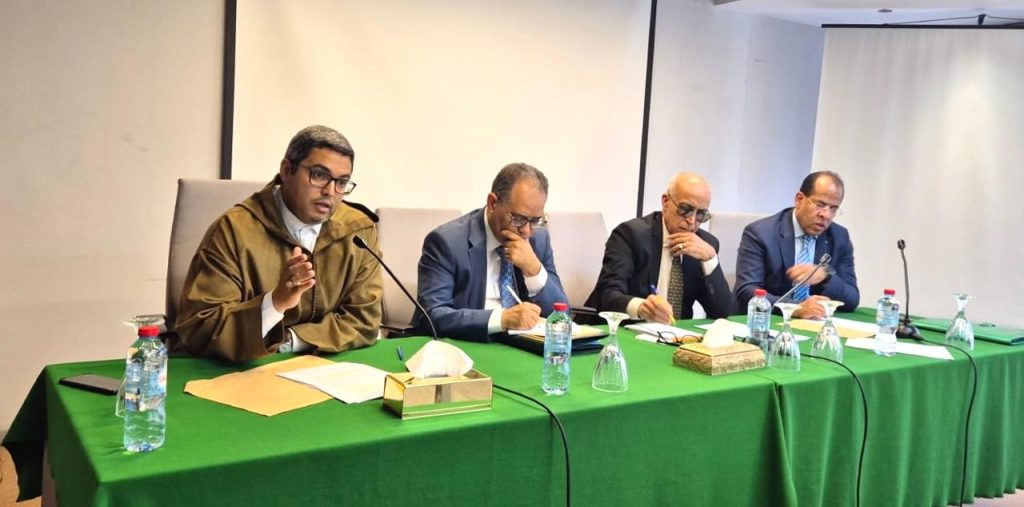
The Administrative Court of Appeal in Marrakech hosted, on Friday, May 15, 2026, the first communication meeting that brought together judges from the chambers of the Administrative Court of Appeal in Marrakech with judges from the two primary administrative courts in Marrakech and Beni Mellal, in an initiative aimed at strengthening institutional coordination and unifying the judicial and legal vision on a number of issues and problems related to administrative justice.
The organization of this meeting, under the supervision of the First President of the Administrative Court of Appeal in Marrakech, comes within the framework of the dynamics aimed at consolidating the culture of judicial dialogue and exchanging experiences between the various components of administrative justice, which contributes to improving judicial performance and achieving legal and judicial security. This scientific demonstration provided an opportunity to raise and discuss a group of topics related to administrative disputes, through scientific and educational presentations presented by specialized judges and consultants, addressing the most prominent practical and legal problems presented before the administrative judiciary. The first session of the meeting addressed a number of axes related to the problems of proving the emptying of the public debt, challenging public tenders, in addition to the effect of not respecting the legal procedure on the validity of imposing the tax. Participants also discussed the topic of public tenders between legal text and judicial jurisprudence, in addition to the problem of representing some groups within public tenders, within the framework of a legal and practical approach that aims to bring points of view closer and unify jurisprudence. The second session was devoted to the topic of administrative responsibility, where the conditions for accepting the cancellation lawsuit were addressed, and the problems related to expropriation for the public interest, in addition to lawsuits of material assault on real estate and compensation for damages resulting from the installation of electrical poles and electricity networks. The third session witnessed the discussion of issues related to disputes of territorial communities, and the role of real estate conservators, in addition to the practical problems related to the implementation of administrative rulings and real estate and expropriation issues. A number of interveners emphasized that this meeting constitutes a qualitative step towards strengthening coordination and communication between the various components of administrative justice, which contributes to unifying judicial jurisprudence and exchanging legal expertise, especially in light of the increase and complexity of administrative disputes related to real estate, public tenders, and local taxes. Participants also stressed the importance of continuing to organize such scientific and communication meetings, for their role in developing administrative judicial work and enhancing the quality of judicial rulings, which reinforces confidence in administrative justice and serves the interests of litigants.