HIBAPRESS – Shafiq Anuri
Malian writer and researcher in African affairs, Hamdi Jawara, confirmed that the rebels who targeted his country last April entered from the Algerian border, expressing his astonishment at the "Tebboune regime's" continuous pursuit of creating chaos in the region.
Jawara said in a statement to the newspaper "HIBAPRESS" that "Algeria's complicity is clear," expressing his surprise at its continuous pursuit of "creating chaos in Mali or in Morocco," and questioning what it will benefit from behind this plan, which targets countries that "contributed strongly to their independence."
The Fall of the Fig Leaf on Algeria's Shame
These developments come after decades of Algeria's attempt to appear in the guise of a supporter of territorial unity in Mali, through its flawed mediations between the Bamako government and the Azawad movements, including those that resulted in the 2015 Tamanrasset agreement.
Regarding Algeria's repeated involvement in Mali's problems, Hamdi Jawara, the Malian writer and researcher in African issues, explained that the Malian people "do not trust Algeria and have not trusted it," clarifying that the northern neighbor of his country has "stuck its nose in the Mali issue."
Jawara added in a statement to "HIBAPRESS" that the reason for Algeria's entry into the picture is due to its desire to "push the terrorist groups that grew on its lands towards northern Mali so that it can get rid of them internally."
Algerian Fears of the Emergence of Secessionist Demands in the South
Jawara pointed out that Algeria believed that "the demands for the secession of southern Algeria would end with that, but it was mistaken in this matter, because southern Algeria is considered its poorest regions and could explode at any time..," according to the Malian researcher.
He continued that "the agreement that was signed in Algeria (the Tamanrasset agreement) did not emanate from a referendum in Mali, nor was the Malian people consulted in it, but it was signed by the Ibika regime (an abbreviation for the name of former Malian President Ibrahim Boubacar Keita) at the time, and he was under intense French, international, and Algerian pressure."
Tamanrasset Agreement.. Division at a Delayed Pace
Jawara indicated that the Malian people were not comfortable with this agreement, "therefore, they continued to criticize the regime for that, because it would eventually lead to division, albeit at a delayed pace," adding that this unease was evident in the demands of the 2020 revolution that overthrew the Ibika regime after the coup, which included the cancellation of the Tamanrasset agreement.
Jawara affirmed in his statement to the newspaper that Algeria did not understand this fact, because "that was a slap in the face for it.. And therefore, it declared war on Mali and contained the rebels on its lands and trained them, and even shot down a Malian plane inside Malian territory..".
Constant Involvement of the Polisario
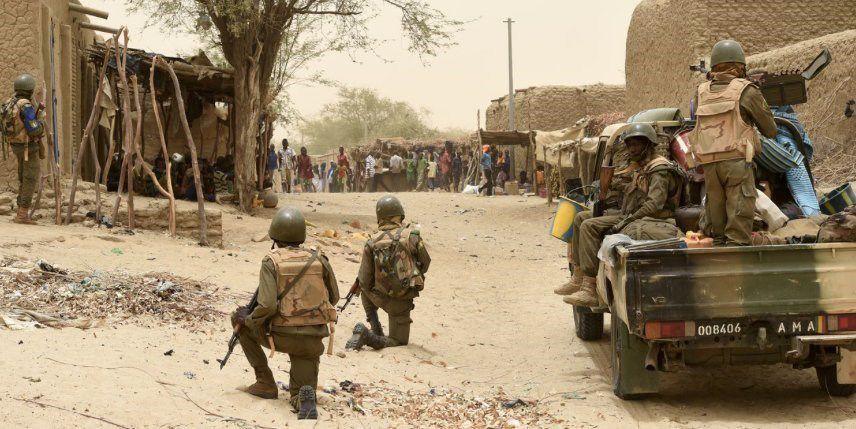
The director of the regional station of the Malian National Radio and Television in Kidal, the journalist Sidi al-Mahdi Ag al-Baka, revealed in a recent statement that the attack that Kidal witnessed on April 25th was interspersed with "movements of fighters who came from outside the country."
He pointed to the presence of "elements from several African countries, including Chad and Sudan, in addition to elements associated with the Polisario Front, and others who came from Algeria," explaining that the period of his detention inside the city revealed to him "the existence of cross-border coordination and movements aimed at destabilizing the country and inciting divisions between the different components of Malian society."