HIBAPRESS
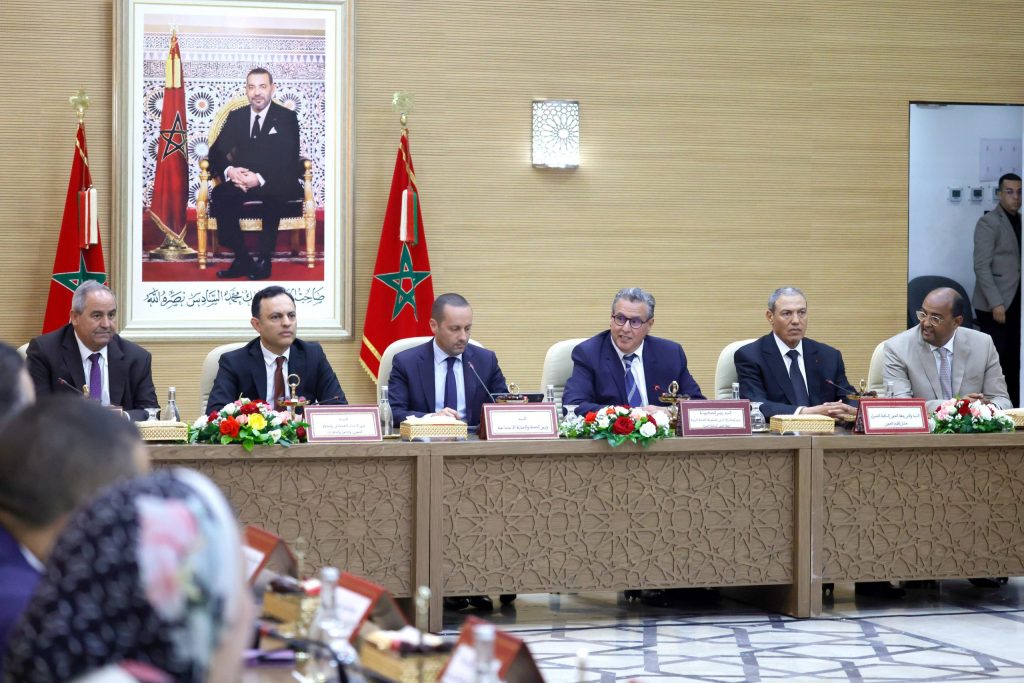
The Head of Government, Aziz Akhannouch, chaired on Monday, May 25, 2026, in the city of Laayoune, the first board of directors of the Territorial Health Group in the Laayoune-Sakia El Hamra region, making it the fourth region to witness the launch of this project, which forms one of the central pillars of the deep reform undertaken by the government to improve the national health system, in implementation of the high royal instructions.
The launch of the Territorial Health Group in the Laayoune-Sakia El Hamra region has a special significance, given the high care that His Majesty King Mohammed VI, may God protect him, continues to give to the southern provinces of the Kingdom. During the meeting, the Head of Government stressed that the activation of the Territorial Health Groups, according to the insightful royal vision, constitutes a structural transformation in the management of the national health system, from a central model to an integrated regional management, which aims to reorganize the regional health offer, and achieve integration between various health institutions, starting from primary health care centers to university hospitals within each region. The Head of Government affirmed that the launch of the Territorial Health Group in the Laayoune-Sakia El Hamra region will enable the provision of an equitable health offer, characterized by quality and proximity for the benefit of citizens in the region's provinces. During the meeting, the General Manager of the Territorial Health Group in the Laayoune-Sakia El Hamra region, Ibrahim Al-Ahmadi, presented the group's work program and its budget for the year 2026, and also presented the draft organizational structure of the group, in addition to a number of draft decisions, all of which were approved by the Board of Directors. It was also emphasized the centrality of the university hospital project in Laayoune in the success of the Territorial Health Group in the Laayoune-Sakia El Hamra region, especially since this project is in its final stages of completion, with a capacity of 500 beds, which will contribute to improving and diversifying the health offer in the southern provinces of the Kingdom, reducing waiting times, and keeping pace with the training of students of the Faculty of Medicine and Pharmacy in the region, within the framework of the implementation of the new development model for the southern provinces that His Majesty the King, may God protect him, launched in 2015. The meeting was an opportunity to emphasize the pivotal role played by primary health care institutions, especially through the establishment of family medicine as a basic entry point for the patient's care path, which allows for improving the guidance of patients towards appropriate treatment paths, and reducing pressure and overcrowding within hospital institutions. This trend reflects the will to move to a new health model based on integration and coordination between different levels of treatment, according to an approach that revolves around the needs of the citizen and the specificities of each territorial area. The role that these health institutions can play was also highlighted, as they are also spaces for training and field training for medical and nursing students, which enhances the quality of practical training, and links health training to the actual needs of the regional health system.