HIBAPRESS – Ahmed Sabbar
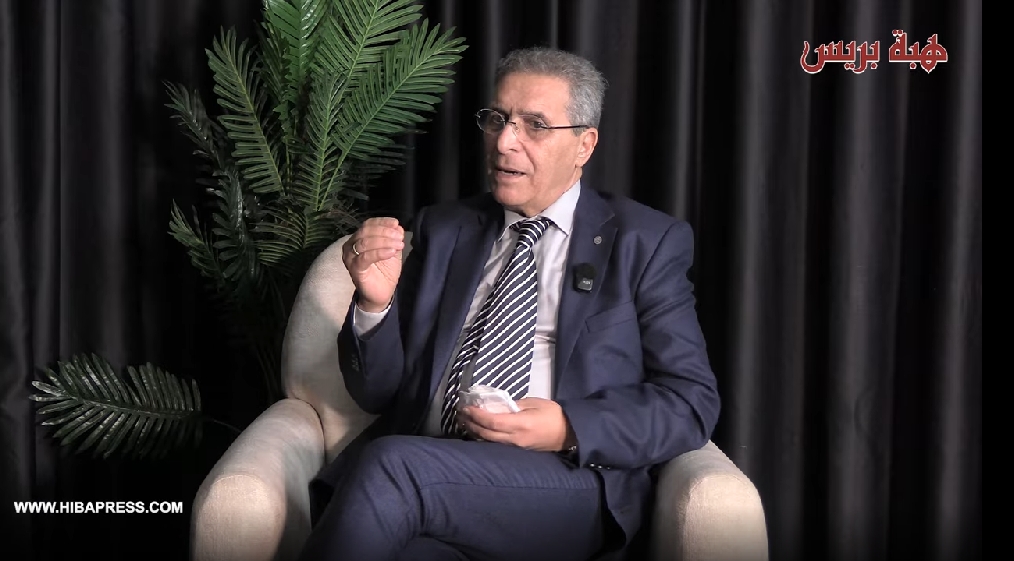
A new episode of "HIBAPRESS Podcast" featured Professor Abdellatif Elfakkak, in an in-depth political discussion about the issue of political participation of Moroccans abroad, between what the Kingdom's constitution guarantees and what is actually achieved on the ground, in a context that raises fundamental questions about representative democracy and its extensions beyond borders.
The episode began with an analytical reading of the provisions of the 2011 Moroccan constitution, which granted an advanced position to the Moroccan community abroad, especially through the stipulation of full citizenship rights, including political participation. However, the discussion highlighted a clear gap between the constitutional text and governmental implementation, as the mechanisms for activating this right are still limited, whether at the level of parliamentary representation or participation in electoral entitlements.
Professor Elfakkak addressed the legal status of Moroccans abroad, especially those holding dual nationality, highlighting that the problem lies not only in the texts, but also in legal interpretations and technical procedures that hinder actual participation, such as the difficulty of registration and voting from abroad, and the weakness of the logistical structures framing the electoral process, emphasizing the absence of a clear vision that guarantees real representation for this group, going beyond symbolic approaches towards effective institutional mechanisms.
In answering the question about the added value of the participation of Moroccans abroad, Elfakkak affirmed that involving this group constitutes a qualitative lever to strengthen democracy, given the political and institutional experiences accumulated by Moroccans abroad within the host countries, as well as the fact that this participation contributes to strengthening the ties between the community and their home country, and supports Morocco's influence at the international level.
The episode also discussed the role of governance institutions and advisory bodies in representing Moroccans abroad, where the guest pointed out that these institutions, despite their importance, remain limited in their impact in the absence of clear decision-making powers, which raises the need to reconsider their roles and enhance their independence, before concluding the episode by anticipating the possible scenarios for activating the political participation of Moroccans abroad, which range between creating electoral districts abroad, or adopting electronic voting, or strengthening representation through existing institutions, but achieving these scenarios remains contingent on the availability of a strong political will, and deep legal and institutional reforms.
In any case, the file of political participation of Moroccans abroad remains one of the most prominent challenges facing the path of Moroccan democracy, between a legitimate constitutional ambition and realistic expectations that have not yet found their full path to activation.