HIBAPRESS – Abdellatif Baraka
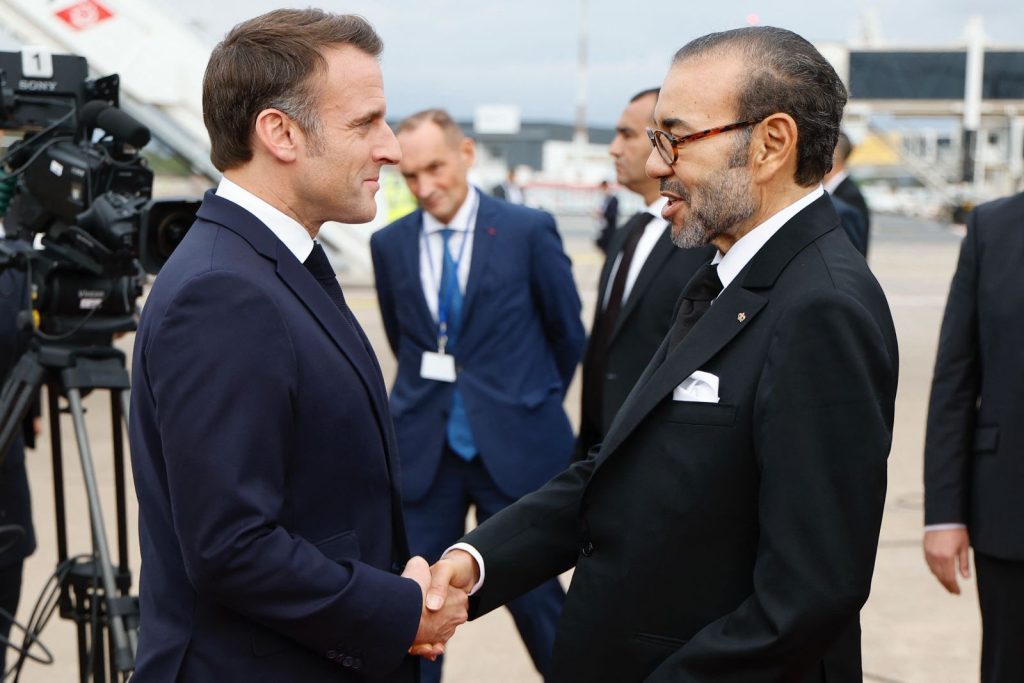
Eyes in both Morocco and France are turning towards the expected official visit that King Mohammed VI will make to Paris, at a sensitive political moment that reflects a remarkable shift in the course of bilateral relations after a period of diplomatic coolness.
This visit is not read only as a traditional protocol, but as a strong signal to rearrange strategic priorities between Rabat and Paris in a changing international and regional context.
The announcement made by the French Foreign Minister Jean-Noël Barrot after his discussions with his Moroccan counterpart Nasser Bourita in Rabat, was not just a confirmation of an expected visit, but carried deep political messages, most notably Paris's desire to turn the page on previous tensions and engage in a new dynamic based on balanced and pragmatic partnership. This comes in light of increasing French awareness of the geopolitical importance that Morocco has come to occupy, whether at the level of regional stability or as a pivotal actor in the African continent.
In recent years, Moroccan-French relations have witnessed a kind of fluctuation, especially in light of differences in some sensitive files, but international transformations, including the reshaping of alliances and the growth of regional roles, have prompted Paris to review its approach towards Rabat, which has consolidated its position as a reliable partner in the fields of security, immigration, and development.
The expected visit carries multiple strategic dimensions, as it is expected to form the basis for launching a new generation of bilateral agreements, including vital sectors such as defense, investment, energy, and culture.
The biggest bet is to rebuild political trust between the two countries, on the basis of respecting mutual interests and overcoming the logic of traditional guardianship that is no longer in line with current transformations.
In this context, the Sahara file stands out as one of the basic determinants in the path of rapprochement, where Paris continues to express its support for the autonomy proposal put forward by Morocco, which constitutes a point of focus in strengthening political understanding between the two parties. This support, although cautious in some of its stages, reflects a gradual shift in the French position towards greater clarity.
This visit also reflects a shared awareness of the need to expand areas of cooperation towards Africa, where the two countries seek to unite their efforts in development and investment projects on the continent, benefiting from the growing Moroccan presence there and traditional French expertise.
Thus, the visit of King Mohammed VI to Paris seems to be more than just a diplomatic stop, but rather a real test of the ability of the two countries to reshape their relationship in a way that is in line with the stakes of the stage. Either it establishes a new phase of equal strategic partnership, or it remains a mere circumstantial attempt to contain transient differences without addressing their deep roots.