HIBAPRESS – Azrou
The city of Azrou in the Ifrane province is entering a new phase in its local governance history, amidst growing expectations from residents regarding the city's future. The question remains whether the next phase, led by the party that will take over its management, will succeed in overcoming the divisions, disputes, and conflicts that characterized the current communal mandate of the Authenticity and Modernity Party (PAM), which is nearing its end. The hope is to transition towards a new logic focused on work, achievement, and linking responsibility with performance.
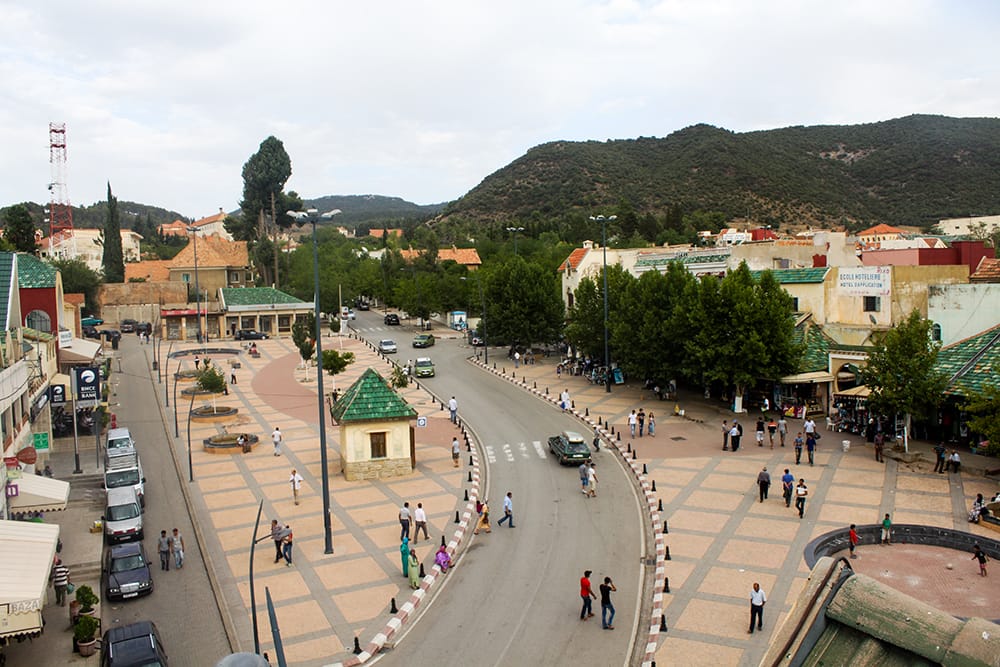
Talking about Azrou today is not just about managing a local commune, but about a city that possesses significant natural, touristic, and economic potential. It requires a clear vision capable of transforming these capabilities into tangible projects, development opportunities, and services that meet the daily needs of citizens.
During the outgoing communal mandate, discussions about the performance of the communal council often revolved around disagreements and disputes among the components of the elected institution. This opened the door to local questions about the achievements of this period and the extent to which political and managerial conflicts impacted the pace of projects, services, and priority issues.
The question that arises today, far from political alignments and calculations, is: What has Azrou gained from years of tug-of-war? And what have the residents benefited from the continued disagreements within the elected institution?
Residents do not measure the performance of elected councils by the number of disputes or the intensity of discussions, but rather by what they see on the ground: well-maintained roads, improved neighborhoods, decent public spaces, better services, and projects capable of improving living conditions and enhancing the city's attractiveness.
From this perspective, the upcoming phase faces a real test, not only for the communal council but also for the various stakeholders and elected officials who bear the responsibility of defending the interests of Azrou and the province. It's a call to move from a logic of managing conflict to a logic of managing development.
Azrou does not need more tug-of-war; it needs an elected institution that is cohesive in its work, clear in its priorities, and capable of making decisions and following up on their implementation. This includes openness to various stakeholders and leveraging the potential offered by state, regional, and provincial programs, as well as other institutions.
Furthermore, the challenge should not be limited to the city itself, as the Ifrane province also needs individuals to champion its issues and address the needs of its residents. This is particularly relevant concerning infrastructure, tourism, roads and pathways, rural development, support for the local economy, and the improvement of essential services.
Azrou possesses a location and potential that could make it a true engine of development for the province. However, this remains contingent on having an integrated collective vision and the ability of various stakeholders to coordinate and set priorities, rather than exhausting effort in disputes that do not directly translate into improved citizen lives.
Today, after years of contention, there is an urgent need to open a new page, with the primary criteria being: What has been achieved? What can be accomplished? And when will the impact of projects reach the citizen?
Elections do not end with the announcement of results; rather, a greater responsibility begins afterward, which is to transform the trust granted by citizens into daily work, projects, and solutions.
For Azrou and the Ifrane province, the next phase could be an opportunity to reorder priorities, evaluate achievements during the previous term, identify areas of stagnation, and then develop a clear vision for the coming years, placing the public interest above narrow calculations.
The city and the province do not need more conflicts, but rather elected officials capable of working, harmonious institutions, clear projects, and measurable results.
Ultimately, the true measure of any communal experience is the impact it leaves on the lives of residents, as citizens do not await new debates but rather a better city, improved services, and development befitting the potential of Azrou and the Ifrane province.